 Bird Album
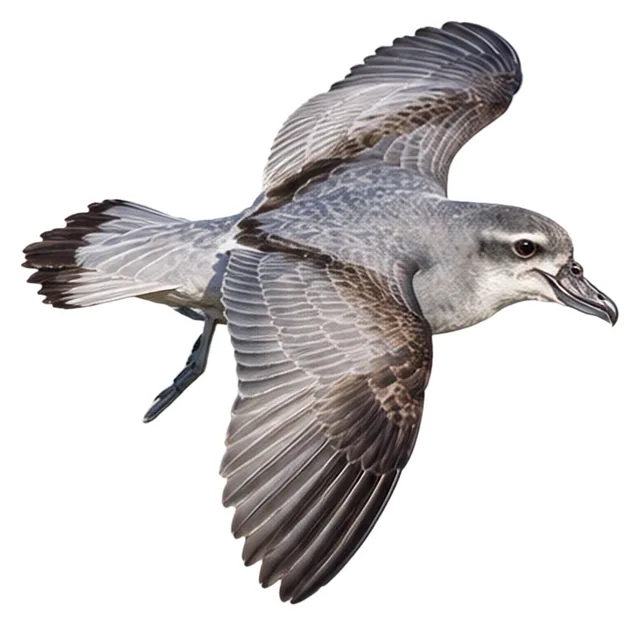
Broad-billed Prion
Pachyptila vittata (Forster, G, 1777)
196 gWeight
The broad-billed prion (Pachyptila vittata) is a small pelagic seabird in the shearwater and petrel family, Procellariidae.
Busiest months: December · Most records: New Zealand, Australia, St. Helena
Where and when it's recorded
Busiest months: December · Most records: New Zealand, Australia, St. Helena

Broad-billed Prion has been recorded at 18 of the 8,276 birding hotspots we track, in 4 countries and regions.
Records by month Southern Hemisphere
Where it's recorded most
- Foveaux StraitNew Zealand57 records
- Eaglehawk Neck Pelagic TripAustralia52 records
- Stewart Island – east coast pelagic watersNew Zealand26 records
More places
- Stewart Island – Titi Islands PelagicNew Zealand14 records
- Cook Strait FerryNew Zealand14 records
- Gough Island general pelagic - CircumnavigationSt. Helena8 records
- Nightingale IslandSt. Helena8 records
- Poor Knights Shelf AreaNew Zealand4 records
- Edinburgh of the Seven SeasSt. Helena4 records
- Nearshore waters (0-2mi/3km) - Gaggins Point to Rockhopper PointSt. Helena3 records
Countries and regions with the most records
eBird records via GBIF up to 2024-12-31. A record means someone listed it; more records partly mean more birders, not more birds.
About
The broad-billed prion (Pachyptila vittata) is a small pelagic seabird in the shearwater and petrel family, Procellariidae. It is the largest prion, with grey upperparts plumage, and white underparts. The sexes are alike.
Excerpt from Wikipedia, CC BY-SA 4.0 · authors · Read more on Wikipedia
Questions
How big is the Broad-billed Prion?
The Broad-billed Prion weighs around 196 g.
Where does the Broad-billed Prion live?
Its breeding range: Southern Ocean: islets off South Island and outlying islands groups of New Zealand, and Nightingale, Inaccessible, and Gough (Tristan da Cunha group, south-central Atlantic Ocean). It is most often recorded in New Zealand, Australia and St. Helena.
When is the best time to see the Broad-billed Prion?
At the hotspots we track, it is recorded most in December (Southern Hemisphere).
Is the Broad-billed Prion endangered?
The IUCN Red List classifies the Broad-billed Prion as Least Concern.
What does the Broad-billed Prion eat?
Main food: Fish, shrimp & shellfish.
What family is the Broad-billed Prion in?
It belongs to the family Petrels, Shearwaters, Diving Petrels (Procellariidae), order Procellariiformes.
At a glance
- Weight
- 196 g
- Habitat
- Ocean
- Diet
- Fish, shrimp & shellfish
- Lifestyle
- Varied
- Migration
- Partial migrant
- Conservation
- Least Concern
More measurements
- Wing
- 195 mm
- Tail
- 94 mm
- Bill
- 38 mm
- Tarsus
- 33 mm
Averages from the AVONET dataset; length from field guides where available.
Range
Southern Ocean: islets off South Island and outlying islands groups of New Zealand, and Nightingale, Inaccessible, and Gough (Tristan da Cunha group, south-central Atlantic Ocean)
Breeding range, IOC World Bird List 15.2
Classification
- Order
- Procellariiformes
- Family
- Petrels, Shearwaters, Diving Petrels Procellariidae
- Genus
- Pachyptila
Other birds in the genus Pachyptila
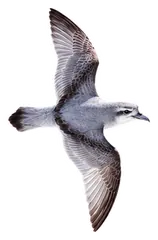 Salvin's PrionPachyptila salvini
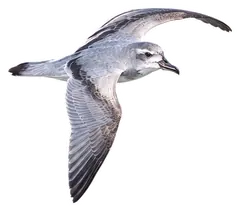 MacGillivray's PrionPachyptila macgillivrayi
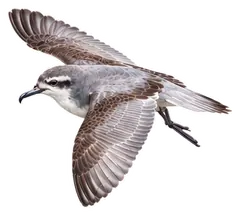 Antarctic PrionPachyptila desolata
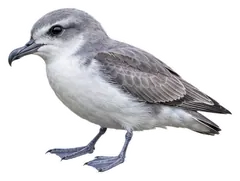 Slender-billed PrionPachyptila belcheri
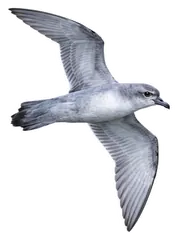 Fairy PrionPachyptila turtur
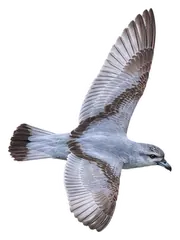 Fulmar PrionPachyptila crassirostris
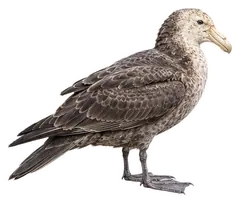 Southern Giant PetrelMacronectes giganteus
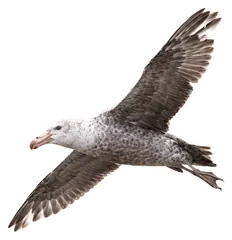 Northern Giant PetrelMacronectes halli
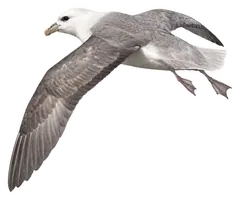 Northern FulmarFulmarus glacialis
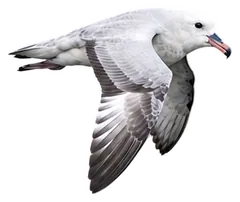 Southern FulmarFulmarus glacialoides
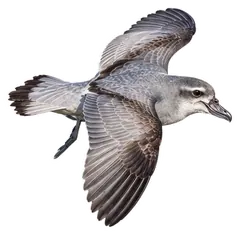
Download illustration
Free to use with credit: “Illustration: Bird Album (birdalbum.com)”. Drawn by AI from a reference photo by Oscar Thomas. ↗
Heard it but can't see it? Mingji identifies birds by sound and photo, on your phone.
In other languages
- EnglishBroad-billed Prion
- 简体中文阔嘴锯鹱
- 繁體中文闊嘴鋸鸌
- 日本語ヒロハシクジラドリ
- DeutschForster-Entensturmvogel
- FrançaisPrion de Forster
- EspañolPrión piquiancho
- Portuguêsfaigão-de-bico-largo
- ItalianoPrione beccolargo
- NederlandsBreedbekprion
- РусскийШирококлювый прион
- Svenskabrednäbbad valfågel
- DanskBrednæbbet Hvalfugl
- Polskipetrelek szerokodzioby