 Bird Album
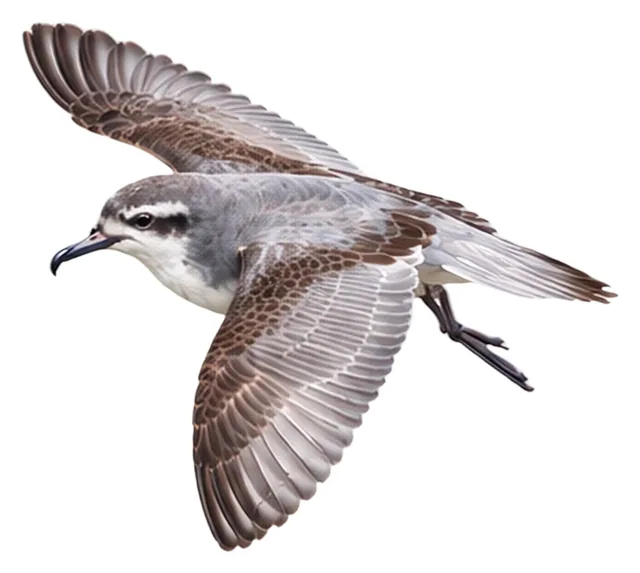
Antarctic Prion
Pachyptila desolata (Gmelin, JF, 1789)
147 gWeight
The Antarctic prion (Pachyptila desolata) also known as the dove prion, or totorore in Māori, is the largest of the prions, a genus of small petrels of the Southern Ocean.
Busiest months: November–January · Most records: South Georgia & South Sandwich Islands, Australia, Antarctica
Where and when it's recorded

Antarctic Prion has been recorded at 32 of the 8,171 birding hotspots we track, in 10 countries and regions.
Records by month Southern Hemisphere
Where it's recorded most
- Eaglehawk Neck Pelagic TripAustralia289 records
- Drake PassageAntarctica197 records
- Cooper BaySouth Georgia & South Sandwich Islands69 records
More places
- ElsehulSouth Georgia & South Sandwich Islands67 records
- Gold HarbourSouth Georgia & South Sandwich Islands63 records
- Salisbury PlainSouth Georgia & South Sandwich Islands59 records
- GrytvikenSouth Georgia & South Sandwich Islands53 records
- Prion IslandSouth Georgia & South Sandwich Islands49 records
- Elephant Island – Point WildAntarctica44 records
- St Andrew's BaySouth Georgia & South Sandwich Islands43 records
Countries and regions with the most records
eBird records via GBIF up to 2024-12-31. A record means someone listed it; more records partly mean more birders, not more birds.
About
The Antarctic prion (Pachyptila desolata) also known as the dove prion, or totorore in Māori, is the largest of the prions, a genus of small petrels of the Southern Ocean.
Excerpt from Wikipedia, CC BY-SA 4.0 · authors · Read more on Wikipedia
Questions
How big is the Antarctic Prion?
The Antarctic Prion weighs around 147 g.
Where does the Antarctic Prion live?
Its breeding range: Southern Ocean, Antarctica: islets of subantarctic to Antarctic oceans (mainly south of Antarctic Convergence) from Antarctic Peninsula to Scott Island (north of Ross Sea) Macquarie (far southeast of Australia) and Auckland islands (south of South Island, New Zealand). It is most often recorded in South Georgia & South Sandwich Islands, Australia and Antarctica.
When is the best time to see the Antarctic Prion?
At the hotspots we track, it is recorded most in January, November and December (Southern Hemisphere).
Is the Antarctic Prion endangered?
The IUCN Red List classifies the Antarctic Prion as Least Concern.
What does the Antarctic Prion eat?
Main food: Fish, shrimp & shellfish.
What family is the Antarctic Prion in?
It belongs to the family Petrels, Shearwaters, Diving Petrels (Procellariidae), order Procellariiformes.
At a glance
- Weight
- 147 g
- Habitat
- Ocean
- Diet
- Fish, shrimp & shellfish
- Lifestyle
- On the water surface
- Migration
- Partial migrant
- Conservation
- Least Concern
More measurements
- Wing
- 182 mm
- Tail
- 87 mm
- Bill
- 30 mm
- Tarsus
- 31 mm
Averages from the AVONET dataset; length from field guides where available.
Range
Southern Ocean, Antarctica: islets of subantarctic to Antarctic oceans (mainly south of Antarctic Convergence) from Antarctic Peninsula to Scott Island (north of Ross Sea) Macquarie (far southeast of Australia) and Auckland islands (south of South Island, New Zealand)
Breeding range, IOC World Bird List 15.2
Classification
- Order
- Procellariiformes
- Family
- Petrels, Shearwaters, Diving Petrels Procellariidae
- Genus
- Pachyptila
Other birds in the genus Pachyptila
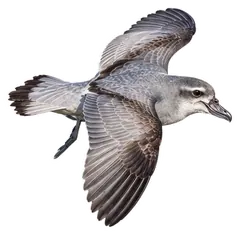 Broad-billed PrionPachyptila vittata
 Salvin's PrionPachyptila salvini
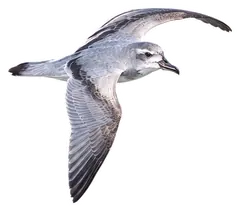 MacGillivray's PrionPachyptila macgillivrayi
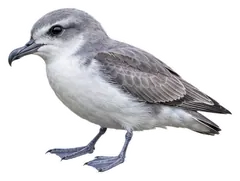 Slender-billed PrionPachyptila belcheri
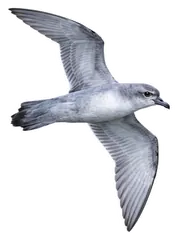 Fairy PrionPachyptila turtur
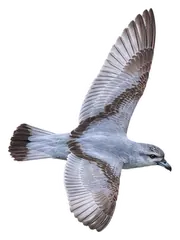 Fulmar PrionPachyptila crassirostris
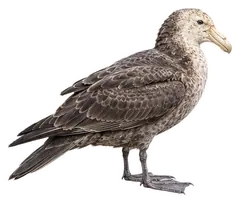 Southern Giant PetrelMacronectes giganteus
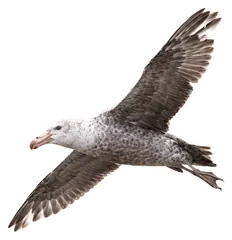 Northern Giant PetrelMacronectes halli
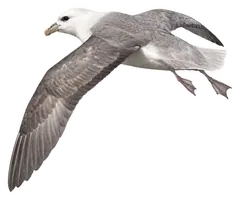 Northern FulmarFulmarus glacialis
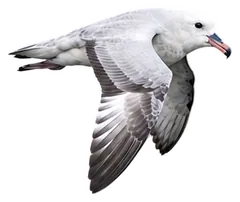 Southern FulmarFulmarus glacialoides
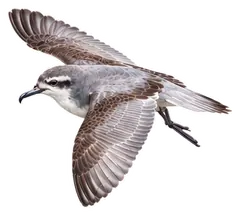
Download illustration
Free to use with credit: “Illustration: Bird Album (birdalbum.com)”. Drawn by AI from a reference photo by whale_nerd. ↗
Heard it but can't see it? Mingji identifies birds by sound and photo, on your phone.