 Bird Album
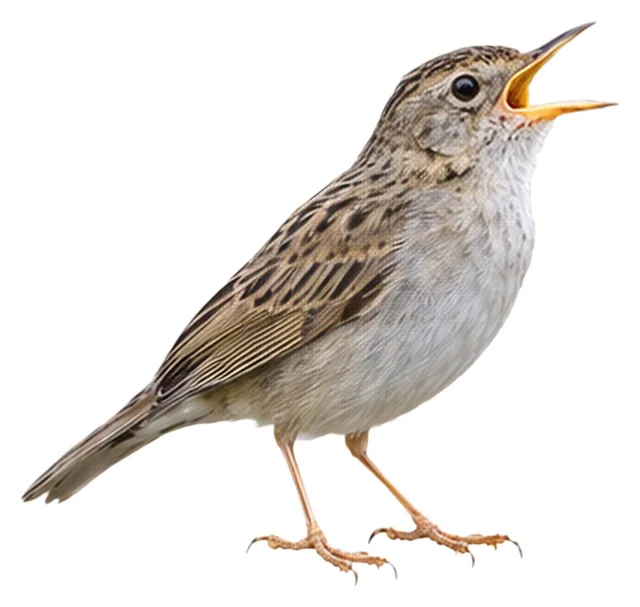
Common Grasshopper Warbler
Locustella naevia (Boddaert, 1783)
13 cmLength17 cmWingspan13 gWeight
It hides in grass and is difficult to see, and sings a mechanical, grasshopper-like trill.
Busiest months: May · Most records: United Kingdom, Germany, Spain
Looks like Lanceolated Warbler, Savi's Warbler
How to identify
Field marks
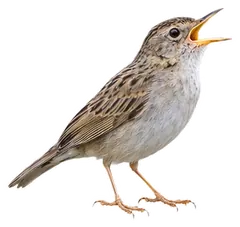
- Upperparts pale olive-brown, with dark brown streaks along the centers of the feathers
- Cheeks gray, with a faint eyestripe behind the eye
- Undertail-coverts with streaks; often cocks the tail on landing
- Legs and feet thin and pale yellowish-brown
Male, female and young
Sexes alike; juvenile has yellower underparts.
Voice
The song is a long, high-pitched continuous trill, like a fishing reel or a distant lawnmower; the alarm call is repeated ticking.
Similar species
Where and when it's recorded
Busiest months: May · Most records: United Kingdom, Germany, Spain

Common Grasshopper Warbler has been recorded at 751 of the 8,276 birding hotspots we track, in 61 countries and regions.
Records by month Northern Hemisphere
Where it's recorded most
- Elton ReservoirUnited Kingdom396 records
- Otmoor RSPB ReserveUnited Kingdom373 records
- Druridge Pools NWT NR and Druridge LinksUnited Kingdom364 records
More places
- Minsmere RSPB ReserveUnited Kingdom311 records
- Lakenheath Fen RSPB ReserveUnited Kingdom236 records
- Middleton Lakes RSPB ReserveUnited Kingdom228 records
- Titchwell Marsh RSPB ReserveUnited Kingdom224 records
- East Tilbury River and MarshesUnited Kingdom189 records
- Spurn Bird Observatory Recording AreaUnited Kingdom171 records
- Rainham Marshes RSPB Reserve, SSSI and LNRUnited Kingdom164 records
Countries and regions with the most records
eBird records via GBIF up to 2024-12-31. A record means someone listed it; more records partly mean more birders, not more birds.
About
The common grasshopper warbler or just grasshopper warbler (Locustella naevia) is a species of Old World warbler in the genus Locustella. It breeds across much of temperate Europe and the western Palearctic. It is migratory, wintering across northern tropical Africa just south of the Sahara, and also locally in India.
Excerpt from Wikipedia, CC BY-SA 4.0 · authors · Read more on Wikipedia
Questions
How big is the Common Grasshopper Warbler?
The Common Grasshopper Warbler is about 13 cm long, with a wingspan of 17 cm and weighs around 13 g.
Where does the Common Grasshopper Warbler live?
Its breeding range: Palearctic: widespread. It is most often recorded in United Kingdom, Germany and Spain.
When is the best time to see the Common Grasshopper Warbler?
At the hotspots we track, it is recorded most in May (Northern Hemisphere).
Is the Common Grasshopper Warbler endangered?
The IUCN Red List classifies the Common Grasshopper Warbler as Least Concern.
What does the Common Grasshopper Warbler eat?
Main food: Insects & other invertebrates.
What family is the Common Grasshopper Warbler in?
It belongs to the family Grassbirds & Allies (Locustellidae), order Passerines (Passeriformes).
At a glance
- Length
- 13 cm
- Wingspan
- 17 cm
- Weight
- 13 g
- Habitat
- Shrubland
- Diet
- Insects & other invertebrates
- Lifestyle
- Varied
- Migration
- Migratory
- Conservation
- Least Concern
More measurements
- Wing
- 64 mm
- Tail
- 56 mm
- Bill
- 15 mm
- Tarsus
- 20 mm
Averages from the AVONET dataset; length from field guides where available.
Range
Palearctic: widespread
Breeding range, IOC World Bird List 15.2
Subspecies · 1
- Locustella naevia straminea e European Russia to sw, sc Siberia, e Kazakhstan, w Mongolia and nw China | non-breeding: to s Asia
Classification
- Order
- Passerines Passeriformes
- Family
- Grassbirds & Allies Locustellidae
- Genus
- Locustella
Other birds in the genus Locustella
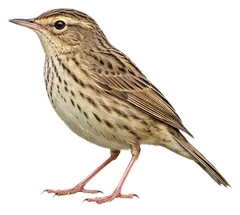 Lanceolated WarblerLocustella lanceolata
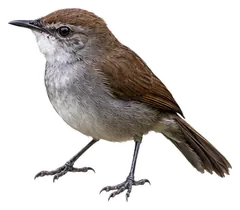 Bamboo WarblerLocustella alfredi
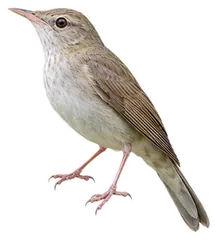 River WarblerLocustella fluviatilis
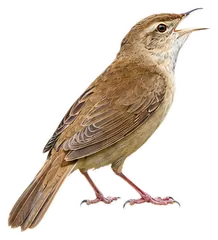 Savi's WarblerLocustella luscinioides
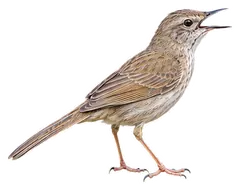 Long-billed Bush WarblerLocustella major
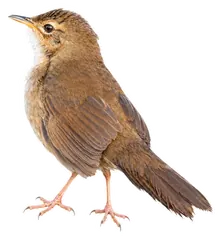 Brown Bush WarblerLocustella luteoventris
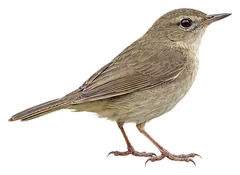 Chinese Bush WarblerLocustella tacsanowskia
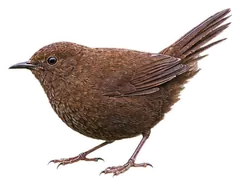 Friendly Bush WarblerLocustella accentor
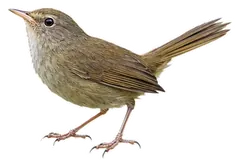 Long-tailed Bush WarblerLocustella caudata
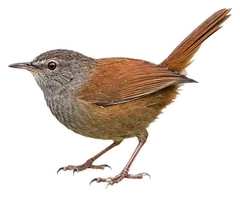 Sulawesi Bush WarblerLocustella castanea
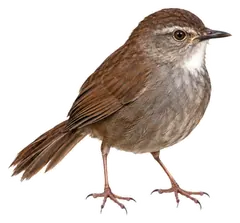 Seram Bush WarblerLocustella musculus
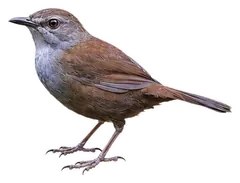 Taliabu Bush WarblerLocustella portenta
Download illustration
Free to use with credit: “Illustration: Bird Album (birdalbum.com)”. Drawn by AI from a reference photo by Erik Eckstein. ↗
Heard it but can't see it? Mingji identifies birds by sound and photo, on your phone.
In other languages
- EnglishCommon Grasshopper Warbler
- 简体中文黑斑蝗莺
- 繁體中文黑斑蝗鶯
- 日本語ヤチセンニュウ
- DeutschFeldschwirl
- FrançaisLocustelle tachetée
- EspañolBuscarla pintoja
- Portuguêscigarrinha-malhada
- ItalianoForapaglie macchiettato
- NederlandsSprinkhaanzanger
- РусскийОбыкновенный сверчок
- Svenskagräshoppsångare
- DanskGræshoppesanger
- Polskiświerszczak (zwyczajny)