 Bird Album
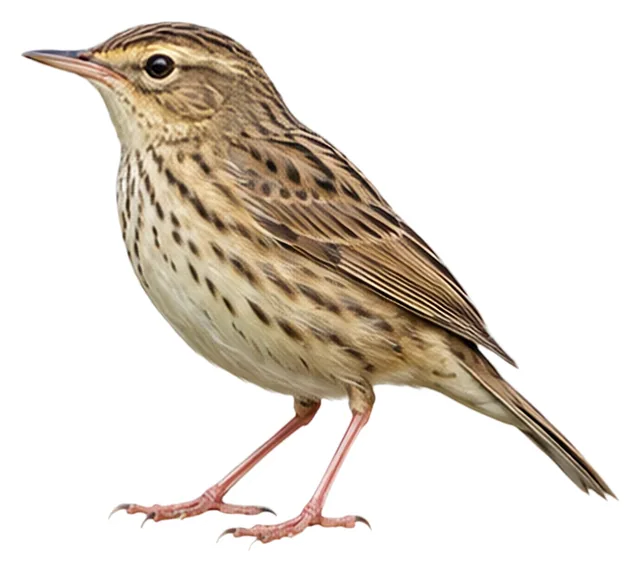
Lanceolated Warbler
Locustella lanceolata (Temminck, 1840)
≈12 cmLength11 gWeight
This small warbler hides in grass and is difficult to see, with fine lance-shaped markings on the underparts.
Busiest months: May and October · Most records: China, Thailand, Cambodia
How to identify
Field marks
- Back rufous with stripes
- Underparts grayish-white with fine lance-shaped markings
- Undertail-coverts also have these stripes
Male, female and young
Sexes alike; juvenile has yellower underparts.
Voice
A monotonous, mechanical insect-like sound, mostly given at dusk.
Where and when it's recorded

Lanceolated Warbler has been recorded at 422 of the 8,171 birding hotspots we track, in 22 countries and regions.
Records by month Northern Hemisphere
Where it's recorded most
- Muravyevka ParkRussia344 records
- Man Nai IslandThailand237 records
- Mai Po NR #8b Reedbed RingingHong Kong (China)182 records
More places
- Bengal Florican ReserveCambodia161 records
- TmatboeyCambodia116 records
- Phnom Krom – rice fieldsCambodia113 records
- Yeliu IBATaiwan (China)104 records
- Mai Po NR – #8b ReedbedHong Kong (China)101 records
- Fair IsleUnited Kingdom100 records
- Happy IslandChina96 records
Countries and regions with the most records
eBird records via GBIF up to 2024-12-31. A record means someone listed it; more records partly mean more birders, not more birds.
About
The lanceolated warbler (Locustella lanceolata) is a species of Old World warbler in the genus Locustella. It breeds from northwest European Russia across the Palearctic to northern Hokkaidō, Japan. It is migratory, wintering in Southeast Asia.
Excerpt from Wikipedia, CC BY-SA 4.0 · authors · Read more on Wikipedia
Questions
How big is the Lanceolated Warbler?
The Lanceolated Warbler is about ≈12 cm long and weighs around 11 g.
Where does the Lanceolated Warbler live?
Its breeding range: Palearctic: northern, northeastern. It is most often recorded in China, Thailand and Cambodia.
When is the best time to see the Lanceolated Warbler?
At the hotspots we track, it is recorded most in May and October (Northern Hemisphere).
Is the Lanceolated Warbler endangered?
The IUCN Red List classifies the Lanceolated Warbler as Least Concern.
What does the Lanceolated Warbler eat?
Main food: Insects & other invertebrates.
What family is the Lanceolated Warbler in?
It belongs to the family Grassbirds & Allies (Locustellidae), order Passerines (Passeriformes).
At a glance
- Length
- ≈12 cm
- Weight
- 11 g
- Habitat
- Grassland
- Diet
- Insects & other invertebrates
- Lifestyle
- Varied
- Migration
- Migratory
- Conservation
- Least Concern
More measurements
- Wing
- 55 mm
- Tail
- 48 mm
- Bill
- 12 mm
- Tarsus
- 18 mm
Averages from the AVONET dataset; length from field guides where available.
Range
Palearctic: northern, northeastern
Breeding range, IOC World Bird List 15.2
Subspecies · 1
- Locustella lanceolata lanceolata n Europe to e Siberia and ne China | non-breeding: to Philippines and Greater Sundas
Classification
- Order
- Passerines Passeriformes
- Family
- Grassbirds & Allies Locustellidae
- Genus
- Locustella
Other birds in the genus Locustella
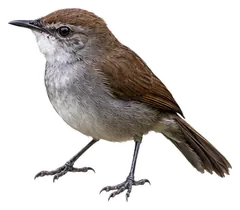 Bamboo WarblerLocustella alfredi
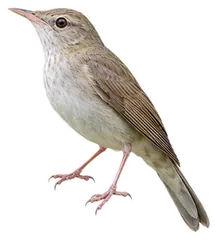 River WarblerLocustella fluviatilis
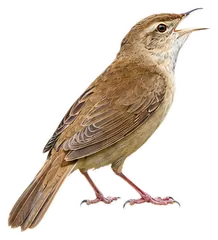 Savi's WarblerLocustella luscinioides
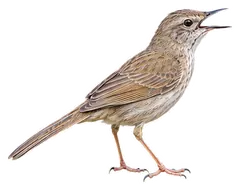 Long-billed Bush WarblerLocustella major
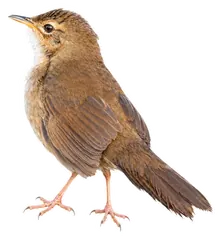 Brown Bush WarblerLocustella luteoventris
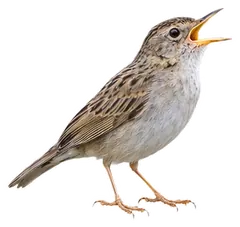 Common Grasshopper WarblerLocustella naevia
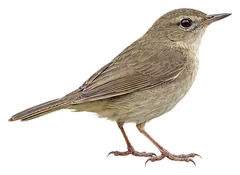 Chinese Bush WarblerLocustella tacsanowskia
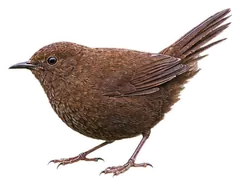 Friendly Bush WarblerLocustella accentor
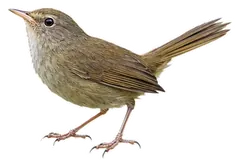 Long-tailed Bush WarblerLocustella caudata
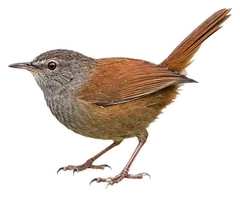 Sulawesi Bush WarblerLocustella castanea
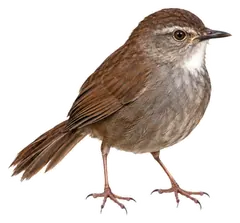 Seram Bush WarblerLocustella musculus
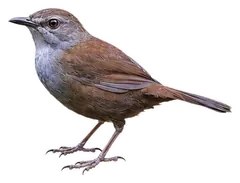 Taliabu Bush WarblerLocustella portenta
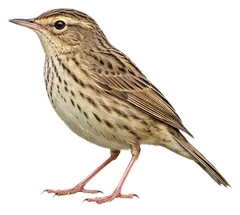
Download illustration
Free to use with credit: “Illustration: Bird Album (birdalbum.com)”. Drawn by AI from a reference photo by Александр Чегодаев. ↗

Heard it but can't see it? Mingji identifies birds by sound and photo, on your phone.
In other languages
- EnglishLanceolated Warbler
- 简体中文矛斑蝗莺
- 繁體中文矛斑蝗鶯
- 日本語マキノセンニュウ
- 한국어쥐발귀개개비
- DeutschStrichelschwirl
- FrançaisLocustelle lancéolée
- EspañolBuscarla lanceolada
- Portuguêscigarrinha-lanceolada
- ItalianoLocustella lanceolata
- NederlandsKleine Sprinkhaanzanger
- РусскийПятнистый сверчок
- Svenskaträsksångare
- DanskStribet Græshoppesanger
- Polskiświerszczak nakrapiany