 Bird Album
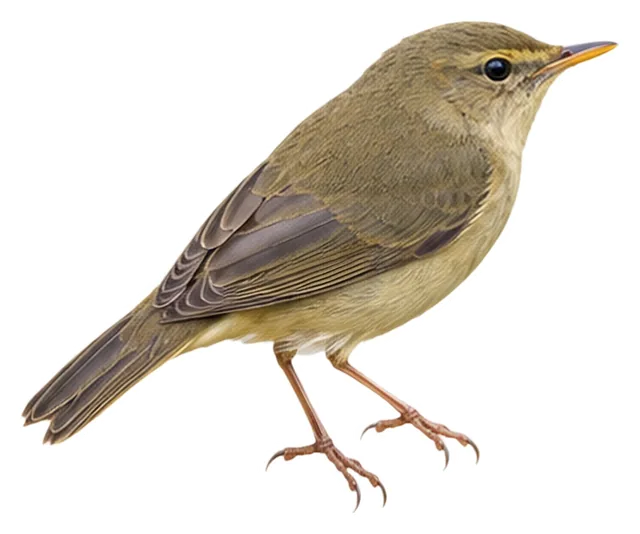
Common Reed Warbler
Acrocephalus scirpaceus (Hermann, 1804)
13 cmLength19 cmWingspan12 gWeight
The adult has a brown back without streaks, a flat forehead and a pointed, strong bill.
Busiest months: May · Most records: United Kingdom, Spain, Israel
How to identify
Field marks
- Adult has a brown back without streaks
- Adult has pale yellowish-brown underparts
- Flat forehead and strong, pointed bill
Male, female and young
Sexes identical in appearance; juvenile has richer yellowish-brown underparts.
Voice
Song is a slow, chattering “jit-jit-jit”, interspersed with whistles and mimicry.
Where and when it's recorded

Common Reed Warbler has been recorded at 1,448 of the 8,276 birding hotspots we track, in 106 countries and regions.
Records by month Northern Hemisphere
Where it's recorded most
- International Birding and Research Center Eilat (IBRCE)Israel4,129 records
- Minsmere RSPB ReserveUnited Kingdom2,655 records
- Jerusalem Bird ObservatoryIsrael2,616 records
More places
- Titchwell Marsh RSPB ReserveUnited Kingdom2,380 records
- Desembocadura del Guadalhorce – ÁreaSpain2,204 records
- Amwell HMWT NRUnited Kingdom1,965 records
- Beddington FarmlandsUnited Kingdom1,566 records
- Rainham Marshes RSPB Reserve, SSSI and LNRUnited Kingdom1,460 records
- Cley & Salthouse Marshes NWT NR – Cley Marshes including Hides and Visitor CentreUnited Kingdom1,442 records
- Gazelle ValleyIsrael1,435 records
Countries and regions with the most records
eBird records via GBIF up to 2024-12-31. A record means someone listed it; more records partly mean more birders, not more birds.
About
The common reed warbler or Eurasian reed-warbler (Acrocephalus scirpaceus) is an Old World warbler in the genus Acrocephalus. It breeds across Europe into the temperate western Palaearctic where it is migratory, wintering in sub-Saharan Africa. It is also a resident species over large parts of Africa.
Excerpt from Wikipedia, CC BY-SA 4.0 · authors · Read more on Wikipedia
Questions
How big is the Common Reed Warbler?
The Common Reed Warbler is about 13 cm long, with a wingspan of 19 cm and weighs around 12 g.
Where does the Common Reed Warbler live?
Its breeding range: Palearctic, Africa: Europe to Central Asia, Arabian Peninsula, northern Africa and Sub-Saharan Africa. It is most often recorded in United Kingdom, Spain and Israel.
When is the best time to see the Common Reed Warbler?
At the hotspots we track, it is recorded most in May (Northern Hemisphere).
Is the Common Reed Warbler endangered?
The IUCN Red List classifies the Common Reed Warbler as Least Concern.
What does the Common Reed Warbler eat?
Main food: Insects & other invertebrates.
What family is the Common Reed Warbler in?
It belongs to the family Reed Warblers & Allies (Acrocephalidae), order Passerines (Passeriformes).
At a glance
- Length
- 13 cm
- Wingspan
- 19 cm
- Weight
- 12 g
- Habitat
- Wetland
- Diet
- Insects & other invertebrates
- Lifestyle
- Perches in trees
- Migration
- Migratory
- Conservation
- Least Concern
More measurements
- Wing
- 67 mm
- Tail
- 52 mm
- Bill
- 17 mm
- Tarsus
- 22 mm
Averages from the AVONET dataset; length from field guides where available.
Range
Palearctic, Africa: Europe to Central Asia, Arabian Peninsula, northern Africa and Sub-Saharan Africa
Breeding range, IOC World Bird List 15.2
Subspecies · 1
- Acrocephalus scirpaceus fuscus n Egypt and c Turkey through the Middle East to se European Russia, n Iran, Kazakhstan and nw China | non-breeding: to e, s Africa
Classification
- Order
- Passerines Passeriformes
- Family
- Reed Warblers & Allies Acrocephalidae
- Genus
- Acrocephalus
Other birds in the genus Acrocephalus
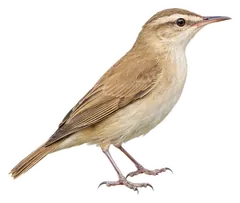 Basra Reed WarblerAcrocephalus griseldis
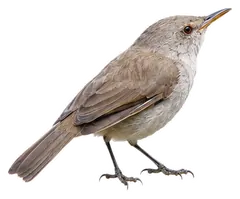 Cape Verde WarblerAcrocephalus brevipennis
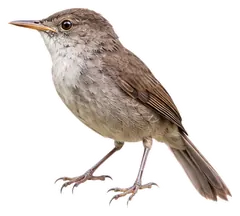 Greater Swamp WarblerAcrocephalus rufescens
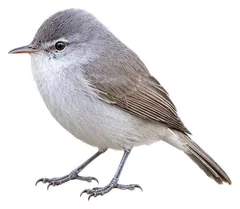 Lesser Swamp WarblerAcrocephalus gracilirostris
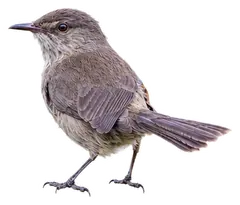 Madagascar Swamp WarblerAcrocephalus newtoni
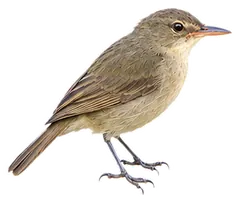 Seychelles WarblerAcrocephalus sechellensis
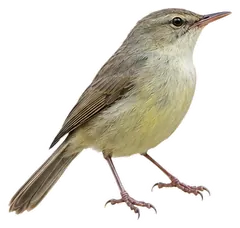 Rodrigues WarblerAcrocephalus rodericanus
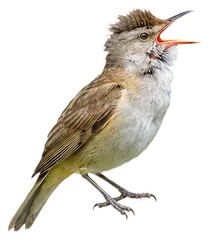 Great Reed WarblerAcrocephalus arundinaceus
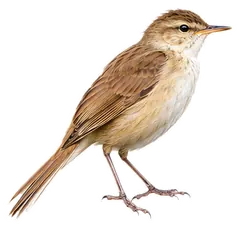 Oriental Reed WarblerAcrocephalus orientalis
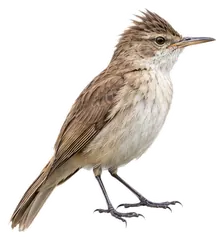 Clamorous Reed WarblerAcrocephalus stentoreus
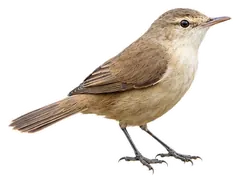 Australian Reed WarblerAcrocephalus australis
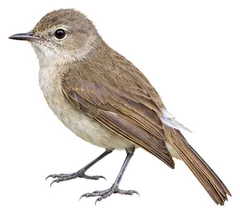 MillerbirdAcrocephalus familiaris
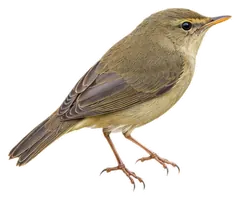
Download illustration
Free to use with credit: “Illustration: Bird Album (birdalbum.com)”. Drawn by AI from a reference photo by Jesús Porrero Bastante. ↗
Heard it but can't see it? Mingji identifies birds by sound and photo, on your phone.