 Bird Album
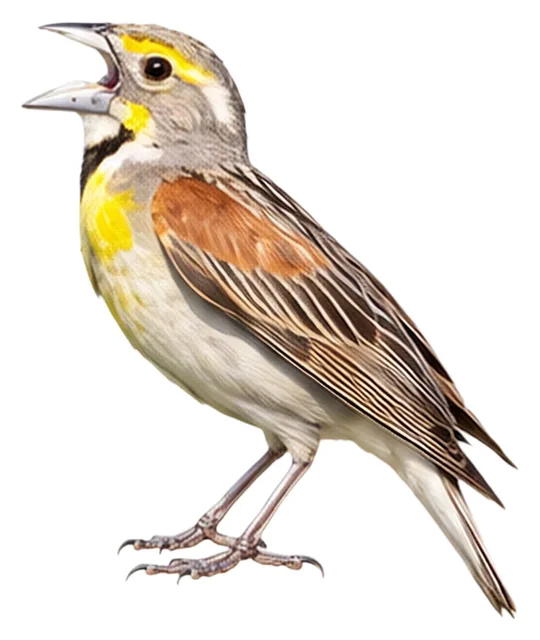
Dickcissel
Spiza americana (Gmelin, JF, 1789)
26 gWeight
The dickcissel (Spiza americana) is a small seed-eating migratory bird in the family Cardinalidae.
Busiest months: May · Most records: United States, Mexico, Canada
Where and when it's recorded
Busiest months: May · Most records: United States, Mexico, Canada

Dickcissel has been recorded at 705 of the 8,276 birding hotspots we track, in 24 countries and regions.
Records by month Northern Hemisphere
Where it's recorded most
- Eagle Bluffs CAUnited States3,973 records
- Riverlands Migratory Bird SanctuaryUnited States3,066 records
- Hagerman NWRUnited States3,062 records
More places
- Village Creek Drying Beds (PPW-W 083) – ACCESS CLOSED July 2025United States2,586 records
- Jocelyn Nungaray NWR (Anahuac)United States2,100 records
- Commons Ford Ranch Metro ParkUnited States2,073 records
- Hornsby BendUnited States2,041 records
- Mitchell Lake Audubon CenterUnited States2,036 records
- South Padre Is. – WBC/Conv. Center/Laguna Madre TrailUnited States1,972 records
- Bald Knob NWRUnited States1,963 records
Countries and regions with the most records
eBird records via GBIF up to 2024-12-31. A record means someone listed it; more records partly mean more birders, not more birds.
About
The dickcissel (Spiza americana) is a small seed-eating migratory bird in the family Cardinalidae. It breeds on the prairie grasslands of the Midwestern United States and winters in Central America, northern Colombia, and northern Venezuela. It is the only member of the genus Spiza, though some sources list another supposedly extinct species.
Excerpt from Wikipedia, CC BY-SA 4.0 · authors · Read more on Wikipedia
Questions
How big is the Dickcissel?
The Dickcissel weighs around 26 g.
Where does the Dickcissel live?
Its breeding range: North America, Middle America, South America: central USA to Venezuela and Colombia. It is most often recorded in United States, Mexico and Canada.
When is the best time to see the Dickcissel?
At the hotspots we track, it is recorded most in May (Northern Hemisphere).
Is the Dickcissel endangered?
The IUCN Red List classifies the Dickcissel as Least Concern.
What does the Dickcissel eat?
Main food: Omnivore.
What family is the Dickcissel in?
It belongs to the family Cardinals & Allies (Cardinalidae), order Passerines (Passeriformes).
At a glance
- Weight
- 26 g
- Habitat
- Grassland
- Diet
- Omnivore
- Lifestyle
- Active on the ground
- Migration
- Migratory
- Conservation
- Least Concern
More measurements
- Wing
- 78 mm
- Tail
- 56 mm
- Bill
- 15 mm
- Tarsus
- 22 mm
Averages from the AVONET dataset; length from field guides where available.
Range
North America, Middle America, South America: central USA to Venezuela and Colombia
Breeding range, IOC World Bird List 15.2
Classification
- Order
- Passerines Passeriformes
- Family
- Cardinals & Allies Cardinalidae
- Genus
- Spiza
More from the family Cardinals & Allies
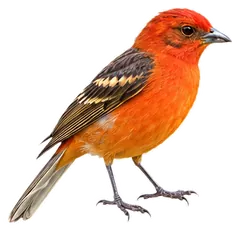 Flame-colored TanagerPiranga bidentata
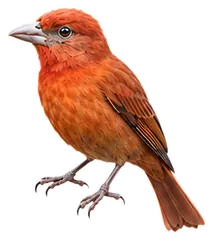 Tooth-billed TanagerPiranga lutea
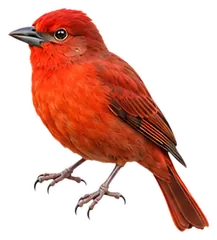 Red TanagerPiranga flava
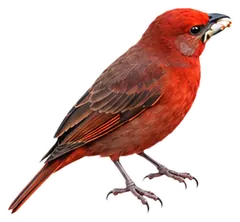 Hepatic TanagerPiranga hepatica
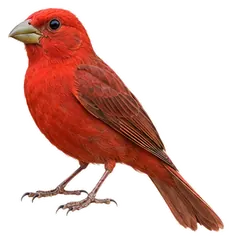 Summer TanagerPiranga rubra
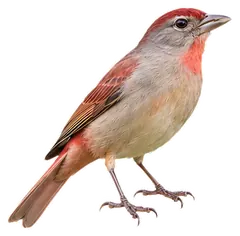 Rose-throated TanagerPiranga roseogularis
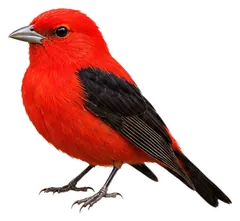 Scarlet TanagerPiranga olivacea
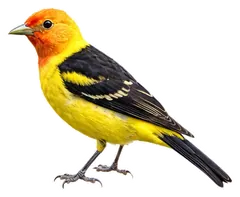 Western TanagerPiranga ludoviciana
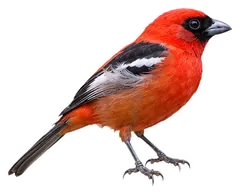 White-winged TanagerPiranga leucoptera
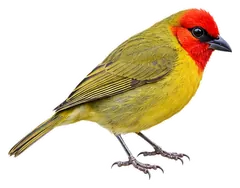 Red-headed TanagerPiranga erythrocephala
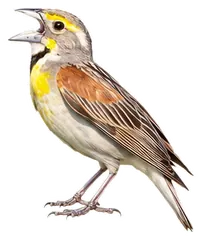
Download illustration
Free to use with credit: “Illustration: Bird Album (birdalbum.com)”. Drawn by AI from a reference photo by Brad Imhoff. ↗
Heard it but can't see it? Mingji identifies birds by sound and photo, on your phone.