 Bird Album
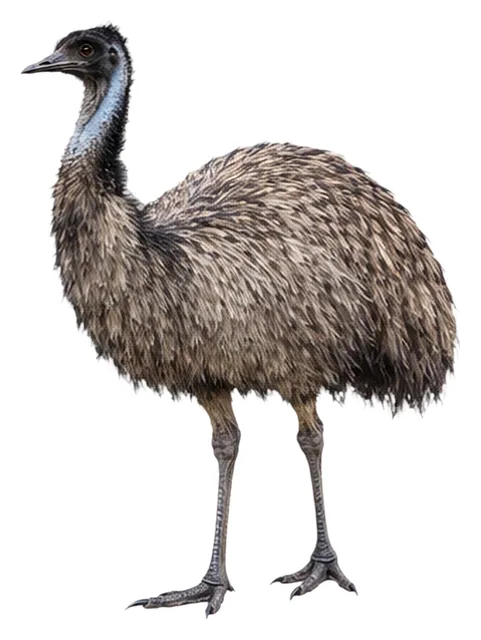
Emu
Dromaius novaehollandiae (Latham, 1790)
139–164 cmLength34 kgWeight
This flightless bird has shaggy brown feathers, a long neck and long legs, and runs well.
Busiest months: September–October · Most records: Australia, Aruba, South Africa
How to identify
Field marks
- Body feathers gray-brown and shaggy
- Neck long, with pale blue skin visible through sparse feathers
- Legs long and unfeathered
- Three toes on each foot
Male, female and young
Sexes similar in appearance; female usually slightly larger, with a distinctly broader rump.
Where and when it's recorded
Busiest months: September–October · Most records: Australia, Aruba, South Africa

Emu has been recorded at 22 of the 8,276 birding hotspots we track, in 3 countries and regions.
Records by month Southern Hemisphere
Where it's recorded most
- Bowra Wildlife SanctuaryAustralia3,616 records
- Serendip SanctuaryAustralia1,057 records
- Hattah-Kulkyne National ParkAustralia722 records
More places
- Gluepot ReserveAustralia277 records
- Mosquito Creek RdAustralia234 records
- Lake McLarty Nature ReserveAustralia153 records
- Cumberland DamAustralia43 records
- Alice Springs Sewage PondsAustralia40 records
- Victoria Dam – Access road, track and picnic areaAustralia6 records
- Kakadu National Park – Yellow WaterAustralia5 records
Countries and regions with the most records
eBird records via GBIF up to 2024-12-31. A record means someone listed it; more records partly mean more birders, not more birds.
About
The emu (Dromaius novaehollandiae) is a species of flightless bird endemic to Australia, where it is the tallest native bird. It is the only extant member of the genus Dromaius and the third-tallest living bird after its African ratite relatives, the common ostrich and Somali ostrich. The emu's native ranges cover most of the Australian mainland.
Excerpt from Wikipedia, CC BY-SA 4.0 · authors · Read more on Wikipedia
Questions
How big is the Emu?
The Emu is about 139–164 cm long and weighs around 34 kg.
Where does the Emu live?
Its breeding range: Australasia: Australia. It is most often recorded in Australia, Aruba and South Africa.
When is the best time to see the Emu?
At the hotspots we track, it is recorded most in September and October (Southern Hemisphere).
Is the Emu endangered?
The IUCN Red List classifies the Emu as Least Concern.
What does the Emu eat?
Main food: Omnivore.
What family is the Emu in?
It belongs to the family Cassowaries, Emu (Casuariidae), order Casuariiformes.
At a glance
- Length
- 139–164 cm
- Weight
- 34 kg
- Habitat
- Grassland
- Diet
- Omnivore
- Lifestyle
- Active on the ground
- Migration
- Resident (barely migrates)
- Conservation
- Least Concern
More measurements
- Wing
- 124 mm
- Tail
- 430 mm
- Bill
- 82 mm
- Tarsus
- 383 mm
Averages from the AVONET dataset; length from field guides where available.
Range
Australasia: Australia
Breeding range, IOC World Bird List 15.2
Classification
- Order
- Casuariiformes
- Family
- Cassowaries, Emu Casuariidae
- Genus
- Dromaius
More from the family Cassowaries, Emu
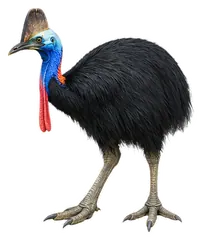 Southern CassowaryCasuarius casuarius
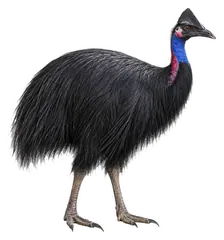 Dwarf CassowaryCasuarius bennetti
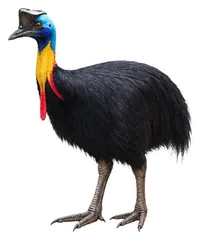 Northern CassowaryCasuarius unappendiculatus
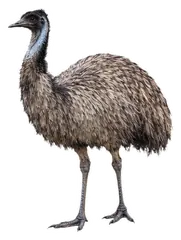
Download illustration
Free to use with credit: “Illustration: Bird Album (birdalbum.com)”. Drawn by AI from a reference photo by kbanning94. ↗
Heard it but can't see it? Mingji identifies birds by sound and photo, on your phone.