 Bird Album
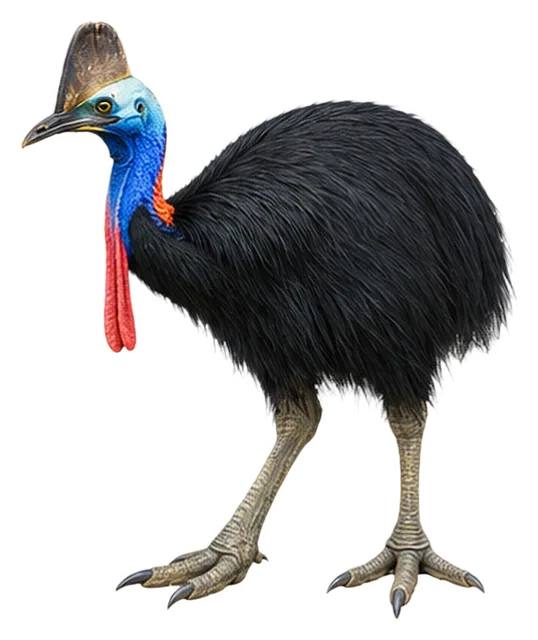
Southern Cassowary
Casuarius casuarius (Linnaeus, 1758)
≈149 cmLength44 kgWeight
The adult has a helmetlike structure on the crown and two red wattles hanging below the throat.
Busiest months: October · Most records: Australia, Papua New Guinea, Indonesia
How to identify
Field marks
- Adult has two red wattles below the throat
- Adult has a blue face and long neck
- Adult has black, coarse, stiff body feathers
Male, female and young
Sexes similar in plumage; female larger, with a longer helmetlike structure, larger bill and more brightly colored bare skin.
Voice
Thunderous booming calls in the breeding season; also hisses and low rumbles at other times.
Where and when it's recorded

Southern Cassowary has been recorded at 14 of the 8,171 birding hotspots we track, in 4 countries and regions.
Records by month Southern Hemisphere
Where it's recorded most
- Mount Hypipamee National ParkAustralia219 records
- Kwatu LodgePapua New Guinea33 records
- Crater Lakes National Park – Lake EachamAustralia10 records
More places
- Crater Lakes National Park – Lake BarrineAustralia9 records
- Elevala RiverPapua New Guinea5 records
- JulattenAustralia3 records
- Daintree Village Boat CruiseAustralia3 records
- Sawai Village RoadIndonesia3 records
- Fly River – between Kiunga and Elevala RiverPapua New Guinea2 records
- Elevala and Ketu RiversPapua New Guinea2 records
Countries and regions with the most records
eBird records via GBIF up to 2024-12-31. A record means someone listed it; more records partly mean more birders, not more birds.
About
The southern cassowary (Casuarius casuarius), also known as double-wattled cassowary, Australian cassowary, or two-wattled cassowary, is a large, flightless, mostly black bird, found in Indonesia, Papua New Guinea, and northeastern Australia. It is one of the three living species of cassowary, alongside the dwarf cassowary and the northern cassowary. It is a ratite and therefore related to the emu, ostrich, rhea and kiwi.
Excerpt from Wikipedia, CC BY-SA 4.0 · authors · Read more on Wikipedia
Questions
How big is the Southern Cassowary?
The Southern Cassowary is about ≈149 cm long and weighs around 44 kg.
Where does the Southern Cassowary live?
Its breeding range: Australasia: Aru Islands (southwest of New Guinea), New Guinea and eastern Cape York Peninsula, northeastern Queensland (northeastern Australia). It is most often recorded in Australia, Papua New Guinea and Indonesia.
When is the best time to see the Southern Cassowary?
At the hotspots we track, it is recorded most in October (Southern Hemisphere).
Is the Southern Cassowary endangered?
The IUCN Red List classifies the Southern Cassowary as Least Concern.
What does the Southern Cassowary eat?
Main food: Fruit.
What family is the Southern Cassowary in?
It belongs to the family Cassowaries, Emu (Casuariidae), order Casuariiformes.
At a glance
- Length
- ≈149 cm
- Weight
- 44 kg
- Habitat
- Forest
- Diet
- Fruit
- Lifestyle
- Active on the ground
- Migration
- Resident (barely migrates)
- Conservation
- Least Concern
More measurements
- Wing
- 301 mm
- Tail
- 402 mm
- Bill
- 105 mm
- Tarsus
- 287 mm
Averages from the AVONET dataset; length from field guides where available.
Range
Australasia: Aru Islands (southwest of New Guinea), New Guinea and eastern Cape York Peninsula, northeastern Queensland (northeastern Australia)
Breeding range, IOC World Bird List 15.2
Classification
- Order
- Casuariiformes
- Family
- Cassowaries, Emu Casuariidae
- Genus
- Casuarius
Other birds in the genus Casuarius
 Dwarf CassowaryCasuarius bennetti
 Northern CassowaryCasuarius unappendiculatus
 EmuDromaius novaehollandiae
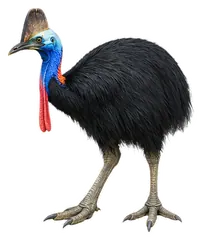
Download illustration
Free to use with credit: “Illustration: Bird Album (birdalbum.com)”. Drawn by AI from a reference photo by Kevin Schafer. ↗
Heard it but can't see it? Mingji identifies birds by sound and photo, on your phone.