 Bird Album
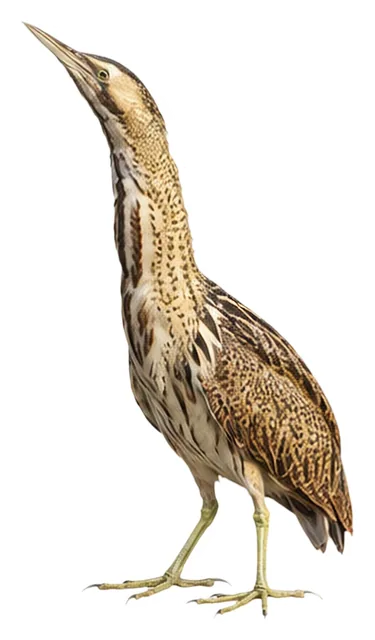
Eurasian Bittern
Botaurus stellaris (Linnaeus, 1758)
69–81 cmLength127 cmWingspan1.3 kgWeight
It is a reclusive bird of reeds, yellowish-brown and striped all over, with a male call as low as a foghorn.
Busiest months: May · Most records: United Kingdom, China, Poland
How to identify
Field marks
- Pale yellowish-brown body feathers covered in dark streaks and barring
- Black crown and nape
- Yellowish-brown supercilium; rufous-black moustachial stripe
- Yellow-green bill; yellow iris; green legs and feet
Male, female and young
The male is slightly larger than the female; juveniles resemble adults in plumage but are paler with less distinct markings.
Voice
In the breeding season the male gives a deep, sighing “boom”, like a foghorn or the lowing of cattle, audible from 5 km away on calm nights.
Where and when it's recorded
Busiest months: May · Most records: United Kingdom, China, Poland

Eurasian Bittern has been recorded at 1,069 of the 8,276 birding hotspots we track, in 84 countries and regions.
Records by month Northern Hemisphere
Where it's recorded most
- Minsmere RSPB ReserveUnited Kingdom3,103 records
- Ham Wall RSPB ReserveUnited Kingdom1,115 records
- Lakenheath Fen RSPB ReserveUnited Kingdom998 records
More places
- WWT London Wetland CentreUnited Kingdom725 records
- Leighton Moss RSPB ReserveUnited Kingdom715 records
- Otmoor RSPB ReserveUnited Kingdom662 records
- St Aidan's RSPB ReserveUnited Kingdom642 records
- Stodmarsh NNRUnited Kingdom625 records
- Cley & Salthouse Marshes NWT NR – Cley Marshes including Hides and Visitor CentreUnited Kingdom621 records
- Potteric Carr YWT NRUnited Kingdom619 records
Countries and regions with the most records
eBird records via GBIF up to 2024-12-31. A record means someone listed it; more records partly mean more birders, not more birds.
About
The Eurasian bittern or great bittern (Botaurus stellaris) is a wading bird in the bittern subfamily (Botaurinae) of the heron family Ardeidae. There are two subspecies, the northern race (B. s. stellaris) breeding in parts of Europe and across the Palearctic, as well as on the northern coast of Africa, while the southern race (B. s. capensis) is endemic to parts of southern Africa. It is a secretive bird, seldom seen in the open as it prefers to skulk in reed beds and thick vegetation near water bodies.
Excerpt from Wikipedia, CC BY-SA 4.0 · authors · Read more on Wikipedia
Questions
How big is the Eurasian Bittern?
The Eurasian Bittern is about 69–81 cm long, with a wingspan of 127 cm and weighs around 1.3 kg.
Where does the Eurasian Bittern live?
Its breeding range: Palearctic, Africa: widespread. It is most often recorded in United Kingdom, China and Poland.
When is the best time to see the Eurasian Bittern?
At the hotspots we track, it is recorded most in May (Northern Hemisphere).
Is the Eurasian Bittern endangered?
The IUCN Red List classifies the Eurasian Bittern as Least Concern.
What does the Eurasian Bittern eat?
Main food: Fish, shrimp & shellfish.
What family is the Eurasian Bittern in?
It belongs to the family Herons, Bitterns (Ardeidae), order Pelecaniformes.
At a glance
- Length
- 69–81 cm
- Wingspan
- 127 cm
- Weight
- 1.3 kg
- Habitat
- Wetland
- Diet
- Fish, shrimp & shellfish
- Lifestyle
- Active on the ground
- Migration
- Partial migrant
- Conservation
- Least Concern
More measurements
- Wing
- 324 mm
- Tail
- 98 mm
- Bill
- 77 mm
- Tarsus
- 94 mm
Averages from the AVONET dataset; length from field guides where available.
Range
Palearctic, Africa: widespread
Breeding range, IOC World Bird List 15.2
Classification
- Order
- Pelecaniformes
- Family
- Herons, Bitterns Ardeidae
- Genus
- Botaurus
Other birds in the genus Botaurus
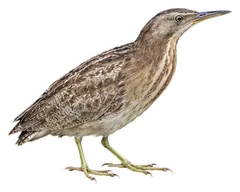 Australasian BitternBotaurus poiciloptilus
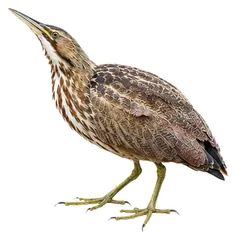 American BitternBotaurus lentiginosus
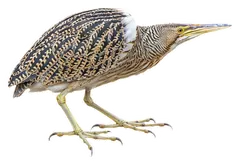 Pinnated BitternBotaurus pinnatus
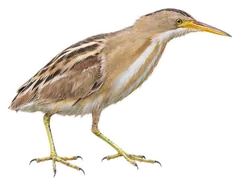 Stripe-backed BitternBotaurus involucris
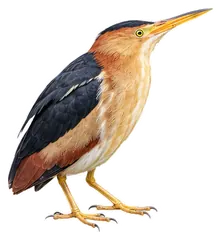 Least BitternBotaurus exilis
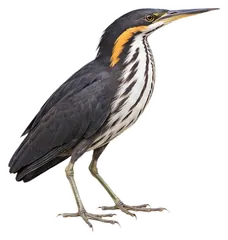 Black BitternBotaurus flavicollis
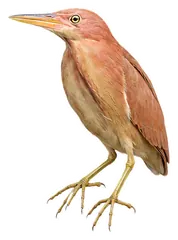 Cinnamon BitternBotaurus cinnamomeus
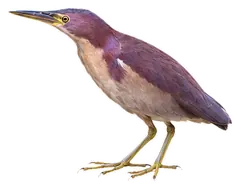 Von Schrenck's BitternBotaurus eurhythmus
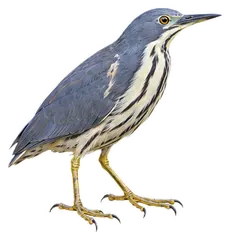 Dwarf BitternBotaurus sturmii
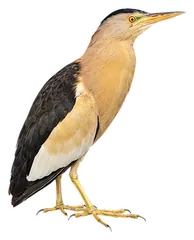 Little BitternBotaurus minutus
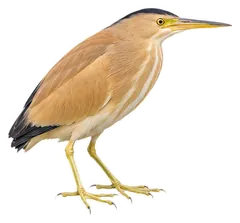 Yellow BitternBotaurus sinensis
 Black-backed BitternBotaurus dubius
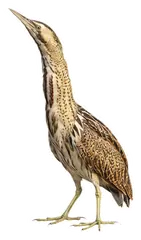
Download illustration
Free to use with credit: “Illustration: Bird Album (birdalbum.com)”. Drawn by AI from a reference photo by Francesco Veronesi. ↗

Heard it but can't see it? Mingji identifies birds by sound and photo, on your phone.