 Bird Album
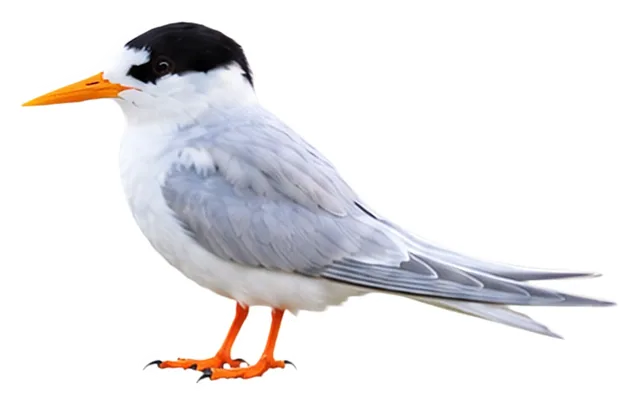
Fairy Tern
Sternula nereis Gould, 1843
25 cmLength72 gWeight
The fairy tern (Sternula nereis) is a small tern which is native to the southwestern Pacific.
Busiest months: January · Most records: Australia, New Zealand, New Caledonia
Where and when it's recorded

Fairy Tern has been recorded at 34 of the 8,171 birding hotspots we track, in 3 countries and regions.
Records by month Southern Hemisphere
Where it's recorded most
- Western Treatment PlantAustralia2,529 records
- Waipu Wildlife RefugeNew Zealand532 records
- Alfred Cove Nature ReserveAustralia480 records
More places
- Lake WollumboolaAustralia245 records
- RhyllAustralia94 records
- Rhyll InletAustralia77 records
- Western Treatment Plant – Western LagoonsAustralia76 records
- Ricketts PointAustralia73 records
- Western Treatment Plant – T Section PondsAustralia73 records
- Western Treatment Plant – Lake BorrieAustralia70 records
Countries and regions with the most records
eBird records via GBIF up to 2024-12-31. A record means someone listed it; more records partly mean more birders, not more birds.
About
The fairy tern (Sternula nereis) is a small tern which is native to the southwestern Pacific. It is listed as vulnerable by the IUCN and the New Zealand subspecies is critically endangered. Fairy terns live in colonies along the coastlines and estuaries of Australia, New Zealand, and New Caledonia, feeding largely on small, epipelagic schooling fishes, breeding in areas close to their feeding sites.
Excerpt from Wikipedia, CC BY-SA 4.0 · authors · Read more on Wikipedia
Questions
How big is the Fairy Tern?
The Fairy Tern is about 25 cm long and weighs around 72 g.
Where does the Fairy Tern live?
Its breeding range: Australasia: western to southeastern Australia, northern North Island (New Zealand) and New Caledonia. It is most often recorded in Australia, New Zealand and New Caledonia.
When is the best time to see the Fairy Tern?
At the hotspots we track, it is recorded most in January (Southern Hemisphere).
Is the Fairy Tern endangered?
The IUCN Red List classifies the Fairy Tern as Vulnerable.
What does the Fairy Tern eat?
Main food: Fish, shrimp & shellfish.
What family is the Fairy Tern in?
It belongs to the family Gulls, Terns, Skimmers (Laridae), order Charadriiformes.
At a glance
- Length
- 25 cm
- Weight
- 72 g
- Habitat
- Coast & tidal flats
- Diet
- Fish, shrimp & shellfish
- Lifestyle
- Feeds in the air
- Migration
- Partial migrant
- Conservation
- Vulnerable
More measurements
- Wing
- 178 mm
- Tail
- 81 mm
- Bill
- 35 mm
- Tarsus
- 15 mm
Averages from the AVONET dataset; length from field guides where available.
Range
Australasia: western to southeastern Australia, northern North Island (New Zealand) and New Caledonia
Breeding range, IOC World Bird List 15.2
Classification
- Order
- Charadriiformes
- Family
- Gulls, Terns, Skimmers Laridae
- Genus
- Sternula
Other birds in the genus Sternula
 Little TernSternula albifrons
 Saunders's TernSternula saundersi
 Least TernSternula antillarum
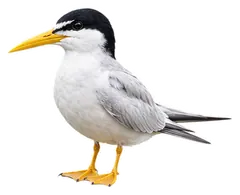 Yellow-billed TernSternula superciliaris
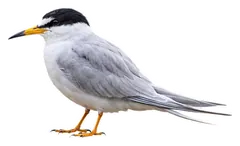 Peruvian TernSternula lorata
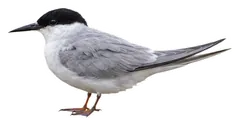 Damara TernSternula balaenarum
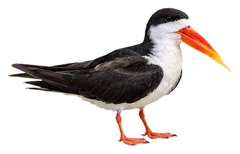 African SkimmerRynchops flavirostris
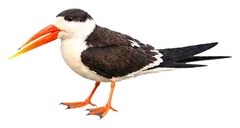 Indian SkimmerRynchops albicollis
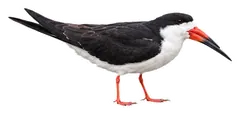 Black SkimmerRynchops niger
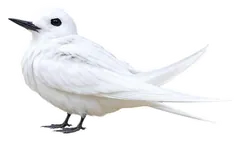 Atlantic White TernGygis alba
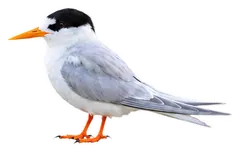
Download illustration
Free to use with credit: “Illustration: Bird Album (birdalbum.com)”. Drawn by AI from a reference photo by Shaun Lee. ↗
Heard it but can't see it? Mingji identifies birds by sound and photo, on your phone.