 Bird Album
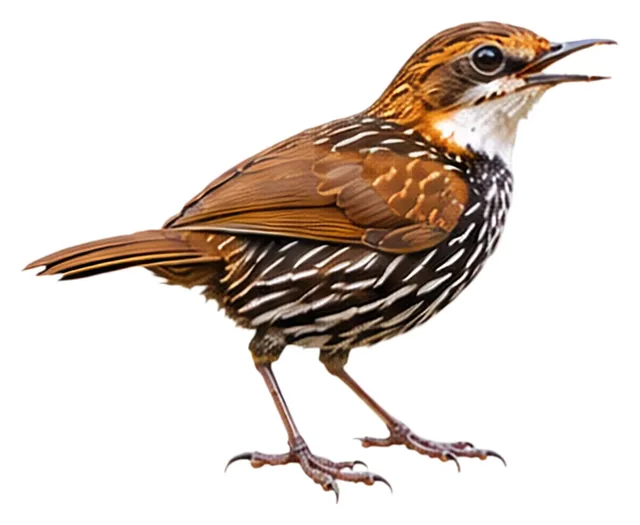
Falcated Wren-Babbler
Ptilocichla falcata Sharpe, 1877
40 gWeight
The falcated wren-babbler (Ptilocichla falcata) is a species of bird in the family Pellorneidae.
Busiest months: February · Most records: Philippines
Where and when it's recorded

Falcated Wren-Babbler has been recorded at 9 of the 8,171 birding hotspots we track, in 1 country or region.
Records by month Northern Hemisphere
Where it's recorded most
- Napsan, Puerto Princesa CityPhilippines117 records
- Iwahig Prison & Penal Farm – Balsahan River Trail, Puerto PrincesaPhilippines34 records
- Puerto Princesa Subterranean River National ParkPhilippines34 records
More places
- Iwahig Prison & Penal FarmPhilippines23 records
- Sabang, Puerto PrincesaPhilippines22 records
- Sabang – Cockatoo Viewpoint, Puerto PrincesaPhilippines19 records
- Zigzag Road, Puerto PrincesaPhilippines19 records
- Irawan Eco Park, Puerto PrincesaPhilippines7 records
- Iwahig Prison & Penal Farm – Ricefields, Puerto PrincesaPhilippines6 records
Countries and regions with the most records
eBird records via GBIF up to 2024-12-31. A record means someone listed it; more records partly mean more birders, not more birds.
About
The falcated wren-babbler (Ptilocichla falcata) is a species of bird in the family Pellorneidae. It is endemic to Palawan. Its natural habitat is tropical moist lowland forest.
Excerpt from Wikipedia, CC BY-SA 4.0 · authors · Read more on Wikipedia
Questions
How big is the Falcated Wren-Babbler?
The Falcated Wren-Babbler weighs around 40 g.
Where does the Falcated Wren-Babbler live?
Its breeding range: Oriental: Palawan (southwestern Philippines). It is most often recorded in Philippines.
When is the best time to see the Falcated Wren-Babbler?
At the hotspots we track, it is recorded most in February (Northern Hemisphere).
Is the Falcated Wren-Babbler endangered?
The IUCN Red List classifies the Falcated Wren-Babbler as Vulnerable.
What does the Falcated Wren-Babbler eat?
Main food: Insects & other invertebrates.
What family is the Falcated Wren-Babbler in?
It belongs to the family Ground Babblers (Pellorneidae), order Passerines (Passeriformes).
At a glance
- Weight
- 40 g
- Habitat
- Forest
- Diet
- Insects & other invertebrates
- Lifestyle
- Varied
- Migration
- Resident (barely migrates)
- Conservation
- Vulnerable
More measurements
- Wing
- 83 mm
- Tail
- 65 mm
- Bill
- 23 mm
- Tarsus
- 31 mm
Averages from the AVONET dataset; length from field guides where available.
Range
Oriental: Palawan (southwestern Philippines)
Breeding range, IOC World Bird List 15.2
Classification
- Order
- Passerines Passeriformes
- Family
- Ground Babblers Pellorneidae
- Genus
- Ptilocichla
Other birds in the genus Ptilocichla
 Striated Wren-BabblerPtilocichla mindanensis
 Bornean Wren-BabblerPtilocichla leucogrammica
 Indian GrassbirdGraminicola bengalensis
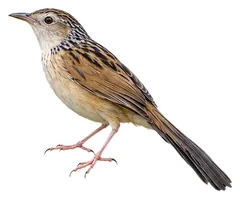 Chinese GrassbirdGraminicola striatus
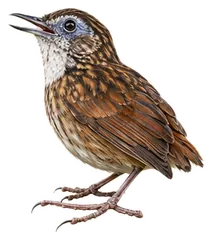 Large Wren-BabblerTurdinus macrodactylus
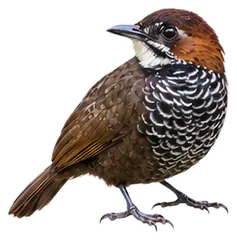 Marbled Wren-BabblerTurdinus marmoratus
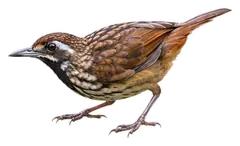 Black-throated Wren-BabblerTurdinus atrigularis
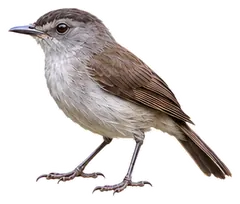 Sooty-capped BabblerMalacopteron affine
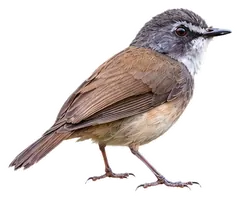 Grey-breasted BabblerMalacopteron albogulare
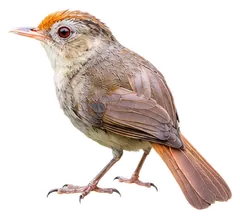 Scaly-crowned BabblerMalacopteron cinereum
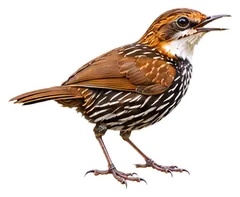
Download illustration
Free to use with credit: “Illustration: Bird Album (birdalbum.com)”. Drawn by AI from a reference photo by matthewkwan. ↗
Heard it but can't see it? Mingji identifies birds by sound and photo, on your phone.
In other languages
- EnglishFalcated Wren-Babbler
- 简体中文菲律宾地鹛
- 繁體中文菲律賓地鶥
- 日本語パラワンミノチメドリ
- DeutschPalawanwolldrossling
- FrançaisTurdinule de Palawan
- EspañolRatina de Palawan
- Portuguêstordina-estriada-de-palauã
- ItalianoGarrulo scricciolo falcato
- NederlandsPalawanwoltimalia
- РусскийПалаванский питтодрозд
- Svenskapalawansmygtimalia
- DanskBalabac Jordtimalie
- Polskibiałopiórek rdzawogłowy