 Bird Album
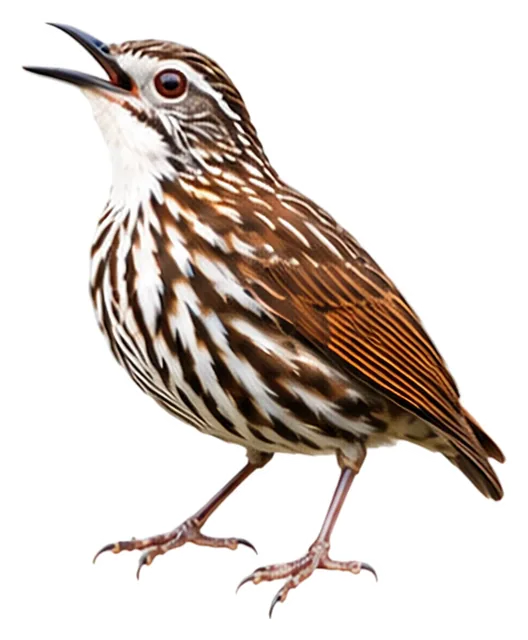
Striated Wren-Babbler
Ptilocichla mindanensis (Blasius, W, 1890)
29 gWeight
The striated wren-babbler (Ptilocichla mindanensis) is a species of passerine bird in the Pellorneidae family.
Busiest months: February–March · Most records: Philippines
Where and when it's recorded

Striated Wren-Babbler has been recorded at 16 of the 8,171 birding hotspots we track, in 1 country or region.
Records by month Northern Hemisphere
Where it's recorded most
- Raja Sikatuna National ParkPhilippines289 records
- Bislig lowlands – PICOP Road 42Philippines112 records
- Bislig lowlands – PICOP Road 4Philippines104 records
More places
- Bislig lowlands – PICOP Roads 1-4Philippines79 records
- Brgy. Kuden, Senator Ninoy AquinoPhilippines49 records
- Bislig lowlands – 321 Quarry TrailPhilippines34 records
- Lake HolonPhilippines34 records
- Mt. Kitanglad Range Natural Park – Del Monte LodgePhilippines18 records
- Pasonanca Natural Park, Zamboanga City – BalunoPhilippines10 records
- Mt. Talomo – 1200masl, Davao CityPhilippines6 records
Countries and regions with the most records
eBird records via GBIF up to 2024-12-31. A record means someone listed it; more records partly mean more birders, not more birds.
About
The striated wren-babbler (Ptilocichla mindanensis) is a species of passerine bird in the Pellorneidae family. It is endemic to the Philippines found on the islands of Bohol, Samar, Leyte, Basilan, Dinagat Islands and Mindanao. Its natural habitats are tropical moist lowland forest and the lower reaches of tropical moist montane forest.
Excerpt from Wikipedia, CC BY-SA 4.0 · authors · Read more on Wikipedia
Questions
How big is the Striated Wren-Babbler?
The Striated Wren-Babbler weighs around 29 g.
Where does the Striated Wren-Babbler live?
Its breeding range: Oriental: East Visayas and Mindanao group (east-central, southern Philippines). It is most often recorded in Philippines.
When is the best time to see the Striated Wren-Babbler?
At the hotspots we track, it is recorded most in February and March (Northern Hemisphere).
Is the Striated Wren-Babbler endangered?
The IUCN Red List classifies the Striated Wren-Babbler as Least Concern.
What does the Striated Wren-Babbler eat?
Main food: Insects & other invertebrates.
What family is the Striated Wren-Babbler in?
It belongs to the family Ground Babblers (Pellorneidae), order Passerines (Passeriformes).
At a glance
- Weight
- 29 g
- Habitat
- Forest
- Diet
- Insects & other invertebrates
- Lifestyle
- Varied
- Migration
- Resident (barely migrates)
- Conservation
- Least Concern
More measurements
- Wing
- 69 mm
- Tail
- 42 mm
- Bill
- 19 mm
- Tarsus
- 26 mm
Averages from the AVONET dataset; length from field guides where available.
Range
Oriental: East Visayas and Mindanao group (east-central, southern Philippines)
Breeding range, IOC World Bird List 15.2
Classification
- Order
- Passerines Passeriformes
- Family
- Ground Babblers Pellorneidae
- Genus
- Ptilocichla
Other birds in the genus Ptilocichla
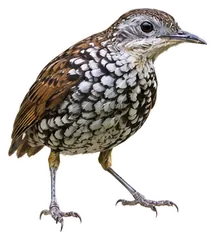 Bornean Wren-BabblerPtilocichla leucogrammica
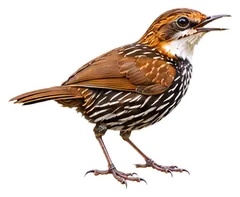 Falcated Wren-BabblerPtilocichla falcata
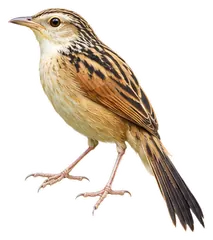 Indian GrassbirdGraminicola bengalensis
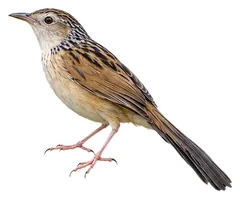 Chinese GrassbirdGraminicola striatus
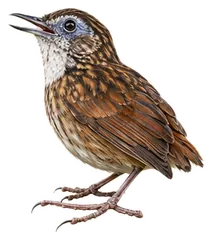 Large Wren-BabblerTurdinus macrodactylus
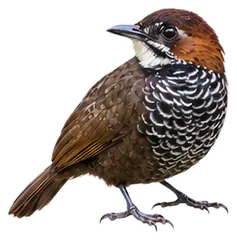 Marbled Wren-BabblerTurdinus marmoratus
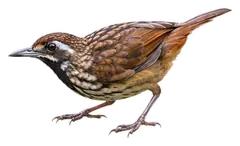 Black-throated Wren-BabblerTurdinus atrigularis
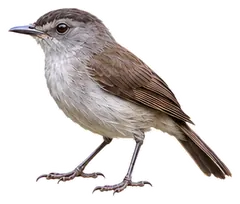 Sooty-capped BabblerMalacopteron affine
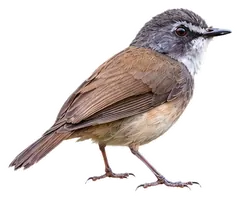 Grey-breasted BabblerMalacopteron albogulare
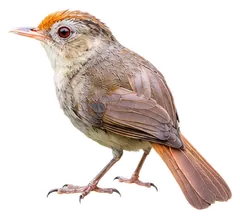 Scaly-crowned BabblerMalacopteron cinereum
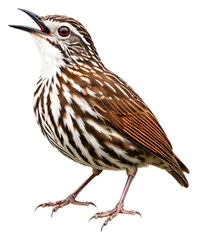
Download illustration
Free to use with credit: “Illustration: Bird Album (birdalbum.com)”. Drawn by AI from a reference photo by sheng860419. ↗
Heard it but can't see it? Mingji identifies birds by sound and photo, on your phone.
In other languages
- EnglishStriated Wren-Babbler
- 简体中文条纹地鹛
- 繁體中文條紋地鶥
- 日本語ミノチメドリ
- DeutschPhilippinenwolldrossling
- FrançaisTurdinule des Philippines
- EspañolRatina de Mindanao
- Portuguêstordina-estriada-de-mindanau
- ItalianoGarrulo scricciolo striato
- NederlandsGestreepte Woltimalia
- РусскийФилиппинский питтодрозд
- Svenskamindanaosmygtimalia
- DanskMindanao Jordtimalie
- Polskibiałopiórek brązowy