 Bird Album
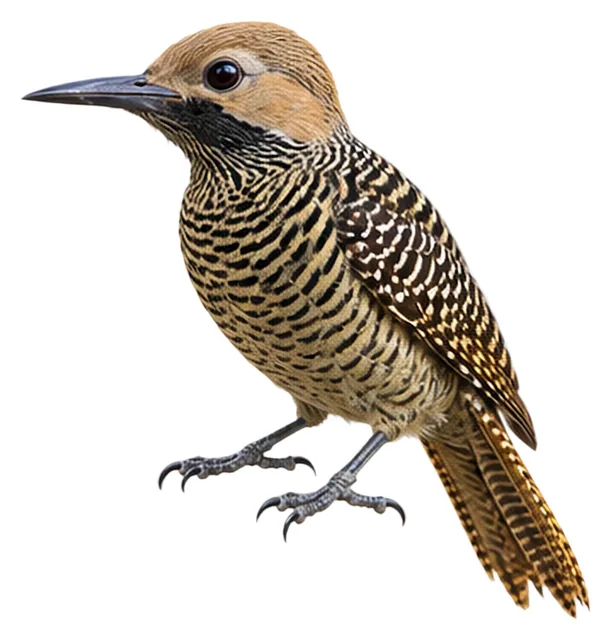
Fernandina's Flicker
Colaptes fernandinae Vigors, 1827
135 gWeight
Fernandina's flicker (Colaptes fernandinae), also known as the Cuban flicker, is a species of bird in the woodpecker family, Picidae.
Busiest months: February–March · Most records: Cuba
Where and when it's recorded

Fernandina's Flicker has been recorded at 13 of the 8,171 birding hotspots we track, in 1 country or region.
Records by month Northern Hemisphere
Where it's recorded most
- Soplillar – Sabanas de PalpiteCuba503 records
- Refugio de Fauna BermejaCuba431 records
- Reserva de la Biosfera Sierra del Rosario – Las TerrazasCuba77 records
More places
- PN Ciénaga de Zapata – Santo TomasCuba68 records
- Hacienda CortinaCuba65 records
- Playa LargaCuba53 records
- Criadero de CocodrilosCuba37 records
- PN Cienaga de Zapata – Las SalinasCuba28 records
- Sierra del Chorillo – Sendero de las AvesCuba24 records
- Zapata – La TurbaCuba23 records
Countries and regions with the most records
eBird records via GBIF up to 2024-12-31. A record means someone listed it; more records partly mean more birders, not more birds.
About
Fernandina's flicker (Colaptes fernandinae), also known as the Cuban flicker, is a species of bird in the woodpecker family, Picidae. Endemic to Cuba, it is severely threatened by habitat loss and is one of the most endangered species of woodpecker in the world.
Excerpt from Wikipedia, CC BY-SA 4.0 · authors · Read more on Wikipedia
Questions
How big is the Fernandina's Flicker?
The Fernandina's Flicker weighs around 135 g.
Where does the Fernandina's Flicker live?
Its breeding range: North America: Cuba. It is most often recorded in Cuba.
When is the best time to see the Fernandina's Flicker?
At the hotspots we track, it is recorded most in February and March (Northern Hemisphere).
Is the Fernandina's Flicker endangered?
The IUCN Red List classifies the Fernandina's Flicker as Endangered.
What does the Fernandina's Flicker eat?
Main food: Insects & other invertebrates.
What family is the Fernandina's Flicker in?
It belongs to the family Woodpeckers (Picidae), order Piciformes.
At a glance
- Weight
- 135 g
- Habitat
- Woodland
- Diet
- Insects & other invertebrates
- Lifestyle
- Active on the ground
- Migration
- Resident (barely migrates)
- Conservation
- Endangered
More measurements
- Wing
- 144 mm
- Tail
- 126 mm
- Bill
- 41 mm
- Tarsus
- 29 mm
Averages from the AVONET dataset; length from field guides where available.
Range
North America: Cuba
Breeding range, IOC World Bird List 15.2
Classification
- Order
- Piciformes
- Family
- Woodpeckers Picidae
- Genus
- Colaptes
Other birds in the genus Colaptes
 Golden-olive WoodpeckerColaptes rubiginosus
 Bronze-winged WoodpeckerColaptes aeruginosus
 Grey-crowned WoodpeckerColaptes auricularis
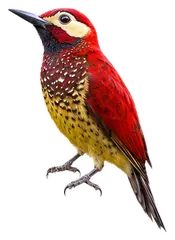 Crimson-mantled WoodpeckerColaptes rivolii
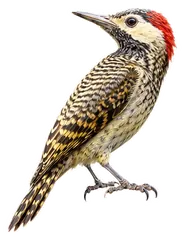 Black-necked WoodpeckerColaptes atricollis
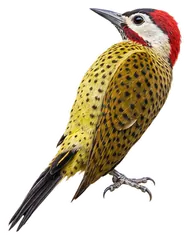 Spot-breasted WoodpeckerColaptes punctigula
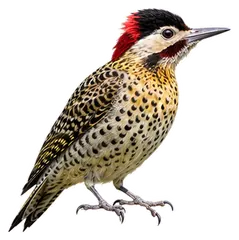 Green-barred WoodpeckerColaptes melanochloros
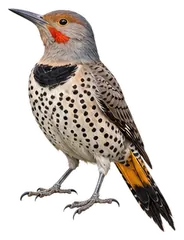 Northern FlickerColaptes auratus
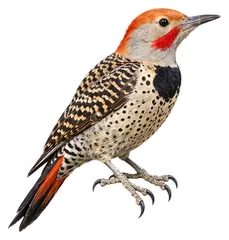 Guatemalan FlickerColaptes mexicanoides
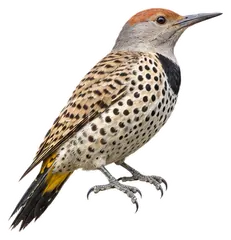 Gilded FlickerColaptes chrysoides
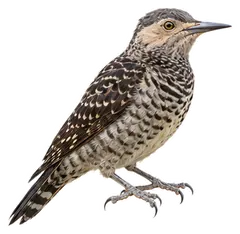 Chilean FlickerColaptes pitius
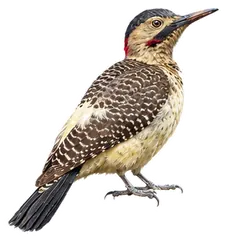 Andean FlickerColaptes rupicola
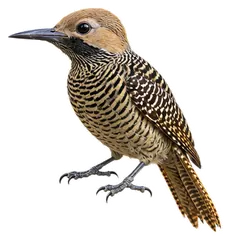
Download illustration
Free to use with credit: “Illustration: Bird Album (birdalbum.com)”. Drawn by AI from a reference photo by Cheryl Rosenfeld. ↗
Heard it but can't see it? Mingji identifies birds by sound and photo, on your phone.
In other languages
- EnglishFernandina's Flicker
- 简体中文古巴扑翅䴕
- 繁體中文古巴撲動鴷
- 日本語キューバハシボソキツツキ
- DeutschKubaspecht
- FrançaisPic de Fernandina
- EspañolCarpintero churroso
- Portuguêspica-pau-cubano
- ItalianoPicchio di Fernandina
- NederlandsCubaanse Grondspecht
- РусскийСапатский дятел
- Svenskazapataspett
- DanskKrumnæbbet Guldspætte
- Polskidzięcioł krzywodzioby