 Bird Album
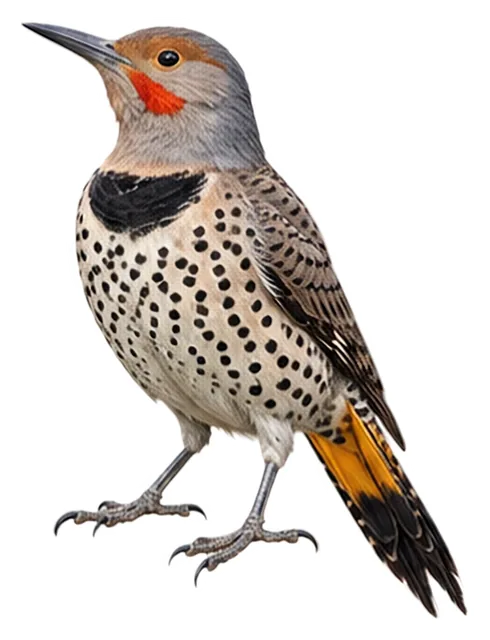
Northern Flicker
Colaptes auratus (Linnaeus, 1758)
132 gWeight
The northern flicker or common flicker (Colaptes auratus) is a medium-sized bird of the woodpecker family.
Busiest months: May · Most records: United States, Canada, Cayman Islands
Where and when it's recorded

Northern Flicker has been recorded at 812 of the 8,171 birding hotspots we track, in 7 countries and regions.
Records by month Northern Hemisphere
Where it's recorded most
- Central ParkUnited States21,239 records
- Prospect ParkUnited States17,570 records
- Union Bay Natural Area/Montlake FillUnited States17,255 records
More places
- Montrose Point Bird Sanctuary, Lincoln Park, ChicagoUnited States17,123 records
- Point Pelee National ParkCanada15,592 records
- Billy Frank Jr. Nisqually NWRUnited States13,049 records
- Magee Marsh – BoardwalkUnited States12,646 records
- Mount Auburn CemeteryUnited States12,623 records
- Calgary – Inglewood Bird SanctuaryCanada12,547 records
- Reifel Bird SanctuaryCanada12,489 records
Countries and regions with the most records
eBird records via GBIF up to 2024-12-31. A record means someone listed it; more records partly mean more birders, not more birds.
About
The northern flicker or common flicker (Colaptes auratus) is a medium-sized bird of the woodpecker family. It is native to most of North America, parts of Central America, Cuba, and the Cayman Islands, and is one of the few woodpecker species that migrate. Over 100 common names for the northern flicker are known, including yellowhammer (not to be confused with the Eurasian yellowhammer (Emberiza citrinella)), clape, gaffer woodpecker, harry-wicket, heigh-ho, wake-up, walk-up, wick-up, yarrup, and gawker bird.
Excerpt from Wikipedia, CC BY-SA 4.0 · authors · Read more on Wikipedia
Questions
How big is the Northern Flicker?
The Northern Flicker weighs around 132 g.
Where does the Northern Flicker live?
Its breeding range: North America, Middle America: widespread. It is most often recorded in United States, Canada and Cayman Islands.
When is the best time to see the Northern Flicker?
At the hotspots we track, it is recorded most in May (Northern Hemisphere).
Is the Northern Flicker endangered?
The IUCN Red List classifies the Northern Flicker as Least Concern.
What does the Northern Flicker eat?
Main food: Insects & other invertebrates.
What family is the Northern Flicker in?
It belongs to the family Woodpeckers (Picidae), order Piciformes.
At a glance
- Weight
- 132 g
- Habitat
- Shrubland
- Diet
- Insects & other invertebrates
- Lifestyle
- Varied
- Migration
- Partial migrant
- Conservation
- Least Concern
More measurements
- Wing
- 157 mm
- Tail
- 110 mm
- Bill
- 40 mm
- Tarsus
- 29 mm
Averages from the AVONET dataset; length from field guides where available.
Range
North America, Middle America: widespread
Breeding range, IOC World Bird List 15.2
Classification
- Order
- Piciformes
- Family
- Woodpeckers Picidae
- Genus
- Colaptes
Other birds in the genus Colaptes
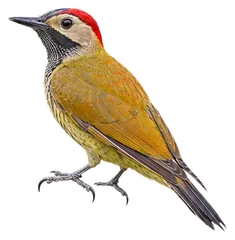 Golden-olive WoodpeckerColaptes rubiginosus
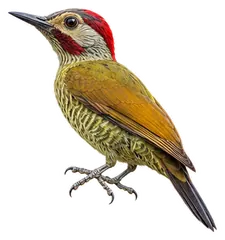 Bronze-winged WoodpeckerColaptes aeruginosus
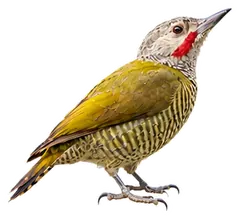 Grey-crowned WoodpeckerColaptes auricularis
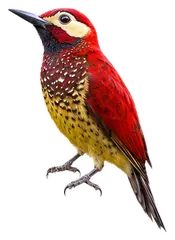 Crimson-mantled WoodpeckerColaptes rivolii
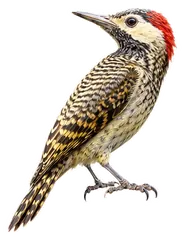 Black-necked WoodpeckerColaptes atricollis
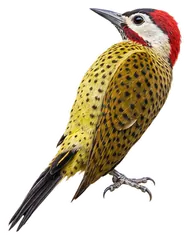 Spot-breasted WoodpeckerColaptes punctigula
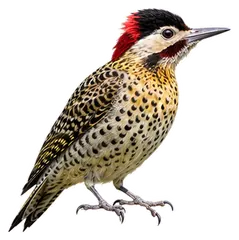 Green-barred WoodpeckerColaptes melanochloros
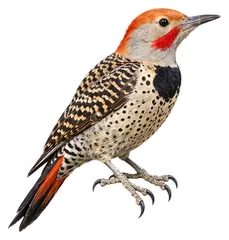 Guatemalan FlickerColaptes mexicanoides
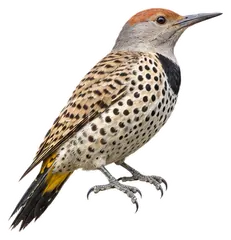 Gilded FlickerColaptes chrysoides
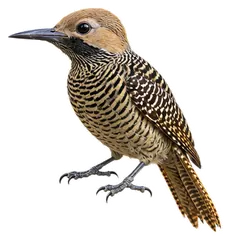 Fernandina's FlickerColaptes fernandinae
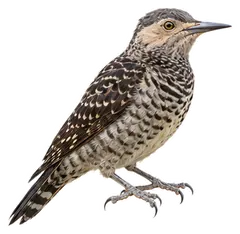 Chilean FlickerColaptes pitius
 Andean FlickerColaptes rupicola
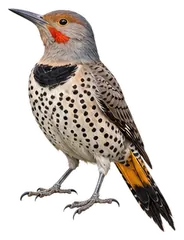
Download illustration
Free to use with credit: “Illustration: Bird Album (birdalbum.com)”. Drawn by AI from a reference photo by maticus. ↗
Heard it but can't see it? Mingji identifies birds by sound and photo, on your phone.