 Bird Album
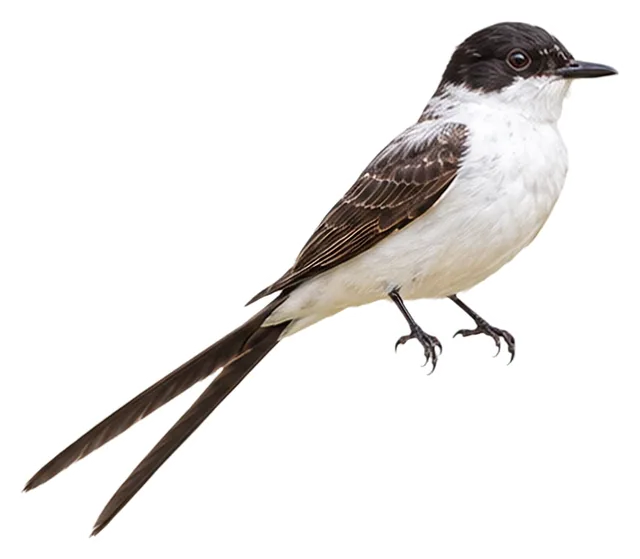
Fork-tailed Flycatcher
Tyrannus savana Daudin, 1802
32 gWeight
The fork-tailed flycatcher (Tyrannus savana) is a passerine bird of the tyrant flycatcher family and is a member of a genus typically referred to as kingbirds.
Most records: Argentina, Brazil, Colombia
Where and when it's recorded

Fork-tailed Flycatcher has been recorded at 841 of the 8,171 birding hotspots we track, in 35 countries and regions.
Records by month Southern Hemisphere
Where it's recorded most
- Reserva Ecológica Costanera SurArgentina2,319 records
- Posada El GalloVenezuela1,040 records
- Medio Queso wetlandCosta Rica987 records
More places
- Carretera a Juan HombrónPanama933 records
- Ciudad Neily rice fields south of HospitalCosta Rica887 records
- Camino a Las Barrancas – Km 0-5Mexico673 records
- RN Laguna de SonsoColombia586 records
- PN Iguazú – Área CataratasArgentina567 records
- Spanish Lookout – Rice FieldsBelize567 records
- Reserva Ecológica Ciudad Universitaria - Costanera NorteArgentina553 records
Countries and regions with the most records
eBird records via GBIF up to 2024-12-31. A record means someone listed it; more records partly mean more birders, not more birds.
About
The fork-tailed flycatcher (Tyrannus savana) is a passerine bird of the tyrant flycatcher family and is a member of a genus typically referred to as kingbirds. Named for the long, forked tail, particularly in males, fork-tailed flycatchers are seen in shrubland, savanna, lightly forested and grassland areas, from southern Mexico to Argentina. They are frequently observed on conspicuous perches whence they sally after insect prey.
Excerpt from Wikipedia, CC BY-SA 4.0 · authors · Read more on Wikipedia
Questions
How big is the Fork-tailed Flycatcher?
The Fork-tailed Flycatcher weighs around 32 g.
Where does the Fork-tailed Flycatcher live?
Its breeding range: Middle America, South America: southern Mexico to Uruguay. It is most often recorded in Argentina, Brazil and Colombia.
Is the Fork-tailed Flycatcher endangered?
The IUCN Red List classifies the Fork-tailed Flycatcher as Least Concern.
What does the Fork-tailed Flycatcher eat?
Main food: Insects & other invertebrates.
What family is the Fork-tailed Flycatcher in?
It belongs to the family Tyrant Flycatchers, Calyptura (Tyrannidae), order Passerines (Passeriformes).
At a glance
- Weight
- 32 g
- Habitat
- Grassland
- Diet
- Insects & other invertebrates
- Lifestyle
- Perches in trees
- Migration
- Migratory
- Conservation
- Least Concern
More measurements
- Wing
- 106 mm
- Tail
- 215 mm
- Bill
- 20 mm
- Tarsus
- 18 mm
Averages from the AVONET dataset; length from field guides where available.
Range
Middle America, South America: southern Mexico to Uruguay
Breeding range, IOC World Bird List 15.2
Classification
- Order
- Passerines Passeriformes
- Family
- Tyrant Flycatchers, Calyptura Tyrannidae
- Genus
- Tyrannus
Other birds in the genus Tyrannus
 Snowy-throated KingbirdTyrannus niveigularis
 White-throated KingbirdTyrannus albogularis
 Tropical KingbirdTyrannus melancholicus
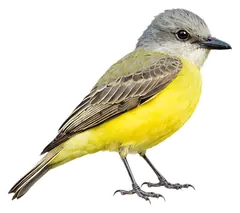 Couch's KingbirdTyrannus couchii
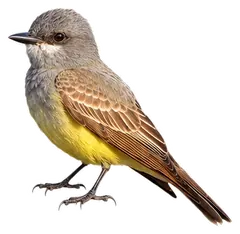 Cassin's KingbirdTyrannus vociferans
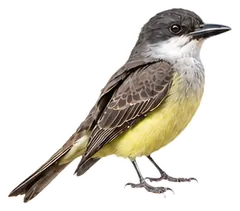 Thick-billed KingbirdTyrannus crassirostris
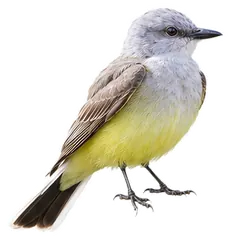 Western KingbirdTyrannus verticalis
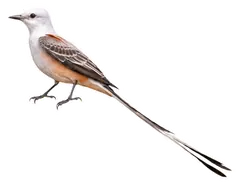 Scissor-tailed FlycatcherTyrannus forficatus
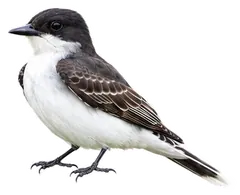 Eastern KingbirdTyrannus tyrannus
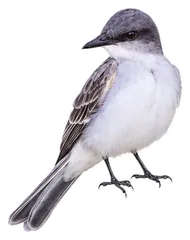 Grey KingbirdTyrannus dominicensis
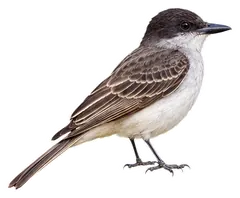 Giant KingbirdTyrannus cubensis
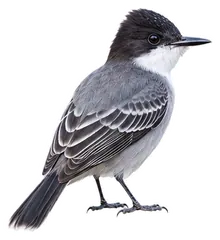 Loggerhead KingbirdTyrannus caudifasciatus
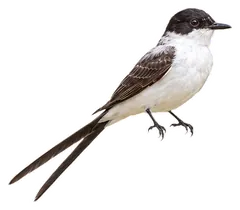
Download illustration
Free to use with credit: “Illustration: Bird Album (birdalbum.com)”. Drawn by AI from a reference photo by Guilherme Cameis Freda. ↗
Heard it but can't see it? Mingji identifies birds by sound and photo, on your phone.
In other languages
- EnglishFork-tailed Flycatcher
- 简体中文叉尾王霸鹟
- 繁體中文叉尾霸鶲
- 日本語ズグロエンビタイランチョウ
- DeutschGabelschwanz-Königstyrann
- FrançaisTyran des savanes
- EspañolTijereta sabanera
- Portuguêstesourinha-do-campo
- ItalianoTiranno codaforcuta meridionale
- NederlandsVorkstaartkoningstiran
- РусскийВилохвостый тиранн
- Svenskagaffelstjärtad kungstyrann
- DanskLanghalet Kongetyran
- Polskityran widłosterny