 Bird Album
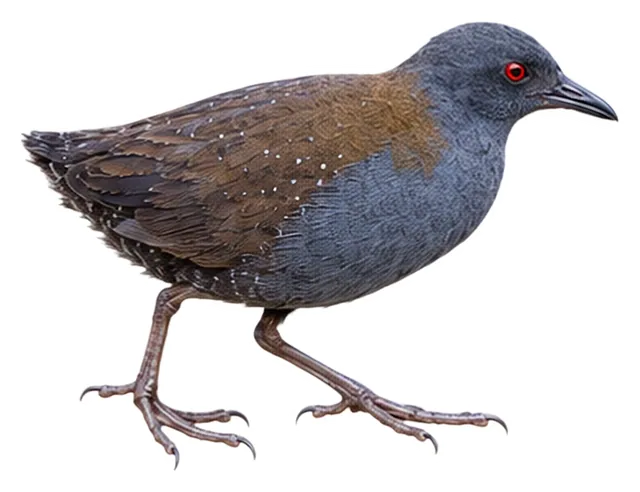
Galapagos Crake
Laterallus spilonota (Gould, 1841)
15 cmLength40 gWeight
The Galapagos crake (Laterallus spilonota), also called the Galapagos rail and Darwin's rail, is a vulnerable species of rail in subfamily Rallinae of family Rallidae, the rails, gallinules, and coots.
Where and when it's recorded
No records at the public birding hotspots we track. It may be rare, remote, or its locations protected.
About
The Galapagos crake (Laterallus spilonota), also called the Galapagos rail and Darwin's rail, is a vulnerable species of rail in subfamily Rallinae of family Rallidae, the rails, gallinules, and coots. It is endemic to the Galápagos Islands. It resembles its sister species, the black rail of the Americas, from which it diverged 1.2 million years ago.
Excerpt from Wikipedia, CC BY-SA 4.0 · authors · Read more on Wikipedia
Questions
How big is the Galapagos Crake?
The Galapagos Crake is about 15 cm long and weighs around 40 g.
Where does the Galapagos Crake live?
Its breeding range: South America: Galápagos.
Is the Galapagos Crake endangered?
The IUCN Red List classifies the Galapagos Crake as Vulnerable.
What does the Galapagos Crake eat?
Main food: Omnivore.
What family is the Galapagos Crake in?
It belongs to the family Rails, Crakes & Coots (Rallidae), order Gruiformes.
At a glance
- Length
- 15 cm
- Weight
- 40 g
- Habitat
- Forest
- Diet
- Omnivore
- Lifestyle
- Active on the ground
- Migration
- Resident (barely migrates)
- Conservation
- Vulnerable
More measurements
- Wing
- 66 mm
- Tail
- 24 mm
- Bill
- 16 mm
- Tarsus
- 21 mm
Averages from the AVONET dataset; length from field guides where available.
Range
South America: Galápagos
Breeding range, IOC World Bird List 15.2
Classification
- Order
- Gruiformes
- Family
- Rails, Crakes & Coots Rallidae
- Genus
- Laterallus
Other birds in the genus Laterallus
 Speckled RailLaterallus notatus
 Dot-winged CrakeLaterallus spiloptera
 Inaccessible Island RailLaterallus rogersi
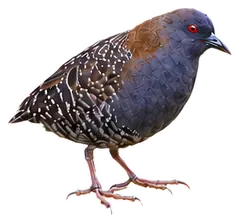 Black RailLaterallus jamaicensis
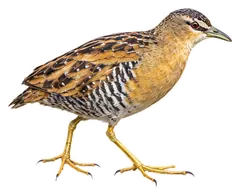 Yellow-breasted CrakeLaterallus flaviventer
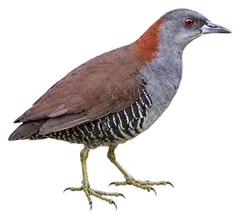 Grey-breasted CrakeLaterallus exilis
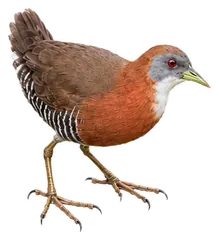 White-throated CrakeLaterallus albigularis
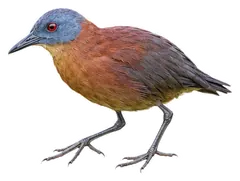 Ruddy CrakeLaterallus ruber
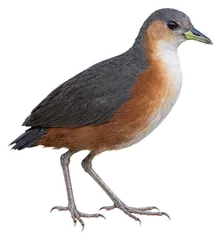 Rusty-flanked CrakeLaterallus levraudi
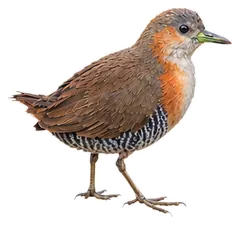 Rufous-sided CrakeLaterallus melanophaius
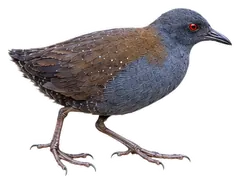
Download illustration
Free to use with credit: “Illustration: Bird Album (birdalbum.com)”. Drawn by AI from a reference photo by Dolma Alonso. ↗
Heard it but can't see it? Mingji identifies birds by sound and photo, on your phone.
In other languages
- EnglishGalapagos Crake
- 简体中文加岛田鸡
- 繁體中文加拉巴哥南美田雞
- 日本語ガラパゴスコビトクイナ
- DeutschGalápagosralle
- FrançaisRâle des Galapagos
- EspañolPolluela de Galápagos
- Portuguêssanã-das-galápagos
- ItalianoRallo delle Galapagos
- NederlandsGalápagosdwergral
- РусскийГалапагосский коростелёк
- Svenskagalápagosdvärgrall
- DanskGalápagos Dværgrikse
- Polskiderkaczyk galapagoski