 Bird Album
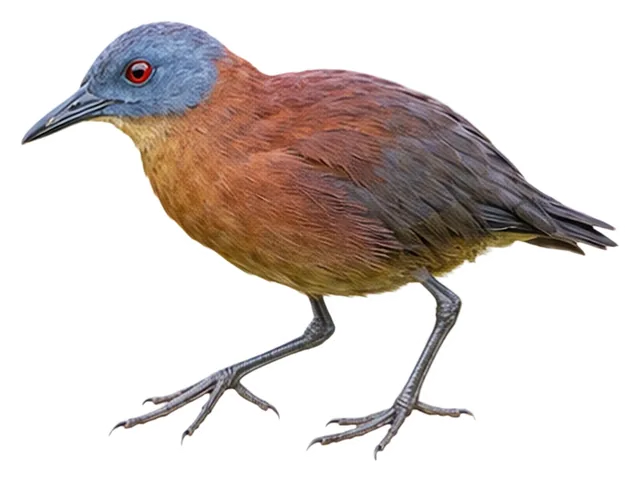
Ruddy Crake
Laterallus ruber (Sclater, PL & Salvin, 1860)
14–16 cmLength44 gWeight
The ruddy crake (Laterallus ruber) is a bird in the rail family, Rallidae.
Busiest months: October · Most records: Belize, Mexico, Honduras
Where and when it's recorded

Ruddy Crake has been recorded at 101 of the 8,171 birding hotspots we track, in 6 countries and regions.
Records by month Northern Hemisphere
Where it's recorded most
- MEX - Veracruz- MInatitlan - Pantano de Santa AlejandrinMexico2,842 records
- Cattle Landing – waterfrontBelize2,180 records
- The DumpBelize788 records
More places
- Zamorano Univ. – Campus Farms and River 740-815 maslHonduras711 records
- Malecon TajamarMexico685 records
- Playa del PuebloGuatemala646 records
- Dawson Creek & Lamanai savannaBelize614 records
- San Cristóbal Verapaz – Laguneta ChichojGuatemala562 records
- San Cristóbal Verapaz – Laguna ChichojGuatemala555 records
- PN Laguna del Tigre – Estación Biológica Las GuacamayasGuatemala427 records
Countries and regions with the most records
eBird records via GBIF up to 2024-12-31. A record means someone listed it; more records partly mean more birders, not more birds.
About
The ruddy crake (Laterallus ruber) is a bird in the rail family, Rallidae. Other names the ruddy crake is known by are "red rail", "ruddy rail" and "red crake".
Excerpt from Wikipedia, CC BY-SA 4.0 · authors · Read more on Wikipedia
Questions
How big is the Ruddy Crake?
The Ruddy Crake is about 14–16 cm long and weighs around 44 g.
Where does the Ruddy Crake live?
Its breeding range: Middle America: eastern Mexico to Costa Rica. It is most often recorded in Belize, Mexico and Honduras.
When is the best time to see the Ruddy Crake?
At the hotspots we track, it is recorded most in October (Northern Hemisphere).
Is the Ruddy Crake endangered?
The IUCN Red List classifies the Ruddy Crake as Least Concern.
What does the Ruddy Crake eat?
Main food: Fish, shrimp & shellfish.
What family is the Ruddy Crake in?
It belongs to the family Rails, Crakes & Coots (Rallidae), order Gruiformes.
At a glance
- Length
- 14–16 cm
- Weight
- 44 g
- Habitat
- Wetland
- Diet
- Fish, shrimp & shellfish
- Lifestyle
- Active on the ground
- Migration
- Resident (barely migrates)
- Conservation
- Least Concern
More measurements
- Wing
- 82 mm
- Tail
- 34 mm
- Bill
- 21 mm
- Tarsus
- 33 mm
Averages from the AVONET dataset; length from field guides where available.
Range
Middle America: eastern Mexico to Costa Rica
Breeding range, IOC World Bird List 15.2
Classification
- Order
- Gruiformes
- Family
- Rails, Crakes & Coots Rallidae
- Genus
- Laterallus
Other birds in the genus Laterallus
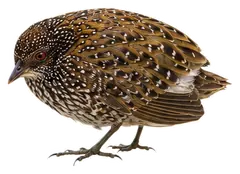 Speckled RailLaterallus notatus
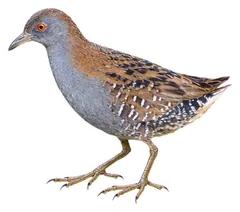 Dot-winged CrakeLaterallus spiloptera
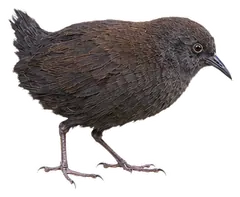 Inaccessible Island RailLaterallus rogersi
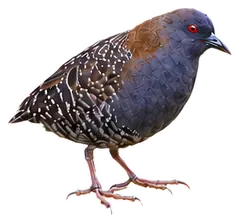 Black RailLaterallus jamaicensis
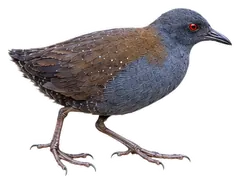 Galapagos CrakeLaterallus spilonota
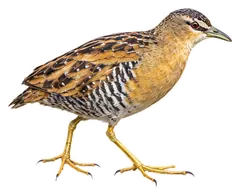 Yellow-breasted CrakeLaterallus flaviventer
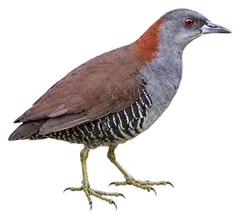 Grey-breasted CrakeLaterallus exilis
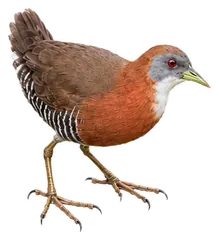 White-throated CrakeLaterallus albigularis
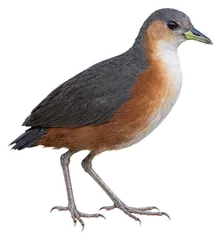 Rusty-flanked CrakeLaterallus levraudi
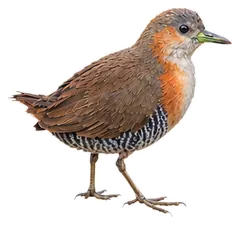 Rufous-sided CrakeLaterallus melanophaius
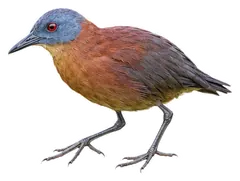
Download illustration
Free to use with credit: “Illustration: Bird Album (birdalbum.com)”. Drawn by AI from a reference photo by wild_nature_clicks. ↗
Heard it but can't see it? Mingji identifies birds by sound and photo, on your phone.