 Bird Album
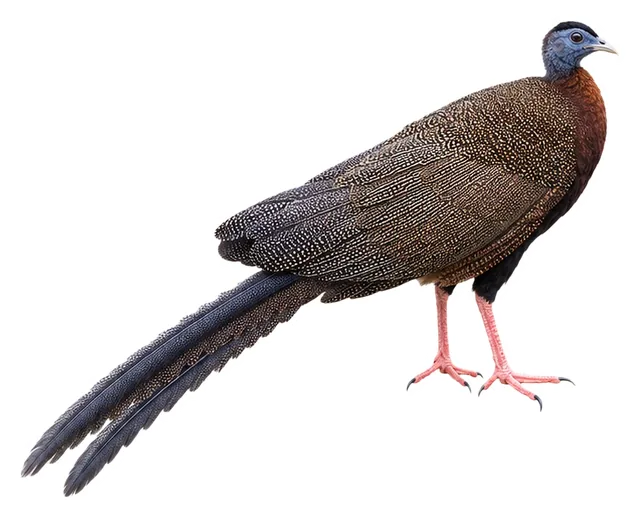
Great Argus
Argusianus argus (Linnaeus, 1766)
2 kgWeight
The great argus or greater argus (Argusianus argus) is a large species of pheasant native to the jungles of Borneo, Sumatra and the Malay Peninsula in southeast Asia.
Busiest months: July · Most records: Malaysia, Thailand, Indonesia
Where and when it's recorded

Great Argus has been recorded at 70 of the 8,171 birding hotspots we track, in 4 countries and regions.
Records by month Northern Hemisphere
Where it's recorded most
- Danum Valley Borneo Rainforest LodgeMalaysia900 records
- Danum Valley Field CentreMalaysia710 records
- Taman Negara NP Kuala TahanMalaysia368 records
More places
- Gunung Panti Recreational Forest – Panti Bird Sanctuary and North AreaMalaysia309 records
- Earth Lodge, Ulu MudaMalaysia212 records
- Deramakot Forest ReserveMalaysia180 records
- Khao Luang NP – Krung Ching Waterfall trail & campgroundThailand168 records
- Hala – Bala Wildlife Sanctuary – BalaThailand133 records
- Taman Negara NPMalaysia119 records
- Taman Negara NP – Mutiara ResortMalaysia115 records
Countries and regions with the most records
eBird records via GBIF up to 2024-12-31. A record means someone listed it; more records partly mean more birders, not more birds.
About
The great argus or greater argus (Argusianus argus) is a large species of pheasant native to the jungles of Borneo, Sumatra and the Malay Peninsula in southeast Asia. It is known for its impressive plumage and courtship behavior. It is not to be confused with the two species of closely related crested argus, genus Rheinardia.
Excerpt from Wikipedia, CC BY-SA 4.0 · authors · Read more on Wikipedia
Questions
How big is the Great Argus?
The Great Argus weighs around 2 kg.
Where does the Great Argus live?
Its breeding range: Oriental: Malay Peninsula, Sumatra and Borneo. It is most often recorded in Malaysia, Thailand and Indonesia.
When is the best time to see the Great Argus?
At the hotspots we track, it is recorded most in July (Northern Hemisphere).
Is the Great Argus endangered?
The IUCN Red List classifies the Great Argus as Vulnerable.
What does the Great Argus eat?
Main food: Fruit.
What family is the Great Argus in?
It belongs to the family Pheasants & Allies (Phasianidae), order Galliformes.
At a glance
- Weight
- 2 kg
- Habitat
- Forest
- Diet
- Fruit
- Lifestyle
- Active on the ground
- Migration
- Resident (barely migrates)
- Conservation
- Vulnerable
More measurements
- Wing
- 384 mm
- Tail
- 716 mm
- Bill
- 41 mm
- Tarsus
- 91 mm
Averages from the AVONET dataset; length from field guides where available.
Range
Oriental: Malay Peninsula, Sumatra and Borneo
Breeding range, IOC World Bird List 15.2
Classification
- Order
- Galliformes
- Family
- Pheasants & Allies Phasianidae
- Genus
- Argusianus
More from the family Pheasants & Allies
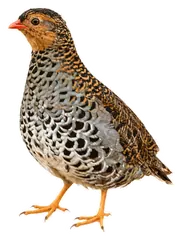 Udzungwa Forest PartridgeXenoperdix udzungwensis
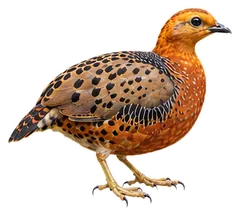 Ferruginous PartridgeCaloperdix oculeus
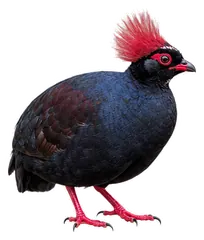 Crested PartridgeRollulus rouloul
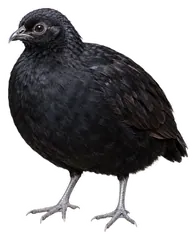 Black PartridgeMelanoperdix niger
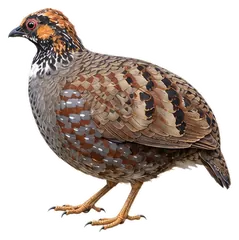 Hill PartridgeArborophila torqueola
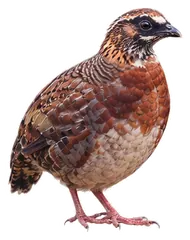 Sichuan PartridgeArborophila rufipectus
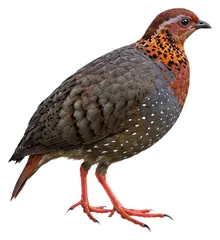 Chestnut-breasted PartridgeArborophila mandellii
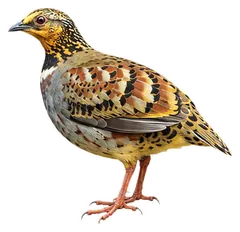 White-necklaced PartridgeArborophila gingica
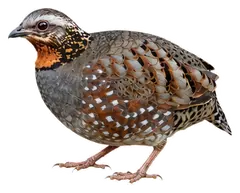 Rufous-throated PartridgeArborophila rufogularis
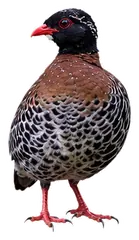 Red-billed PartridgeArborophila rubrirostris
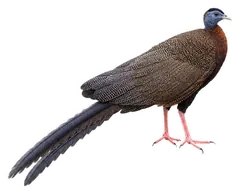
Download illustration
Free to use with credit: “Illustration: Bird Album (birdalbum.com)”. Drawn by AI from reference photos. ↗
Heard it but can't see it? Mingji identifies birds by sound and photo, on your phone.