 Bird Album
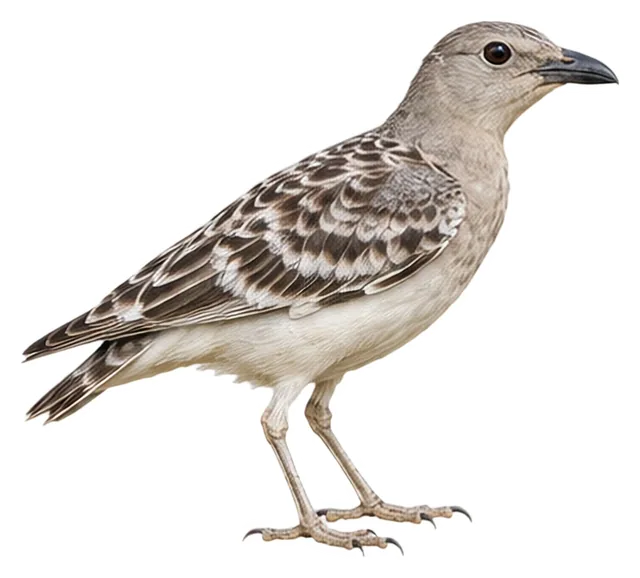
Great Bowerbird
Chlamydera nuchalis (Jardine & Selby, 1830)
33–38 cmLength200 gWeight
The great bowerbird (Chlamydera nuchalis) is a common and conspicuous resident of northern Australia, from the area around Broome across the Top End to Cape York Peninsula and as far south as Mount Isa and Townsville.
Busiest months: July–October · Most records: Australia
Where and when it's recorded

Great Bowerbird has been recorded at 38 of the 8,171 birding hotspots we track, in 1 country or region.
Records by month Southern Hemisphere
Where it's recorded most
- Broome Bird ObservatoryAustralia4,545 records
- Carlyle Gardens Retirement Resort, TownsvilleAustralia2,422 records
- Townsville Town Common Conservation ParkAustralia1,284 records
More places
- Katherine Wastewater Treatment PlantAustralia542 records
- Cumberland DamAustralia489 records
- Broome South Wastewater Treatment PlantAustralia474 records
- JulattenAustralia376 records
- Roebuck Plains StationAustralia297 records
- Bushland BeachAustralia272 records
- Tyto WetlandsAustralia218 records
Countries and regions with the most records
eBird records via GBIF up to 2024-12-31. A record means someone listed it; more records partly mean more birders, not more birds.
About
The great bowerbird (Chlamydera nuchalis) is a common and conspicuous resident of northern Australia, from the area around Broome across the Top End to Cape York Peninsula and as far south as Mount Isa and Townsville. Favoured habitat is a broad range of forest and woodland, and the margins of vine forests, monsoon forest, and mangrove swamps.
Excerpt from Wikipedia, CC BY-SA 4.0 · authors · Read more on Wikipedia
Questions
How big is the Great Bowerbird?
The Great Bowerbird is about 33–38 cm long and weighs around 200 g.
Where does the Great Bowerbird live?
Its breeding range: Australasia: northern Australia. It is most often recorded in Australia.
When is the best time to see the Great Bowerbird?
At the hotspots we track, it is recorded most in July, August, September and October (Southern Hemisphere).
Is the Great Bowerbird endangered?
The IUCN Red List classifies the Great Bowerbird as Least Concern.
What does the Great Bowerbird eat?
Main food: Omnivore.
What family is the Great Bowerbird in?
It belongs to the family Bowerbirds (Ptilonorhynchidae), order Passerines (Passeriformes).
At a glance
- Length
- 33–38 cm
- Weight
- 200 g
- Habitat
- Shrubland
- Diet
- Omnivore
- Lifestyle
- Perches in trees
- Migration
- Resident (barely migrates)
- Conservation
- Least Concern
More measurements
- Wing
- 173 mm
- Tail
- 142 mm
- Bill
- 36 mm
- Tarsus
- 48 mm
Averages from the AVONET dataset; length from field guides where available.
Range
Australasia: northern Australia
Breeding range, IOC World Bird List 15.2
Classification
- Order
- Passerines Passeriformes
- Family
- Bowerbirds Ptilonorhynchidae
- Genus
- Chlamydera
Other birds in the genus Chlamydera
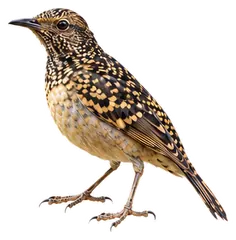 Western BowerbirdChlamydera guttata
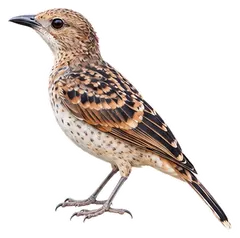 Spotted BowerbirdChlamydera maculata
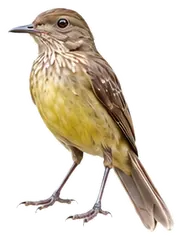 Yellow-breasted BowerbirdChlamydera lauterbachi
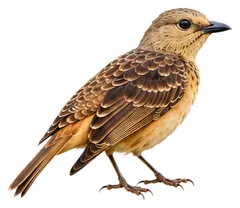 Fawn-breasted BowerbirdChlamydera cerviniventris
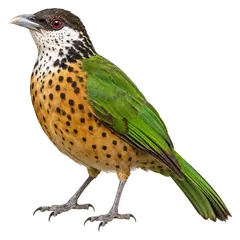 Ochre-breasted CatbirdAiluroedus stonii
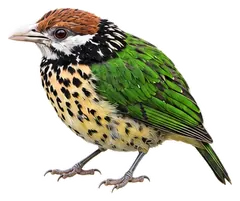 White-eared CatbirdAiluroedus buccoides
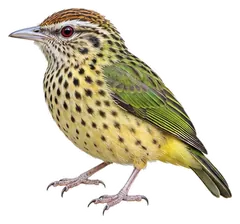 Tan-capped CatbirdAiluroedus geislerorum
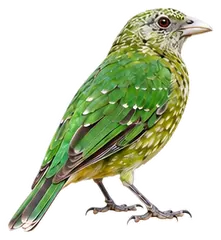 Green CatbirdAiluroedus crassirostris
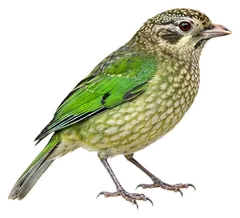 Spotted CatbirdAiluroedus maculosus
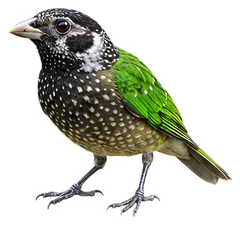 Black-eared CatbirdAiluroedus melanotis
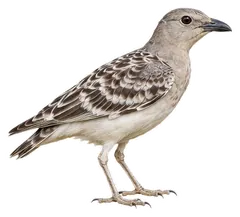
Download illustration
Free to use with credit: “Illustration: Bird Album (birdalbum.com)”. Drawn by AI from a reference photo by KristenM. ↗
Heard it but can't see it? Mingji identifies birds by sound and photo, on your phone.
In other languages
- EnglishGreat Bowerbird
- 简体中文大亭鸟
- 繁體中文大園丁鳥
- 日本語オオニワシドリ
- DeutschGraulaubenvogel
- FrançaisJardinier à nuque rose
- EspañolPergolero grande
- Portuguêsperguleiro-cinzento
- ItalianoUccello giardiniere maggiore
- NederlandsGrijze Prieelvogel
- РусскийБольшой беседочник
- Svenskastörre lövsalsfågel
- DanskStor Løvhyttefugl
- Polskijedwabnica szara