 Bird Album
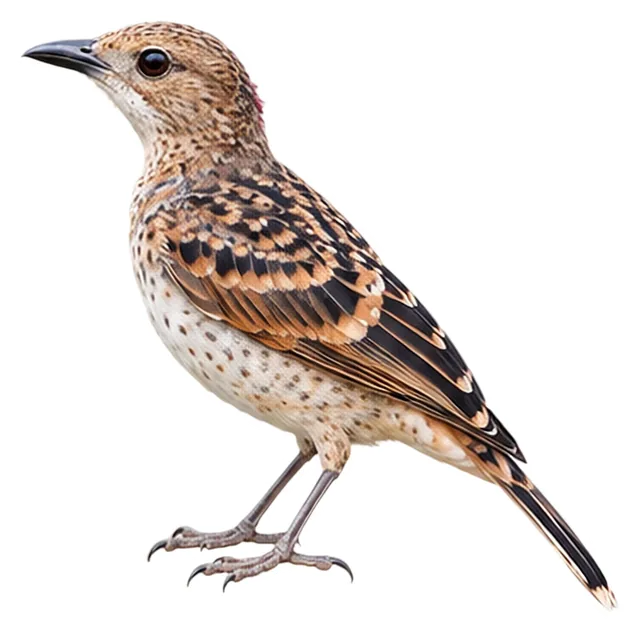
Spotted Bowerbird
Chlamydera maculata (Gould, 1837)
29 cmLength140 gWeight
The spotted bowerbird (Chlamydera maculata) is a sedentary, mid-sized passerine found across broad parts of the drier habitats of eastern Australia.
Busiest months: May–June and August–September · Most records: Australia
Where and when it's recorded

Spotted Bowerbird has been recorded at 4 of the 8,171 birding hotspots we track, in 1 country or region.
Records by month Southern Hemisphere
Where it's recorded most
- Bowra Wildlife SanctuaryAustralia3,535 records
- Mosquito Creek RdAustralia145 records
- DanthoniaAustralia16 records
More places
- Lake Cargelligo Wastewater Treatment PlantAustralia11 records
Countries and regions with the most records
eBird records via GBIF up to 2024-12-31. A record means someone listed it; more records partly mean more birders, not more birds.
About
The spotted bowerbird (Chlamydera maculata) is a sedentary, mid-sized passerine found across broad parts of the drier habitats of eastern Australia. The species is known for its remarkable behaviours, like many other bowerbirds (Ptilonorynchidae), which include bower building and decorating, courtship displays and vocal mimicry. Spotted bowerbirds are locally common, however, overall the population is thought to be in decline.
Excerpt from Wikipedia, CC BY-SA 4.0 · authors · Read more on Wikipedia
Questions
How big is the Spotted Bowerbird?
The Spotted Bowerbird is about 29 cm long and weighs around 140 g.
Where does the Spotted Bowerbird live?
Its breeding range: Australasia: Queensland (except Cape York Peninsula) and New South Wales (eastern, southeastern Australia). It is most often recorded in Australia.
When is the best time to see the Spotted Bowerbird?
At the hotspots we track, it is recorded most in May, June, August and September (Southern Hemisphere).
Is the Spotted Bowerbird endangered?
The IUCN Red List classifies the Spotted Bowerbird as Least Concern.
What does the Spotted Bowerbird eat?
Main food: Omnivore.
What family is the Spotted Bowerbird in?
It belongs to the family Bowerbirds (Ptilonorhynchidae), order Passerines (Passeriformes).
At a glance
- Length
- 29 cm
- Weight
- 140 g
- Habitat
- Shrubland
- Diet
- Omnivore
- Lifestyle
- Perches in trees
- Migration
- Resident (barely migrates)
- Conservation
- Least Concern
More measurements
- Wing
- 146 mm
- Tail
- 110 mm
- Bill
- 30 mm
- Tarsus
- 40 mm
Averages from the AVONET dataset; length from field guides where available.
Range
Australasia: Queensland (except Cape York Peninsula) and New South Wales (eastern, southeastern Australia)
Breeding range, IOC World Bird List 15.2
Classification
- Order
- Passerines Passeriformes
- Family
- Bowerbirds Ptilonorhynchidae
- Genus
- Chlamydera
Other birds in the genus Chlamydera
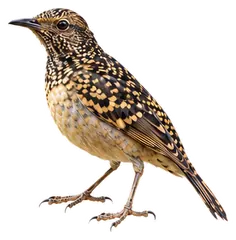 Western BowerbirdChlamydera guttata
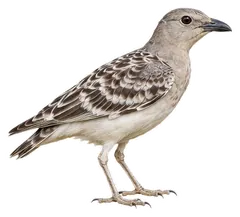 Great BowerbirdChlamydera nuchalis
 Yellow-breasted BowerbirdChlamydera lauterbachi
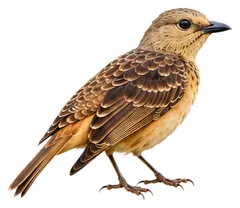 Fawn-breasted BowerbirdChlamydera cerviniventris
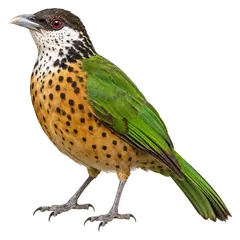 Ochre-breasted CatbirdAiluroedus stonii
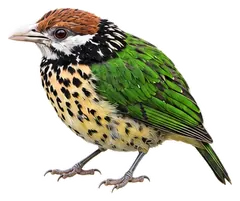 White-eared CatbirdAiluroedus buccoides
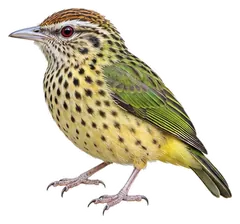 Tan-capped CatbirdAiluroedus geislerorum
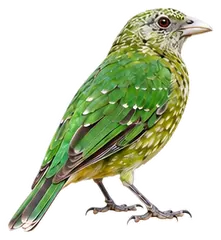 Green CatbirdAiluroedus crassirostris
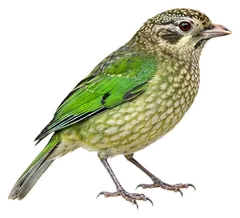 Spotted CatbirdAiluroedus maculosus
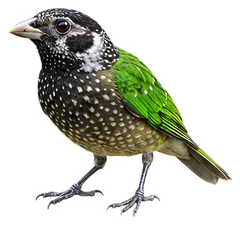 Black-eared CatbirdAiluroedus melanotis
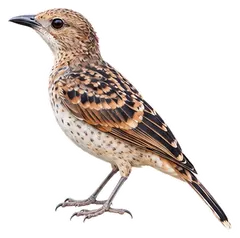
Download illustration
Free to use with credit: “Illustration: Bird Album (birdalbum.com)”. Drawn by AI from a reference photo by diana_shang. ↗
Heard it but can't see it? Mingji identifies birds by sound and photo, on your phone.
In other languages
- EnglishSpotted Bowerbird
- 简体中文斑大亭鸟
- 繁體中文點斑大園丁鳥
- 日本語マダラニワシドリ
- DeutschFleckenlaubenvogel
- FrançaisJardinier maculé
- EspañolPergolero moteado oriental
- Portuguêsperguleiro-maculado
- ItalianoUccello giardiniere macchiato
- NederlandsGrijsnekprieelvogel
- РусскийПятнистый беседочник
- Svenskafläckig lövsalsfågel
- DanskPlettet Løvhyttefugl
- Polskijedwabnica plamista