 Bird Album
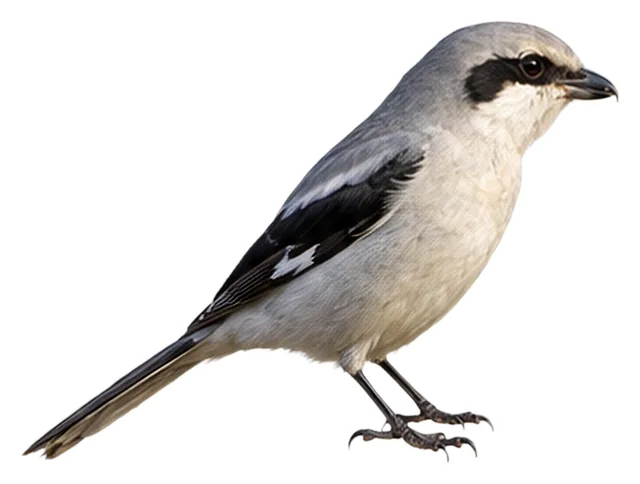
Great Grey Shrike
Lanius excubitor Linnaeus, 1758
22–26 cmLength32 cmWingspan63 gWeight
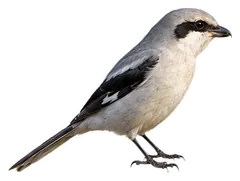
This large shrike has pearl-gray upperparts, a black mask through the eye and white underparts.
Busiest months: October · Most records: United Arab Emirates, India, Israel
Looks like Chinese Grey Shrike, Lesser Grey Shrike
How to identify
Field marks
- Black mask from the bill base through the eye to the ear-coverts
- Upperparts pearl-gray
- Wings black with white wing patches; scapulars white
- Tail black, long and pointed, with white outer edges to the outer tail feathers
Male, female and young
Sexes differ little in appearance; female has grayer underparts, often with gray-brown barring, and fewer white patches on the wings and tail.
Voice
Male gives short, melodious warbles interspersed with clear whistles; alarm call is a long, sharp, hoarse whistle, “trrii”.
Similar species
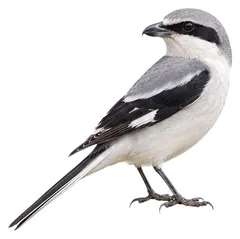
Chinese Grey Shrike is larger, with much more extensive white on the wings and tail.
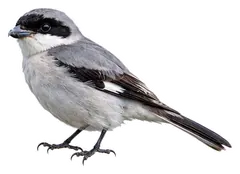
Lesser Grey Shrike is smaller and shorter-tailed; the black patch above the bill is large, almost reaching the forehead, with no white supercilium; in flight, its black tail tip is broad rather than pointed.
Where and when it's recorded

Great Grey Shrike has been recorded at 783 of the 8,171 birding hotspots we track, in 78 countries and regions.
Records by month Northern Hemisphere
Where it's recorded most
- Private estate near Green MubazzarahUnited Arab Emirates3,129 records
- Tal Chhapar SanctuaryIndia1,132 records
- Wamm FarmsUnited Arab Emirates1,116 records
More places
- Green MubazzarahUnited Arab Emirates747 records
- Jayamangali Blackbuck Conservation ReserveIndia651 records
- Kfar Ruppin fishpondsIsrael613 records
- Eilat – KM20 Flamingo Pools 20Israel606 records
- Irakhiya FarmQatar584 records
- Dubai Pivot FieldsUnited Arab Emirates566 records
- Abu Dhabi Golf and Equestrian ClubUnited Arab Emirates509 records
Countries and regions with the most records
eBird records via GBIF up to 2024-12-31. A record means someone listed it; more records partly mean more birders, not more birds.
About
The great grey shrike (Lanius excubitor) is a large and predatory songbird species in the shrike family (Laniidae). It forms a superspecies with a number of large, similar-looking parapatric relatives.
Excerpt from Wikipedia, CC BY-SA 4.0 · authors · Read more on Wikipedia
Questions
How big is the Great Grey Shrike?
The Great Grey Shrike is about 22–26 cm long, with a wingspan of 32 cm and weighs around 63 g.
Where does the Great Grey Shrike live?
Its breeding range: Palearctic, Africa: widespread in Europe, Asia and northern Africa. It is most often recorded in United Arab Emirates, India and Israel.
When is the best time to see the Great Grey Shrike?
At the hotspots we track, it is recorded most in October (Northern Hemisphere).
Is the Great Grey Shrike endangered?
The IUCN Red List classifies the Great Grey Shrike as Least Concern.
What does the Great Grey Shrike eat?
Main food: Vertebrate prey.
What family is the Great Grey Shrike in?
It belongs to the family Shrikes (Laniidae), order Passerines (Passeriformes).
At a glance
- Length
- 22–26 cm
- Wingspan
- 32 cm
- Weight
- 63 g
- Habitat
- Shrubland
- Diet
- Vertebrate prey
- Lifestyle
- Perches in trees
- Migration
- Migratory
- Conservation
- Least Concern
More measurements
- Wing
- 109 mm
- Tail
- 106 mm
- Bill
- 23 mm
- Tarsus
- 29 mm
Averages from the AVONET dataset; length from field guides where available.
Range
Palearctic, Africa: widespread in Europe, Asia and northern Africa
Breeding range, IOC World Bird List 15.2
Subspecies · 1
- Lanius excubitor pallidirostris s Russia and s Kazakhstan to Mongolia and n China, s to nw Iran, Afghanistan and Pakistan | non-breeding: sw Asia and ne Africa
Classification
- Order
- Passerines Passeriformes
- Family
- Shrikes Laniidae
- Genus
- Lanius
Other birds in the genus Lanius
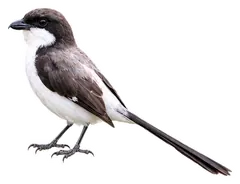 Long-tailed FiscalLanius cabanisi
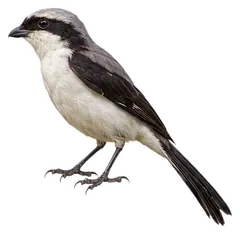 Grey-backed FiscalLanius excubitoroides
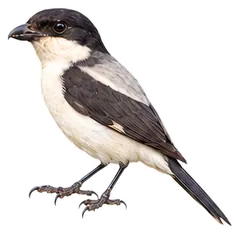 Taita FiscalLanius dorsalis
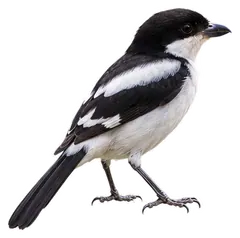 Somali FiscalLanius somalicus
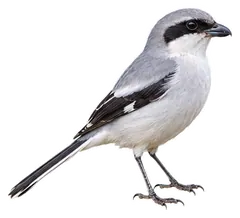 Loggerhead ShrikeLanius ludovicianus
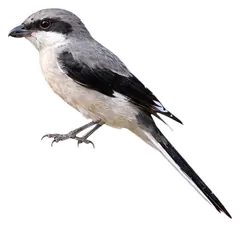 Giant Grey ShrikeLanius giganteusChinese Grey ShrikeLanius sphenocercus
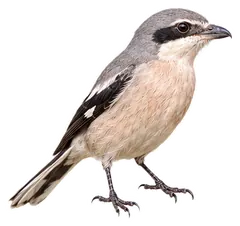 Iberian Grey ShrikeLanius meridionalis
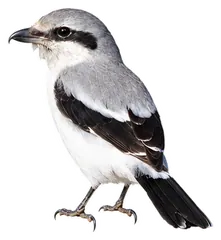 Northern ShrikeLanius borealis
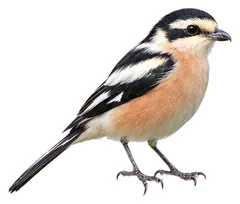 Masked ShrikeLanius nubicus
 Sao Tome FiscalLanius newtoni
 Northern FiscalLanius humeralis
Download illustration
Free to use with credit: “Illustration: Bird Album (birdalbum.com)”. Drawn by AI from a reference photo by Jure Grošelj. ↗
Heard it but can't see it? Mingji identifies birds by sound and photo, on your phone.