 Bird Album
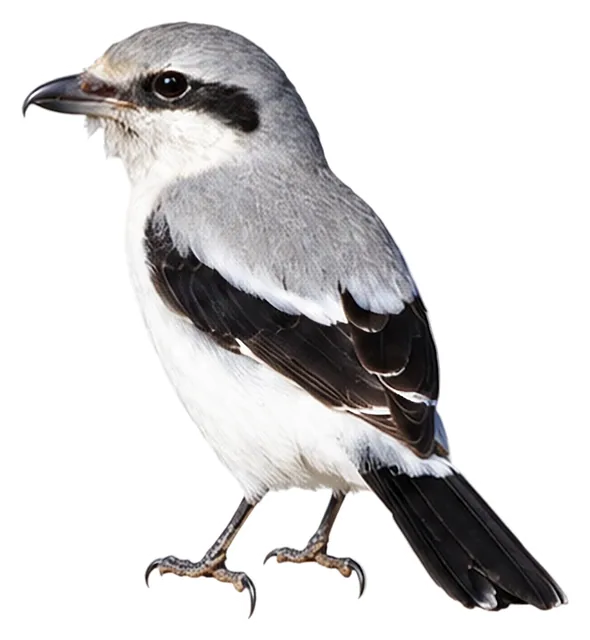
Northern Shrike
Lanius borealis Vieillot, 1808
≈24 cmLength63 gWeight
It favors perching on tall poles or branches, scanning for prey.
Busiest months: January and November · Most records: Canada, United States, China
How to identify
Field marks
- Bill tip hooked
Where and when it's recorded
Busiest months: January and November · Most records: Canada, United States, China

Northern Shrike has been recorded at 454 of the 8,276 birding hotspots we track, in 10 countries and regions.
Records by month Northern Hemisphere
Where it's recorded most
- RNF du Cap-TourmenteCanada2,086 records
- Billy Frank Jr. Nisqually NWRUnited States1,974 records
- Marymoor ParkUnited States1,534 records
More places
- Reifel Bird SanctuaryCanada1,349 records
- Amherst IslandCanada1,103 records
- Parker River NWRUnited States1,093 records
- Nanaimo River EstuaryCanada925 records
- Coquitlam—ƛ̓éx t m (tla-hut-um) Regional ParkCanada853 records
- RF Marguerite-D'YouvilleCanada830 records
- Salmon Arm BayCanada790 records
Countries and regions with the most records
eBird records via GBIF up to 2024-12-31. A record means someone listed it; more records partly mean more birders, not more birds.
About
The northern shrike (Lanius borealis) is a large songbird species in the shrike family (Laniidae) native to North America and Siberia. Long considered a subspecies of the great grey shrike, it was classified as a distinct species in 2017. Six subspecies are recognised.
Excerpt from Wikipedia, CC BY-SA 4.0 · authors · Read more on Wikipedia
Questions
How big is the Northern Shrike?
The Northern Shrike is about ≈24 cm long and weighs around 63 g.
Where does the Northern Shrike live?
Its breeding range: North America, Palearctic: northern. It is most often recorded in Canada, United States and China.
When is the best time to see the Northern Shrike?
At the hotspots we track, it is recorded most in January and November (Northern Hemisphere).
Is the Northern Shrike endangered?
The IUCN Red List classifies the Northern Shrike as Least Concern.
What does the Northern Shrike eat?
Main food: Vertebrate prey.
What family is the Northern Shrike in?
It belongs to the family Shrikes (Laniidae), order Passerines (Passeriformes).
At a glance
- Length
- ≈24 cm
- Weight
- 63 g
- Habitat
- Shrubland
- Diet
- Vertebrate prey
- Lifestyle
- Perches in trees
- Migration
- Migratory
- Conservation
- Least Concern
More measurements
- Wing
- 109 mm
- Tail
- 106 mm
- Bill
- 23 mm
- Tarsus
- 29 mm
Averages from the AVONET dataset; length from field guides where available.
Range
North America, Palearctic: northern
Breeding range, IOC World Bird List 15.2
Subspecies · 3
- Lanius borealis sibiricus c, e Siberia, n Mongolia and se Russia | non-breeding: to ne China
- Lanius borealis mollis sc Russia and nw Mongolia | non-breeding: to n China
- Lanius borealis funereus e Kazakhstan, Kyrgyzstan and nw China
Classification
- Order
- Passerines Passeriformes
- Family
- Shrikes Laniidae
- Genus
- Lanius
Other birds in the genus Lanius
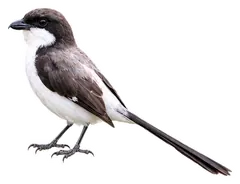 Long-tailed FiscalLanius cabanisi
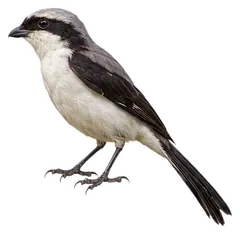 Grey-backed FiscalLanius excubitoroides
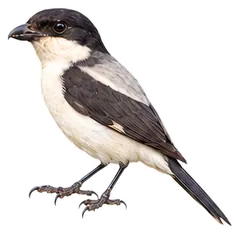 Taita FiscalLanius dorsalis
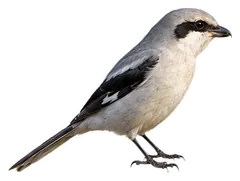 Great Grey ShrikeLanius excubitor
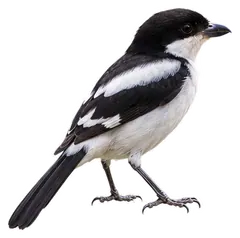 Somali FiscalLanius somalicus
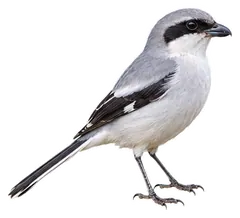 Loggerhead ShrikeLanius ludovicianus
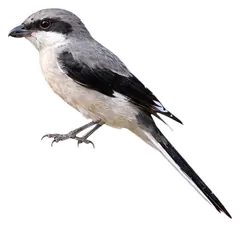 Giant Grey ShrikeLanius giganteus
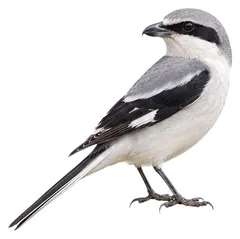 Chinese Grey ShrikeLanius sphenocercus
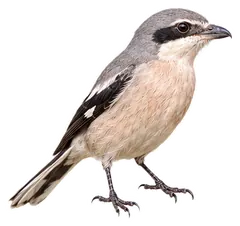 Iberian Grey ShrikeLanius meridionalis
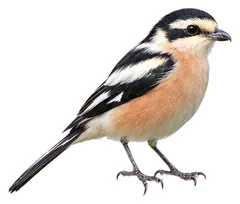 Masked ShrikeLanius nubicus
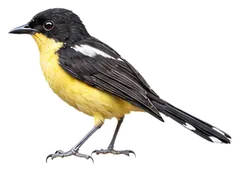 Sao Tome FiscalLanius newtoni
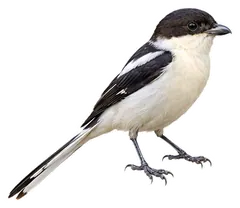 Northern FiscalLanius humeralis
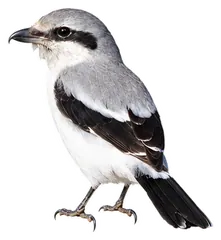
Download illustration
Free to use with credit: “Illustration: Bird Album (birdalbum.com)”. Drawn by AI from a reference photo by Steven Mlodinow. ↗
Heard it but can't see it? Mingji identifies birds by sound and photo, on your phone.