 Bird Album
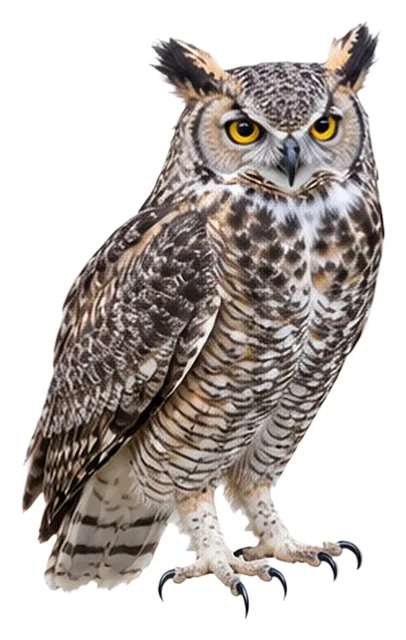
Great Horned Owl
Bubo virginianus (Gmelin, JF, 1788)
1.4 kgWeight
The great horned owl (Bubo virginianus), also known as the tiger owl (originally derived from early naturalists' description as the "winged tiger" or "tiger of the air") or the hoot owl, is a large owl native to the Americas.
Busiest months: April–May · Most records: United States, Canada, Brazil
Where and when it's recorded

Great Horned Owl has been recorded at 937 of the 8,171 birding hotspots we track, in 20 countries and regions.
Records by month Northern Hemisphere
Where it's recorded most
- Lake St. Clair MetroparkUnited States3,878 records
- Reifel Bird SanctuaryCanada3,647 records
- Piute PondsUnited States3,490 records
More places
- Malheur NWR – HeadquartersUnited States3,447 records
- Billy Frank Jr. Nisqually NWRUnited States3,408 records
- Domaine de MaizeretsCanada3,112 records
- Frank G. Bonelli RP/Puddingstone Reservoir and vicinityUnited States2,995 records
- Mount Auburn CemeteryUnited States2,702 records
- Whitewater Draw Wildlife AreaUnited States2,682 records
- Ridgefield NWR – River 'S' UnitUnited States2,375 records
Countries and regions with the most records
eBird records via GBIF up to 2024-12-31. A record means someone listed it; more records partly mean more birders, not more birds.
About
The great horned owl (Bubo virginianus), also known as the tiger owl (originally derived from early naturalists' description as the "winged tiger" or "tiger of the air") or the hoot owl, is a large owl native to the Americas. It is an extremely adaptable bird with a vast range and is the most widely distributed true owl in the Americas. Its diet consists primarily of rabbits and hares, rats and mice, and voles; it remains one of the few regular predators of skunk.
Excerpt from Wikipedia, CC BY-SA 4.0 · authors · Read more on Wikipedia
Questions
How big is the Great Horned Owl?
The Great Horned Owl weighs around 1.4 kg.
Where does the Great Horned Owl live?
Its breeding range: North America, Middle America, South America: widespread. It is most often recorded in United States, Canada and Brazil.
When is the best time to see the Great Horned Owl?
At the hotspots we track, it is recorded most in April and May (Northern Hemisphere).
Is the Great Horned Owl endangered?
The IUCN Red List classifies the Great Horned Owl as Least Concern.
What does the Great Horned Owl eat?
Main food: Vertebrate prey.
What family is the Great Horned Owl in?
It belongs to the family Owls (Strigidae), order Strigiformes.
At a glance
- Weight
- 1.4 kg
- Habitat
- Forest
- Diet
- Vertebrate prey
- Lifestyle
- Perches in trees
- Migration
- Resident (barely migrates)
- Conservation
- Least Concern
More measurements
- Wing
- 352 mm
- Tail
- 188 mm
- Bill
- 42 mm
- Tarsus
- 70 mm
Averages from the AVONET dataset; length from field guides where available.
Range
North America, Middle America, South America: widespread
Breeding range, IOC World Bird List 15.2
Classification
- Order
- Strigiformes
- Family
- Owls Strigidae
- Genus
- Bubo
Other birds in the genus Bubo
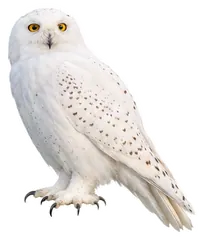 Snowy OwlBubo scandiacus
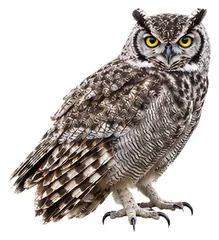 Lesser Horned OwlBubo magellanicus
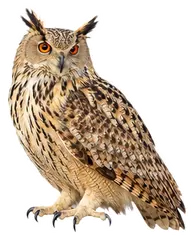 Eurasian Eagle-OwlBubo bubo
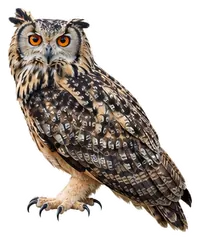 Indian Eagle-OwlBubo bengalensis
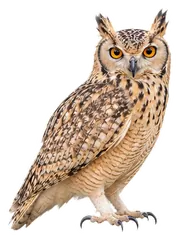 Pharaoh Eagle-OwlBubo ascalaphus
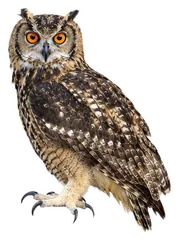 Cape Eagle-OwlBubo capensis
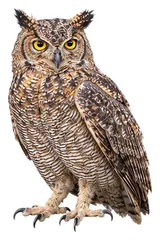 Arabian Eagle-OwlBubo milesi
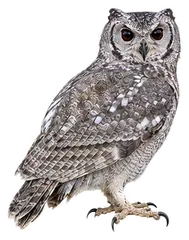 Greyish Eagle-OwlBubo cinerascens
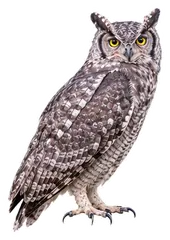 Spotted Eagle-OwlBubo africanus
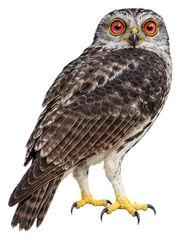 Papuan Hawk-OwlUroglaux dimorpha
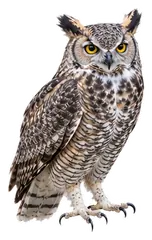
Download illustration
Free to use with credit: “Illustration: Bird Album (birdalbum.com)”. Drawn by AI from reference photos. ↗
Heard it but can't see it? Mingji identifies birds by sound and photo, on your phone.