 Bird Album
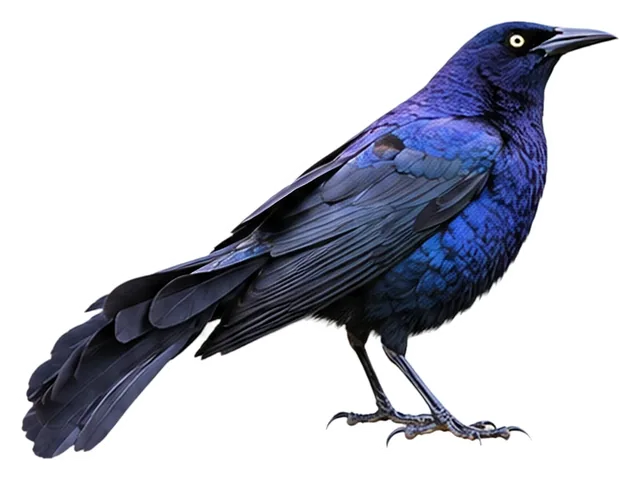
Great-tailed Grackle
Quiscalus mexicanus (Gmelin, JF, 1788)
160 gWeight
The great-tailed grackle or Mexican grackle (Quiscalus mexicanus) is a medium-sized, highly social passerine bird native to North and South America.
Busiest months: April · Most records: United States, Costa Rica, Mexico
Where and when it's recorded

Great-tailed Grackle has been recorded at 625 of the 8,171 birding hotspots we track, in 18 countries and regions.
Records by month Northern Hemisphere
Where it's recorded most
- Riparian Preserve at Gilbert Water RanchUnited States25,067 records
- Estero Llano Grande SP WBCUnited States25,006 records
- Sweetwater WetlandsUnited States19,409 records
More places
- Bentsen-Rio Grande Val. SP WBC (Mission)United States14,659 records
- Hornsby BendUnited States13,974 records
- South Padre Is. – WBC/Conv. Center/Laguna Madre TrailUnited States13,480 records
- Leonabelle Turnbull Birding Ctr.United States13,187 records
- South Padre Is. – Birding and Nature CenterUnited States11,843 records
- Santa Ana NWRUnited States11,503 records
- High Island – Smith Oaks SanctuaryUnited States10,269 records
Countries and regions with the most records
eBird records via GBIF up to 2024-12-31. A record means someone listed it; more records partly mean more birders, not more birds.
About
The great-tailed grackle or Mexican grackle (Quiscalus mexicanus) is a medium-sized, highly social passerine bird native to North and South America. A member of the family Icteridae, it is one of 10 extant species of grackle and is closely related to the boat-tailed grackle and the extinct slender-billed grackle.
Excerpt from Wikipedia, CC BY-SA 4.0 · authors · Read more on Wikipedia
Questions
How big is the Great-tailed Grackle?
The Great-tailed Grackle weighs around 160 g.
Where does the Great-tailed Grackle live?
Its breeding range: North America, Middle America, South America: southern USA through western, northern South America. It is most often recorded in United States, Costa Rica and Mexico.
When is the best time to see the Great-tailed Grackle?
At the hotspots we track, it is recorded most in April (Northern Hemisphere).
Is the Great-tailed Grackle endangered?
The IUCN Red List classifies the Great-tailed Grackle as Least Concern.
What does the Great-tailed Grackle eat?
Main food: Omnivore.
What family is the Great-tailed Grackle in?
It belongs to the family Oropendolas, New World Orioles, Blackbirds (Icteridae), order Passerines (Passeriformes).
At a glance
- Weight
- 160 g
- Habitat
- Towns & farmland
- Diet
- Omnivore
- Lifestyle
- Active on the ground
- Migration
- Resident (barely migrates)
- Conservation
- Least Concern
More measurements
- Wing
- 169 mm
- Tail
- 170 mm
- Bill
- 43 mm
- Tarsus
- 48 mm
Averages from the AVONET dataset; length from field guides where available.
Range
North America, Middle America, South America: southern USA through western, northern South America
Breeding range, IOC World Bird List 15.2
Classification
- Order
- Passerines Passeriformes
- Family
- Oropendolas, New World Orioles, Blackbirds Icteridae
- Genus
- Quiscalus
Other birds in the genus Quiscalus
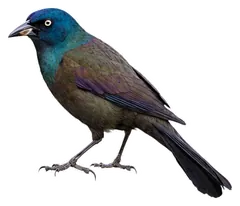 Common GrackleQuiscalus quiscula
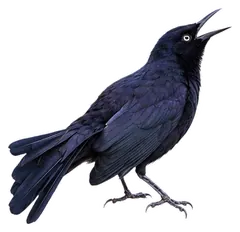 Nicaraguan GrackleQuiscalus nicaraguensis
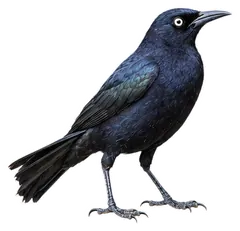 Carib GrackleQuiscalus lugubris
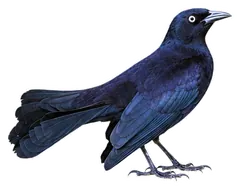 Greater Antillean GrackleQuiscalus niger
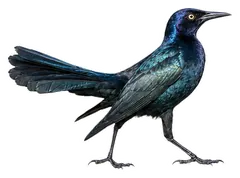 Boat-tailed GrackleQuiscalus major
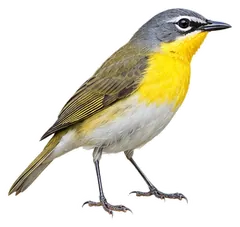 Yellow-breasted ChatIcteria virens
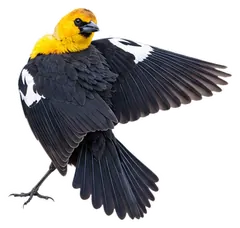 Yellow-headed BlackbirdXanthocephalus xanthocephalus
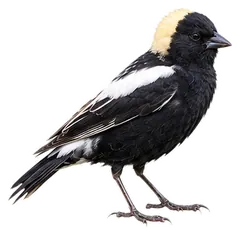 BobolinkDolichonyx oryzivorus
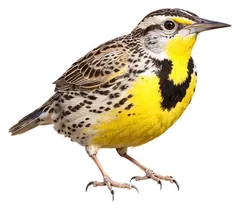 Western MeadowlarkSturnella neglecta
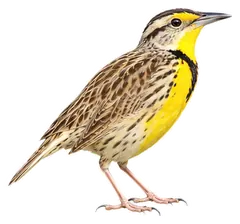 Eastern MeadowlarkSturnella magna
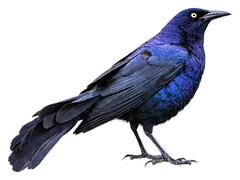
Download illustration
Free to use with credit: “Illustration: Bird Album (birdalbum.com)”. Drawn by AI from a reference photo by Ad Konings. ↗
Heard it but can't see it? Mingji identifies birds by sound and photo, on your phone.
In other languages
- EnglishGreat-tailed Grackle
- 简体中文大尾拟八哥
- 繁體中文大尾擬八哥
- 日本語オナガクロムクドリモドキ
- DeutschGroßschwanzgrackel
- FrançaisQuiscale à longue queue
- EspañolZanate mexicano
- Portuguêsiraúna-mexicana
- ItalianoGracula codalunga
- NederlandsLangstaarttroepiaal
- РусскийБольшехвостый гракл
- Svenskamexikansk båtstjärt
- DanskKragegrackel
- Polskiwilgowron meksykański