 Bird Album
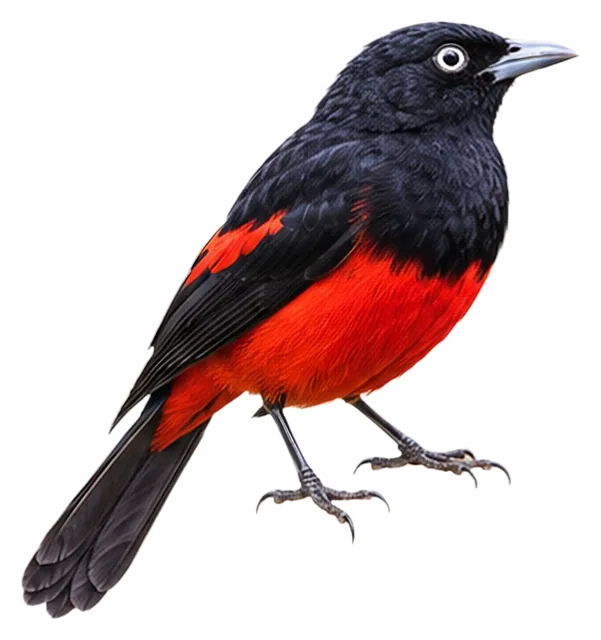
Red-bellied Grackle
Hypopyrrhus pyrohypogaster (de Tarragon, L, 1847)
101 gWeight
The red-bellied grackle (Hypopyrrhus pyrohypogaster) is a species of bird in the family Icteridae.
Busiest months: January–March and November · Most records: Colombia
Where and when it's recorded

Red-bellied Grackle has been recorded at 27 of the 8,171 birding hotspots we track, in 1 country or region.
Records by month Northern Hemisphere
Where it's recorded most
- RN La RomeraColombia1,487 records
- Las Tangaras ProAves ReserveColombia977 records
- RN Jardín de RocasColombia761 records
More places
- Arrierito Antioqueño ProAves ReserveColombia599 records
- La Drymophila Nature ReserveColombia357 records
- Sendero La HerreraColombia356 records
- RN San Sebastián de La CastellanaColombia312 records
- RN Bosques de la CristalinaColombia266 records
- RNA Las Tangaras – SendasColombia131 records
- Camino Montezuma – Río ClaroColombia77 records
Countries and regions with the most records
eBird records via GBIF up to 2024-12-31. A record means someone listed it; more records partly mean more birders, not more birds.
About
The red-bellied grackle (Hypopyrrhus pyrohypogaster) is a species of bird in the family Icteridae. Its genus, Hypopyrrhus, is monotypic.
Excerpt from Wikipedia, CC BY-SA 4.0 · authors · Read more on Wikipedia
Questions
How big is the Red-bellied Grackle?
The Red-bellied Grackle weighs around 101 g.
Where does the Red-bellied Grackle live?
Its breeding range: South America: Colombia. It is most often recorded in Colombia.
When is the best time to see the Red-bellied Grackle?
At the hotspots we track, it is recorded most in January, February, March and November (Northern Hemisphere).
Is the Red-bellied Grackle endangered?
The IUCN Red List classifies the Red-bellied Grackle as Vulnerable.
What does the Red-bellied Grackle eat?
Main food: Omnivore.
What family is the Red-bellied Grackle in?
It belongs to the family Oropendolas, New World Orioles, Blackbirds (Icteridae), order Passerines (Passeriformes).
At a glance
- Weight
- 101 g
- Habitat
- Forest
- Diet
- Omnivore
- Lifestyle
- Perches in trees
- Migration
- Resident (barely migrates)
- Conservation
- Vulnerable
More measurements
- Wing
- 140 mm
- Tail
- 139 mm
- Bill
- 32 mm
- Tarsus
- 34 mm
Averages from the AVONET dataset; length from field guides where available.
Range
South America: Colombia
Breeding range, IOC World Bird List 15.2
Classification
- Order
- Passerines Passeriformes
- Family
- Oropendolas, New World Orioles, Blackbirds Icteridae
- Genus
- Hypopyrrhus
More from the family Oropendolas, New World Orioles, Blackbirds
 Yellow-breasted ChatIcteria virens
 Yellow-headed BlackbirdXanthocephalus xanthocephalus
 BobolinkDolichonyx oryzivorus
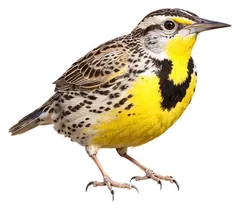 Western MeadowlarkSturnella neglecta
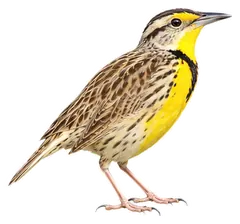 Eastern MeadowlarkSturnella magna
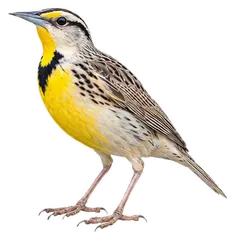 Chihuahuan MeadowlarkSturnella lilianae
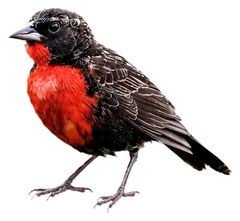 Red-breasted MeadowlarkLeistes militaris
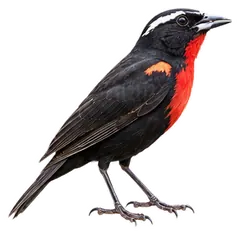 White-browed MeadowlarkLeistes superciliaris
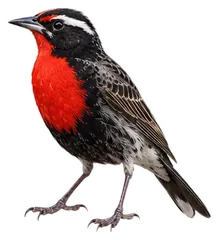 Peruvian MeadowlarkLeistes bellicosus
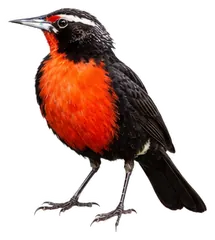 Long-tailed MeadowlarkLeistes loyca
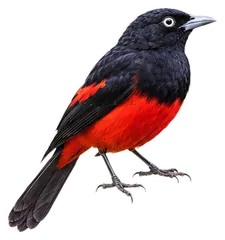
Download illustration
Free to use with credit: “Illustration: Bird Album (birdalbum.com)”. Drawn by AI from a reference photo by Arley Vargas. ↗
Heard it but can't see it? Mingji identifies birds by sound and photo, on your phone.
In other languages
- EnglishRed-bellied Grackle
- 简体中文红腹拟鹩哥
- 繁體中文紅腹擬鷯哥
- 日本語アカハラムクドリモドキ
- DeutschRotbauchstärling
- FrançaisCarouge à ventre rouge
- EspañolChango ventrirrojo
- Portuguêsiraúna-de-barriga-vermelha
- ItalianoGracula panciarossa
- NederlandsRoodbuiktroepiaal
- РусскийКраснобрюхий гракл
- Svenskarödbukig trupial
- DanskRødbuget Stærling
- Polskikacykarz