 Bird Album
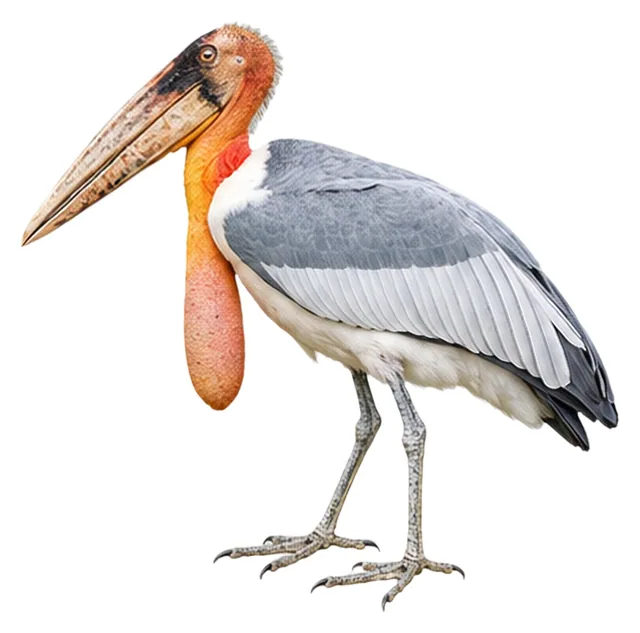
Greater Adjutant
Leptoptilos dubius (Gmelin, JF, 1789)
9.1 kgWeight
The greater adjutant (Leptoptilos dubius) is a member of the stork family, Ciconiidae.
Busiest months: January and March · Most records: India, Cambodia, Thailand
Where and when it's recorded

Greater Adjutant has been recorded at 39 of the 8,171 birding hotspots we track, in 5 countries and regions.
Records by month Northern Hemisphere
Where it's recorded most
- Prek Toal Bird SanctuaryCambodia557 records
- Prek ToalCambodia363 records
- Kaziranga NP & SurroundingsIndia310 records
More places
- Kaziranga NP & Surroundings – Eastern RangeIndia305 records
- Kaziranga NP & Surroundings – Central RangeIndia278 records
- Kaziranga NP & Surroundings – Western RangeIndia259 records
- Ang Trapeang ThmorCambodia77 records
- Mechrey and Prek ToalCambodia51 records
- Tonle Sap LakeCambodia45 records
- Garbhanga Reserve ForestIndia36 records
Countries and regions with the most records
eBird records via GBIF up to 2024-12-31. A record means someone listed it; more records partly mean more birders, not more birds.
About
The greater adjutant (Leptoptilos dubius) is a member of the stork family, Ciconiidae. Its genus includes the lesser adjutant of Asia and the marabou stork of Africa. Once found widely across southern Asia and mainland southeast Asia, the greater adjutant is now restricted to a much smaller range with only three breeding populations; two in India, one in the north-eastern state of Assam and a smaller one around Bhagalpur; and another breeding population in Cambodia.
Excerpt from Wikipedia, CC BY-SA 4.0 · authors · Read more on Wikipedia
Questions
How big is the Greater Adjutant?
The Greater Adjutant weighs around 9.1 kg.
Where does the Greater Adjutant live?
Its breeding range: Oriental: northern India. It is most often recorded in India, Cambodia and Thailand.
When is the best time to see the Greater Adjutant?
At the hotspots we track, it is recorded most in January and March (Northern Hemisphere).
Is the Greater Adjutant endangered?
The IUCN Red List classifies the Greater Adjutant as Near Threatened.
What does the Greater Adjutant eat?
Main food: Omnivore.
What family is the Greater Adjutant in?
It belongs to the family Storks (Ciconiidae), order Ciconiiformes.
At a glance
- Weight
- 9.1 kg
- Habitat
- Wetland
- Diet
- Omnivore
- Lifestyle
- Active on the ground
- Migration
- Partial migrant
- Conservation
- Near Threatened
More measurements
- Wing
- 761 mm
- Tail
- 305 mm
- Bill
- 294 mm
- Tarsus
- 313 mm
Averages from the AVONET dataset; length from field guides where available.
Range
Oriental: northern India
Breeding range, IOC World Bird List 15.2
Classification
- Order
- Ciconiiformes
- Family
- Storks Ciconiidae
- Genus
- Leptoptilos
Other birds in the genus Leptoptilos
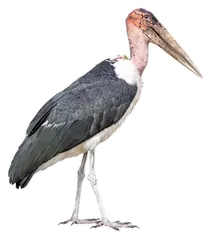 Marabou StorkLeptoptilos crumenifer
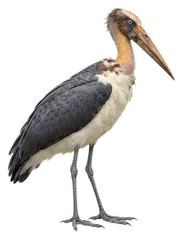 Lesser AdjutantLeptoptilos javanicus
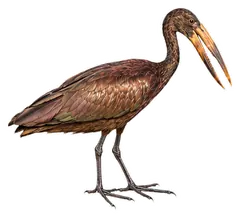 African OpenbillAnastomus lamelligerus
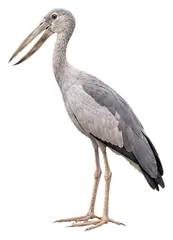 Asian OpenbillAnastomus oscitans
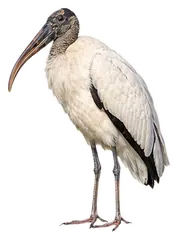 Wood StorkMycteria americana
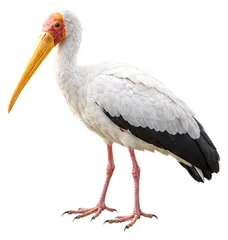 Yellow-billed StorkMycteria ibis
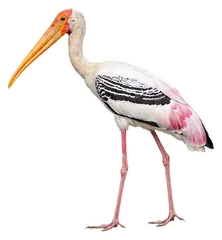 Painted StorkMycteria leucocephala
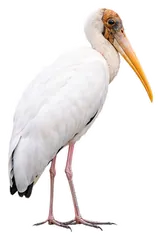 Milky StorkMycteria cinerea
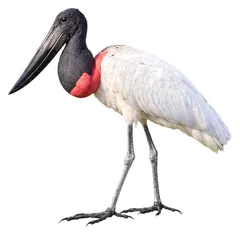 JabiruJabiru mycteria
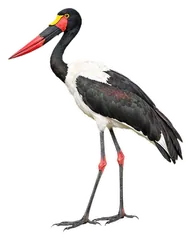 Saddle-billed StorkEphippiorhynchus senegalensis
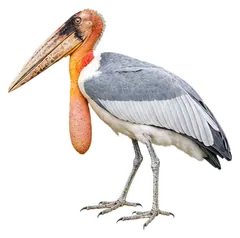
Download illustration
Free to use with credit: “Illustration: Bird Album (birdalbum.com)”. Drawn by AI from a reference photo by Rejoice Gassah. ↗
Heard it but can't see it? Mingji identifies birds by sound and photo, on your phone.