 Bird Album
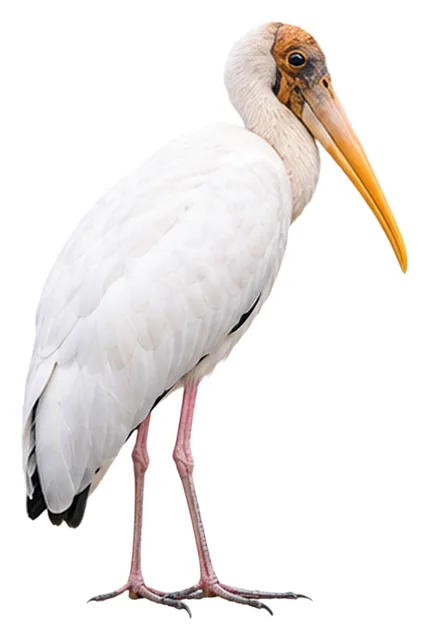
Milky Stork
Mycteria cinerea (Raffles, 1822)
2.4 kgWeight
The milky stork (Mycteria cinerea) is a stork species inhabiting predominantly mangroves in Southeast Asia.
Busiest months: November–January and August–September · Most records: Singapore, Cambodia, Indonesia
Where and when it's recorded
Busiest months: November–January and August–September · Most records: Singapore, Cambodia, Indonesia

Milky Stork has been recorded at 95 of the 8,276 birding hotspots we track, in 5 countries and regions.
Records by month Northern Hemisphere
Where it's recorded most
- Sungei Buloh Wetland ReserveSingapore2,501 records
- Prek Toal Bird SanctuaryCambodia378 records
- Muara Angke NR – northern sectionIndonesia325 records
More places
- Prek ToalCambodia259 records
- Sungei Buloh Wetland Reserve - East inc. Kranji Nature TrailSingapore211 records
- Taiping Lake GardensMalaysia127 records
- Muara Angke NRIndonesia79 records
- Jurong Lake GardensSingapore79 records
- Ang Trapeang ThmorCambodia64 records
- Khlong Tamru – 1 Alley salt pansThailand63 records
Countries and regions with the most records
eBird records via GBIF up to 2024-12-31. A record means someone listed it; more records partly mean more birders, not more birds.
About
The milky stork (Mycteria cinerea) is a stork species inhabiting predominantly mangroves in Southeast Asia. It is native to Cambodia, Vietnam, Malaysia and Indonesia. It is currently included in the genus Mycteria, is around 91–97 cm (36–38 in) tall, with a wingspan of 43.5–50 cm (17.1–19.7 in) and a tail around 14.5–17 cm (5.7–6.7 in).
Excerpt from Wikipedia, CC BY-SA 4.0 · authors · Read more on Wikipedia
Questions
How big is the Milky Stork?
The Milky Stork weighs around 2.4 kg.
Where does the Milky Stork live?
Its breeding range: Oriental, Australasia: central Cambodia, western Malay Peninsula, Sumatra, Java and Sulawesi. It is most often recorded in Singapore, Cambodia and Indonesia.
When is the best time to see the Milky Stork?
At the hotspots we track, it is recorded most in January, August, September, November and December (Northern Hemisphere).
Is the Milky Stork endangered?
The IUCN Red List classifies the Milky Stork as Endangered.
What does the Milky Stork eat?
Main food: Fish, shrimp & shellfish.
What family is the Milky Stork in?
It belongs to the family Storks (Ciconiidae), order Ciconiiformes.
At a glance
- Weight
- 2.4 kg
- Habitat
- Coast & tidal flats
- Diet
- Fish, shrimp & shellfish
- Lifestyle
- Active on the ground
- Migration
- Partial migrant
- Conservation
- Endangered
More measurements
- Wing
- 477 mm
- Tail
- 156 mm
- Bill
- 228 mm
- Tarsus
- 214 mm
Averages from the AVONET dataset; length from field guides where available.
Range
Oriental, Australasia: central Cambodia, western Malay Peninsula, Sumatra, Java and Sulawesi
Breeding range, IOC World Bird List 15.2
Classification
- Order
- Ciconiiformes
- Family
- Storks Ciconiidae
- Genus
- Mycteria
Other birds in the genus Mycteria
 Wood StorkMycteria americana
 Yellow-billed StorkMycteria ibis
 Painted StorkMycteria leucocephala
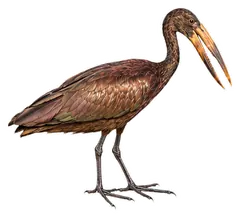 African OpenbillAnastomus lamelligerus
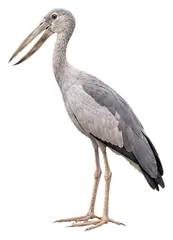 Asian OpenbillAnastomus oscitans
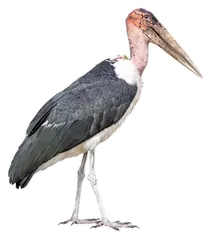 Marabou StorkLeptoptilos crumenifer
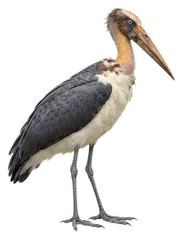 Lesser AdjutantLeptoptilos javanicus
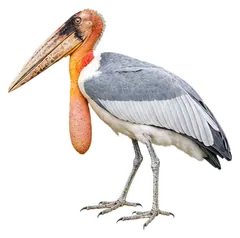 Greater AdjutantLeptoptilos dubius
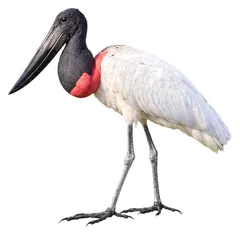 JabiruJabiru mycteria
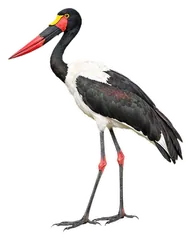 Saddle-billed StorkEphippiorhynchus senegalensis
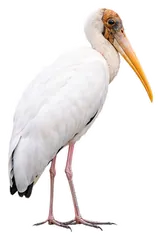
Download illustration
Free to use with credit: “Illustration: Bird Album (birdalbum.com)”. Drawn by AI from a reference photo by Minder Singh. ↗
Heard it but can't see it? Mingji identifies birds by sound and photo, on your phone.