 Bird Album
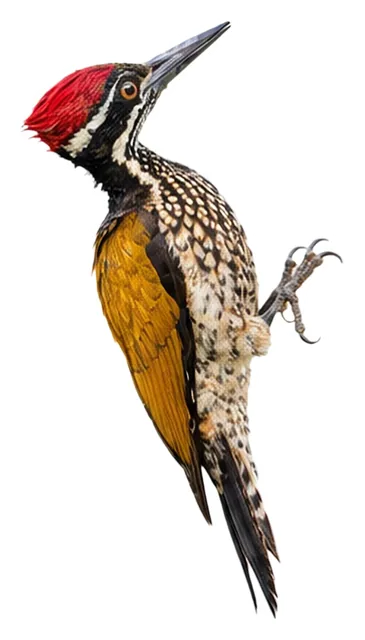
Greater Flameback
Chrysocolaptes guttacristatus (Tickell, 1833)
≈34 cmLength166 gWeight
The greater flameback (Chrysocolaptes guttacristatus), also known as the greater goldenback or large golden-backed woodpecker, is a woodpecker species.
Busiest months: February · Most records: Thailand, India, Cambodia
Where and when it's recorded
Busiest months: February · Most records: Thailand, India, Cambodia

Greater Flameback has been recorded at 252 of the 8,276 birding hotspots we track, in 13 countries and regions.
Records by month Northern Hemisphere
Where it's recorded most
- Kaeng Krachan NP – km 9 vicinityThailand828 records
- Kaeng Krachan NPThailand814 records
- Kaeng Krachan NP – stream crossings 1–3Thailand623 records
More places
- TmatboeyCambodia526 records
- Khao Yai NPThailand430 records
- Nameri National Park & SurroundingsIndia425 records
- Kaeng Krachan NP – Ban Krang CampgroundsThailand355 records
- Cat Tien NPVietnam333 records
- Mahananda WLS – Rongtong and Shivakhola ForestIndia331 records
- Dihing Patkai NP – SoraipungIndia329 records
Countries and regions with the most records
eBird records via GBIF up to 2024-12-31. A record means someone listed it; more records partly mean more birders, not more birds.
About
The greater flameback (Chrysocolaptes guttacristatus), also known as the greater goldenback or large golden-backed woodpecker, is a woodpecker species. It occurs widely in the northern Indian subcontinent, eastwards to southern China, the Malay Peninsula, Sumatra, western and central Java and northeast Borneo.
Excerpt from Wikipedia, CC BY-SA 4.0 · authors · Read more on Wikipedia
Questions
How big is the Greater Flameback?
The Greater Flameback is about ≈34 cm long and weighs around 166 g.
Where does the Greater Flameback live?
Its breeding range: Palearctic, Oriental: southeastern India, Himalayas east to Malay Peninsula and Greater Sundas. It is most often recorded in Thailand, India and Cambodia.
When is the best time to see the Greater Flameback?
At the hotspots we track, it is recorded most in February (Northern Hemisphere).
Is the Greater Flameback endangered?
The IUCN Red List classifies the Greater Flameback as Least Concern.
What does the Greater Flameback eat?
Main food: Insects & other invertebrates.
What family is the Greater Flameback in?
It belongs to the family Woodpeckers (Picidae), order Piciformes.
At a glance
- Length
- ≈34 cm
- Weight
- 166 g
- Habitat
- Woodland
- Diet
- Insects & other invertebrates
- Lifestyle
- Perches in trees
- Migration
- Resident (barely migrates)
- Conservation
- Least Concern
More measurements
- Wing
- 166 mm
- Tail
- 90 mm
- Bill
- 52 mm
- Tarsus
- 30 mm
Averages from the AVONET dataset; length from field guides where available.
Range
Palearctic, Oriental: southeastern India, Himalayas east to Malay Peninsula and Greater Sundas
Breeding range, IOC World Bird List 15.2
Subspecies · 1
- Chrysocolaptes guttacristatus guttacristatus c, e Himalayas and se India to s China, Thailand and Indochina
Classification
- Order
- Piciformes
- Family
- Woodpeckers Picidae
- Genus
- Chrysocolaptes
Other birds in the genus Chrysocolaptes
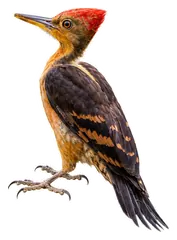 Orange-backed WoodpeckerChrysocolaptes validus
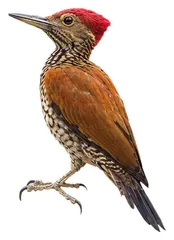 Buff-spotted FlamebackChrysocolaptes lucidus
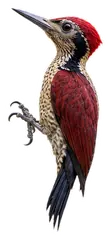 Luzon FlamebackChrysocolaptes haematribon
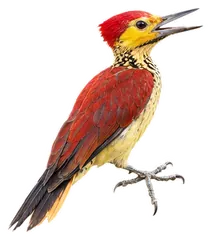 Yellow-faced FlamebackChrysocolaptes xanthocephalus
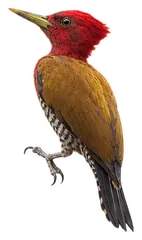 Red-headed FlamebackChrysocolaptes erythrocephalus
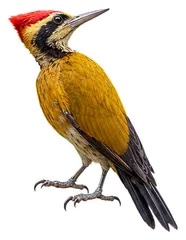 Javan FlamebackChrysocolaptes strictus
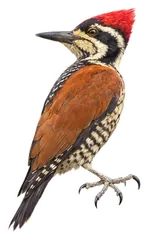 Malabar FlamebackChrysocolaptes socialis
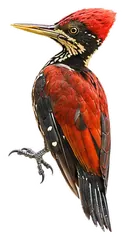 Crimson-backed FlamebackChrysocolaptes stricklandi
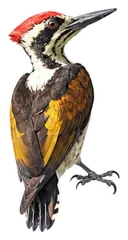 White-naped WoodpeckerChrysocolaptes festivus
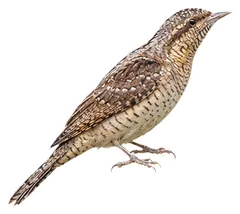 Eurasian WryneckJynx torquilla
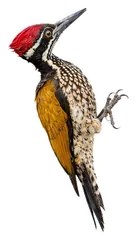
Download illustration
Free to use with credit: “Illustration: Bird Album (birdalbum.com)”. Drawn by AI from a reference photo by Chan Chee Keong. ↗
Heard it but can't see it? Mingji identifies birds by sound and photo, on your phone.