 Bird Album
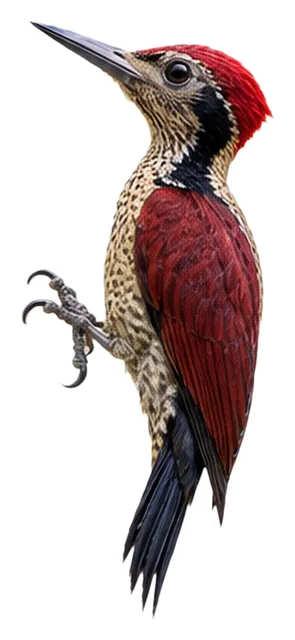
Luzon Flameback
Chrysocolaptes haematribon (Wagler, 1827)
130 gWeight
The Luzon flameback (Chrysocolaptes haematribon) is a species of bird in the family Picidae.
Busiest months: February–March · Most records: Philippines
Where and when it's recorded
Busiest months: February–March · Most records: Philippines

Luzon Flameback has been recorded at 11 of the 8,276 birding hotspots we track, in 1 country or region.
Records by month Northern Hemisphere
Where it's recorded most
- Subic Bay – Nabasan TrailPhilippines478 records
- Subic BayPhilippines238 records
- Subic Bay – Hill 394 roadPhilippines213 records
More places
- Mt. Makiling Forest Reserve – TrailPhilippines134 records
- Jariel's Peak – Restaurant, Bgy. Magsaysay, InfantaPhilippines60 records
- Mt. PolisPhilippines42 records
- Makiling Botanic Garden, Los BañosPhilippines36 records
- Caylabne Bay Resort, TernatePhilippines36 records
- Mt. Makiling Forest Reserve – TREESPhilippines34 records
- IRRI Staff Housing, Los BañosPhilippines4 records
Countries and regions with the most records
eBird records via GBIF up to 2024-12-31. A record means someone listed it; more records partly mean more birders, not more birds.
About
The Luzon flameback (Chrysocolaptes haematribon) is a species of bird in the family Picidae. It is found on the northern islands of Luzon, Polillo, Catanduanes and Marinduque, Philippines. It is sometimes considered a subspecies of the greater flameback.
Excerpt from Wikipedia, CC BY-SA 4.0 · authors · Read more on Wikipedia
Questions
How big is the Luzon Flameback?
The Luzon Flameback weighs around 130 g.
Where does the Luzon Flameback live?
Its breeding range: Oriental: Luzon group (northern Philippines). It is most often recorded in Philippines.
When is the best time to see the Luzon Flameback?
At the hotspots we track, it is recorded most in February and March (Northern Hemisphere).
Is the Luzon Flameback endangered?
The IUCN Red List classifies the Luzon Flameback as Least Concern.
What does the Luzon Flameback eat?
Main food: Insects & other invertebrates.
What family is the Luzon Flameback in?
It belongs to the family Woodpeckers (Picidae), order Piciformes.
At a glance
- Weight
- 130 g
- Habitat
- Woodland
- Diet
- Insects & other invertebrates
- Lifestyle
- Perches in trees
- Migration
- Resident (barely migrates)
- Conservation
- Least Concern
More measurements
- Wing
- 143 mm
- Tail
- 83 mm
- Bill
- 43 mm
- Tarsus
- 28 mm
Averages from the AVONET dataset; length from field guides where available.
Range
Oriental: Luzon group (northern Philippines)
Breeding range, IOC World Bird List 15.2
Classification
- Order
- Piciformes
- Family
- Woodpeckers Picidae
- Genus
- Chrysocolaptes
Other birds in the genus Chrysocolaptes
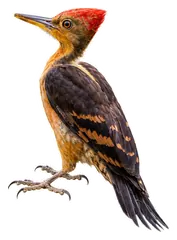 Orange-backed WoodpeckerChrysocolaptes validus
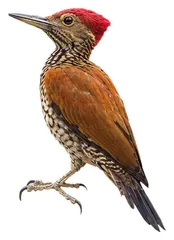 Buff-spotted FlamebackChrysocolaptes lucidus
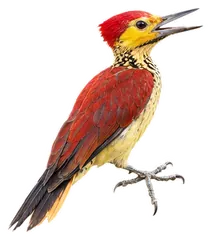 Yellow-faced FlamebackChrysocolaptes xanthocephalus
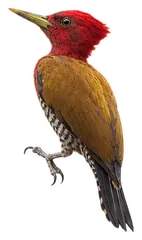 Red-headed FlamebackChrysocolaptes erythrocephalus
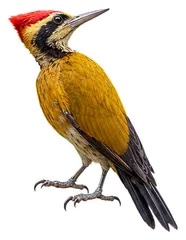 Javan FlamebackChrysocolaptes strictus
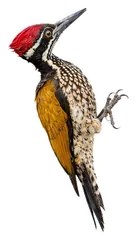 Greater FlamebackChrysocolaptes guttacristatus
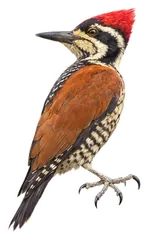 Malabar FlamebackChrysocolaptes socialis
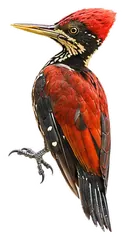 Crimson-backed FlamebackChrysocolaptes stricklandi
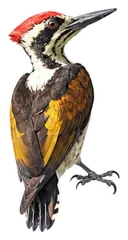 White-naped WoodpeckerChrysocolaptes festivus
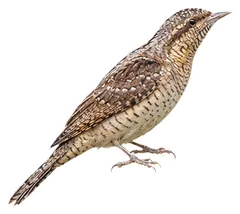 Eurasian WryneckJynx torquilla
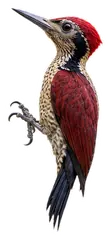
Download illustration
Free to use with credit: “Illustration: Bird Album (birdalbum.com)”. Drawn by AI from a reference photo by Forest Botial-Jarvis. ↗
Heard it but can't see it? Mingji identifies birds by sound and photo, on your phone.