 Bird Album
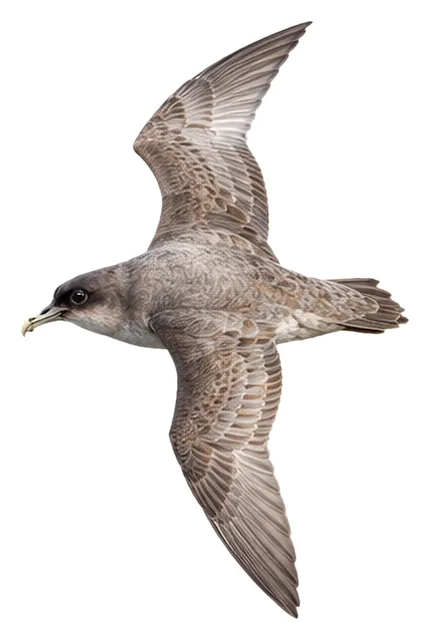
Grey Petrel
Procellaria cinerea Gmelin, JF, 1789
1.1 kgWeight
The grey petrel (Procellaria cinerea), also called the gray petrel, brown petrel, pediunker or grey shearwater, is a species of seabird in the Procellariidae, or petrel family.
Busiest months: June and August · Most records: Australia, French Southern Territories, New Zealand
Where and when it's recorded

Grey Petrel has been recorded at 23 of the 8,171 birding hotspots we track, in 8 countries and regions.
Records by month Southern Hemisphere
Where it's recorded most
- Eaglehawk Neck Pelagic TripAustralia332 records
- Kaikoura – offshore – Albatross Encounter pelagicNew Zealand24 records
- Nearshore waters (0-2mi/3km) - Gaggins Point to Rockhopper PointSt. Helena20 records
More places
- Cap RatmanoffFrench Southern Territories15 records
- Ile HauteFrench Southern Territories14 records
- Ile MayèsFrench Southern Territories12 records
- Port-aux-FrançaisFrench Southern Territories11 records
- Poor Knights Shelf AreaNew Zealand10 records
- Gough Island general pelagic - CircumnavigationSt. Helena8 records
- Stewart Island – east coast pelagic watersNew Zealand4 records
Countries and regions with the most records
eBird records via GBIF up to 2024-12-31. A record means someone listed it; more records partly mean more birders, not more birds.
About
The grey petrel (Procellaria cinerea), also called the gray petrel, brown petrel, pediunker or grey shearwater, is a species of seabird in the Procellariidae, or petrel family. It is pelagic and occurs in the open seas of the Southern Hemisphere, mainly between 32°S and 58°S.
Excerpt from Wikipedia, CC BY-SA 4.0 · authors · Read more on Wikipedia
Questions
How big is the Grey Petrel?
The Grey Petrel weighs around 1.1 kg.
Where does the Grey Petrel live?
Its breeding range: Southern Ocean: islets of southern temperate and subantarctic oceans from Inaccessible and Gough (central South Atlantic Ocean) to Macquarie (far southeast of Australia), Antipodes (southeast of Stewart Island) and Campbell islands (south of South Island; New Zealand). It is most often recorded in Australia, French Southern Territories and New Zealand.
When is the best time to see the Grey Petrel?
At the hotspots we track, it is recorded most in June and August (Southern Hemisphere).
Is the Grey Petrel endangered?
The IUCN Red List classifies the Grey Petrel as Near Threatened.
What does the Grey Petrel eat?
Main food: Fish, shrimp & shellfish.
What family is the Grey Petrel in?
It belongs to the family Petrels, Shearwaters, Diving Petrels (Procellariidae), order Procellariiformes.
At a glance
- Weight
- 1.1 kg
- Habitat
- Ocean
- Diet
- Fish, shrimp & shellfish
- Lifestyle
- Varied
- Migration
- Partial migrant
- Conservation
- Near Threatened
More measurements
- Wing
- 326 mm
- Tail
- 100 mm
- Bill
- 50 mm
- Tarsus
- 57 mm
Averages from the AVONET dataset; length from field guides where available.
Range
Southern Ocean: islets of southern temperate and subantarctic oceans from Inaccessible and Gough (central South Atlantic Ocean) to Macquarie (far southeast of Australia), Antipodes (southeast of Stewart Island) and Campbell islands (south of South Island; New Zealand)
Breeding range, IOC World Bird List 15.2
Classification
- Order
- Procellariiformes
- Family
- Petrels, Shearwaters, Diving Petrels Procellariidae
- Genus
- Procellaria
Other birds in the genus Procellaria
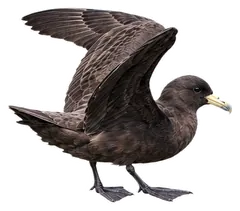 White-chinned PetrelProcellaria aequinoctialis
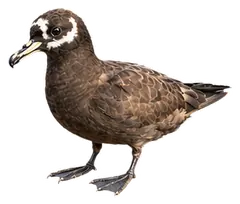 Spectacled PetrelProcellaria conspicillata
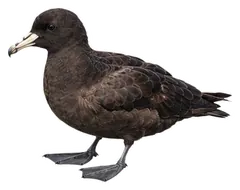 Black PetrelProcellaria parkinsoni
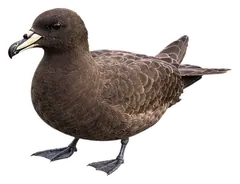 Westland PetrelProcellaria westlandica
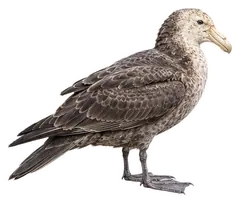 Southern Giant PetrelMacronectes giganteus
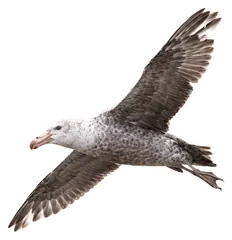 Northern Giant PetrelMacronectes halli
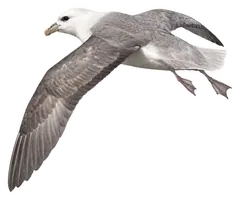 Northern FulmarFulmarus glacialis
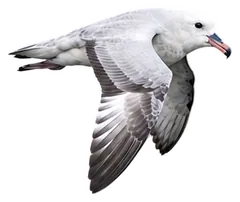 Southern FulmarFulmarus glacialoides
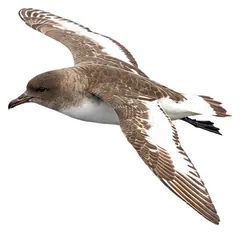 Antarctic PetrelThalassoica antarctica
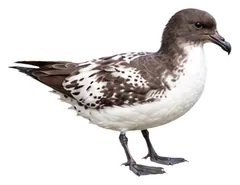 Pintado PetrelDaption capense
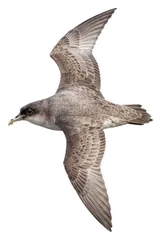
Download illustration
Free to use with credit: “Illustration: Bird Album (birdalbum.com)”. Drawn by AI from a reference photo by JJ Harrison. ↗
Heard it but can't see it? Mingji identifies birds by sound and photo, on your phone.