 Bird Album
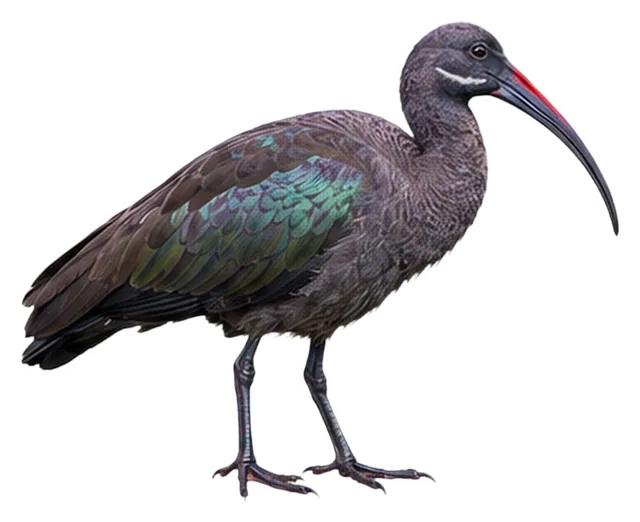
Hadada Ibis
Bostrychia hagedash (Latham, 1790)
76 cmLength1.2 kgWeight
The hadada ibis (Bostrychia hagedash) or hadeda is an ibis native to Sub-Saharan Africa.
Busiest months: October–November · Most records: South Africa, Kenya, Uganda
Where and when it's recorded
Busiest months: October–November · Most records: South Africa, Kenya, Uganda

Hadada Ibis has been recorded at 467 of the 8,276 birding hotspots we track, in 40 countries and regions.
Records by month Southern Hemisphere
Where it's recorded most
- Strandfontein WTPSouth Africa2,492 records
- Kirstenbosch Botanical GardenSouth Africa2,468 records
- Nairobi NPKenya1,769 records
More places
- Entebbe Botanical GardenUganda1,613 records
- Kruger NP – Skukuza CampSouth Africa1,234 records
- Lake Nakuru NPKenya1,141 records
- Rietvlei NRSouth Africa904 records
- Marievale Bird SanctuarySouth Africa843 records
- Lake Mburo NPUganda698 records
- Walter Sisulu National Botanical GardenSouth Africa683 records
Countries and regions with the most records
eBird records via GBIF up to 2024-12-31. A record means someone listed it; more records partly mean more birders, not more birds.
About
The hadada ibis (Bostrychia hagedash) or hadeda is an ibis native to Sub-Saharan Africa. It is named for its loud three to four note calls uttered in flight especially in the mornings and evenings when they fly out or return to their roost trees. Although not as dependent on water as some ibises, they are found near wetlands and often live in close proximity to humans, foraging in cultivated land and gardens.
Excerpt from Wikipedia, CC BY-SA 4.0 · authors · Read more on Wikipedia
Questions
How big is the Hadada Ibis?
The Hadada Ibis is about 76 cm long and weighs around 1.2 kg.
Where does the Hadada Ibis live?
Its breeding range: Africa: widespread. It is most often recorded in South Africa, Kenya and Uganda.
When is the best time to see the Hadada Ibis?
At the hotspots we track, it is recorded most in October and November (Southern Hemisphere).
Is the Hadada Ibis endangered?
The IUCN Red List classifies the Hadada Ibis as Least Concern.
What does the Hadada Ibis eat?
Main food: Insects & other invertebrates.
What family is the Hadada Ibis in?
It belongs to the family Ibises, Spoonbills (Threskiornithidae), order Pelecaniformes.
At a glance
- Length
- 76 cm
- Weight
- 1.2 kg
- Habitat
- Grassland
- Diet
- Insects & other invertebrates
- Lifestyle
- Active on the ground
- Migration
- Resident (barely migrates)
- Conservation
- Least Concern
More measurements
- Wing
- 339 mm
- Tail
- 162 mm
- Bill
- 144 mm
- Tarsus
- 74 mm
Averages from the AVONET dataset; length from field guides where available.
Range
Africa: widespread
Breeding range, IOC World Bird List 15.2
Classification
- Order
- Pelecaniformes
- Family
- Ibises, Spoonbills Threskiornithidae
- Genus
- Bostrychia
Other birds in the genus Bostrychia
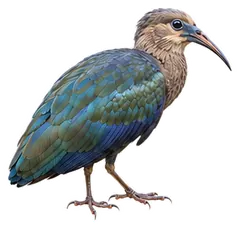 Olive IbisBostrychia olivacea
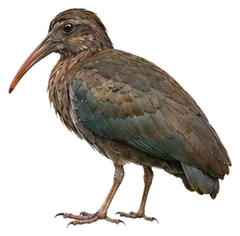 Sao Tome IbisBostrychia bocagei
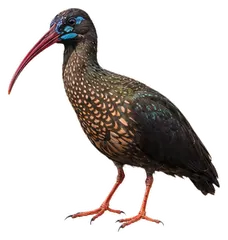 Spot-breasted IbisBostrychia rara
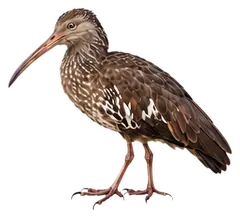 Wattled IbisBostrychia carunculata
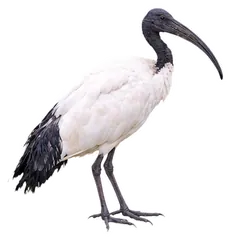 African Sacred IbisThreskiornis aethiopicus
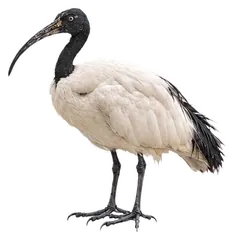 Malagasy Sacred IbisThreskiornis bernieri
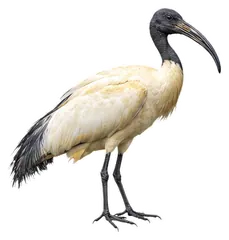 Black-headed IbisThreskiornis melanocephalus
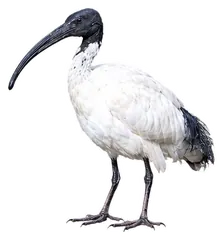 Australian White IbisThreskiornis molucca
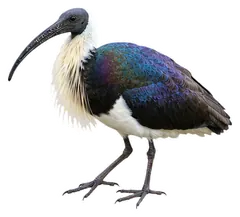 Straw-necked IbisThreskiornis spinicollis
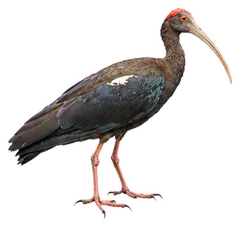 Red-naped IbisPseudibis papillosa
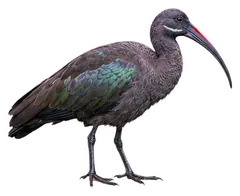
Download illustration
Free to use with credit: “Illustration: Bird Album (birdalbum.com)”. Drawn by AI from a reference photo by Sunil Onamkulam. ↗
Heard it but can't see it? Mingji identifies birds by sound and photo, on your phone.