 Bird Album
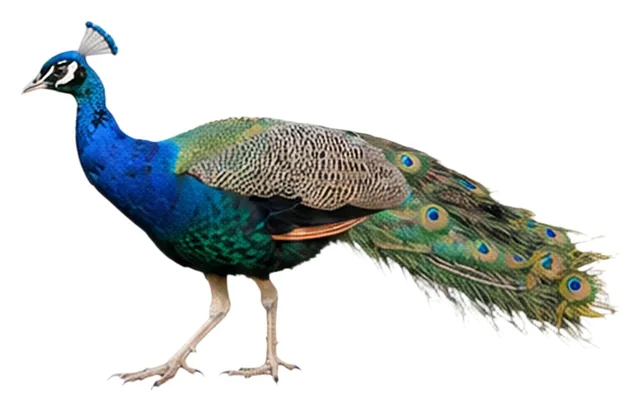
Indian Peafowl
Pavo cristatus Linnaeus, 1758
≈95 cmLength4.2 kgWeight
The adult male has a fan-shaped crest and spreads a train covered in colorful eyespots.
Busiest months: February · Most records: India, Sri Lanka, United States
How to identify
Field marks
- Adult male has a metallic-blue crown and fan-shaped crest
- Adult male has a long blue neck
- Adult male has colorful eyespots on the long train feathers
- Female has a white face and a green sheen on the lower neck
Voice
Calls are loud and sometimes alert others to a nearby predator.
Where and when it's recorded

Indian Peafowl has been recorded at 547 of the 8,171 birding hotspots we track, in 56 countries and regions.
Records by month Northern Hemisphere
Where it's recorded most
- GKVK CampusIndia11,771 records
- Kanha NP – Mukki ZoneIndia9,706 records
- Irvine Regional ParkUnited States4,883 records
More places
- Salim Ali Centre for Ornithology and Natural HistoryIndia4,256 records
- Bharatpur – Keoladeo Ghana NPIndia3,858 records
- Vetal Tekdi/HillIndia2,792 records
- Jayantilal ParkIndia2,716 records
- Kanha NP – Kanha ZoneIndia2,360 records
- Krishnampathi Lake, SeeranaickenpalayamIndia1,997 records
- Kerala Agricultural UniversityIndia1,963 records
Countries and regions with the most records
eBird records via GBIF up to 2024-12-31. A record means someone listed it; more records partly mean more birders, not more birds.
About
The Indian peafowl (Pavo cristatus), also known as the common peafowl, or blue peafowl, is a species of peafowl native to the Indian subcontinent. While it originated in the Indian subcontinent, it has since been introduced to many other parts of the world. Male peafowl are referred to as peacocks, and female peafowl are referred to as peahens, although both sexes are often referred to colloquially as a "peacock".
Excerpt from Wikipedia, CC BY-SA 4.0 · authors · Read more on Wikipedia
Questions
How big is the Indian Peafowl?
The Indian Peafowl is about ≈95 cm long and weighs around 4.2 kg.
Where does the Indian Peafowl live?
Its breeding range: Oriental: India, Pakistan and Sri Lanka. It is most often recorded in India, Sri Lanka and United States.
When is the best time to see the Indian Peafowl?
At the hotspots we track, it is recorded most in February (Northern Hemisphere).
Is the Indian Peafowl endangered?
The IUCN Red List classifies the Indian Peafowl as Least Concern.
What does the Indian Peafowl eat?
Main food: Omnivore.
What family is the Indian Peafowl in?
It belongs to the family Pheasants & Allies (Phasianidae), order Galliformes.
At a glance
- Length
- ≈95 cm
- Weight
- 4.2 kg
- Habitat
- Forest
- Diet
- Omnivore
- Lifestyle
- Active on the ground
- Migration
- Resident (barely migrates)
- Conservation
- Least Concern
More measurements
- Wing
- 445 mm
- Tail
- 403 mm
- Bill
- 49 mm
- Tarsus
- 130 mm
Averages from the AVONET dataset; length from field guides where available.
Range
Oriental: India, Pakistan and Sri Lanka
Breeding range, IOC World Bird List 15.2
Classification
- Order
- Galliformes
- Family
- Pheasants & Allies Phasianidae
- Genus
- Pavo
Other birds in the genus Pavo
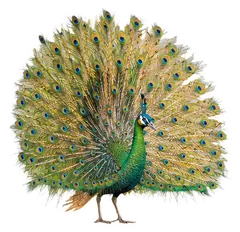 Green PeafowlPavo muticus
 Udzungwa Forest PartridgeXenoperdix udzungwensis
 Ferruginous PartridgeCaloperdix oculeus
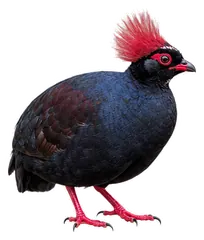 Crested PartridgeRollulus rouloul
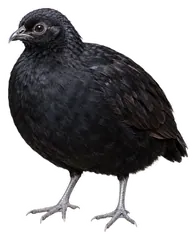 Black PartridgeMelanoperdix niger
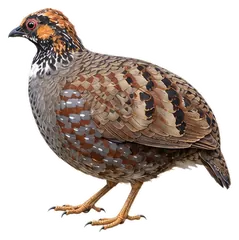 Hill PartridgeArborophila torqueola
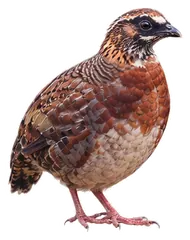 Sichuan PartridgeArborophila rufipectus
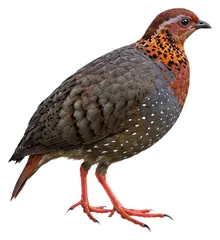 Chestnut-breasted PartridgeArborophila mandellii
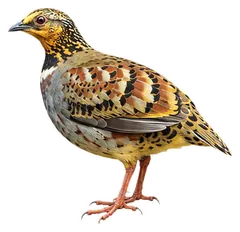 White-necklaced PartridgeArborophila gingica
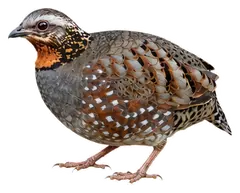 Rufous-throated PartridgeArborophila rufogularis
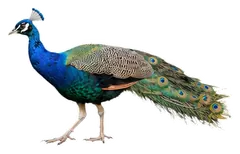
Download illustration
Free to use with credit: “Illustration: Bird Album (birdalbum.com)”. Drawn by AI from a reference photo by John C. Avise. ↗
Heard it but can't see it? Mingji identifies birds by sound and photo, on your phone.