 Bird Album
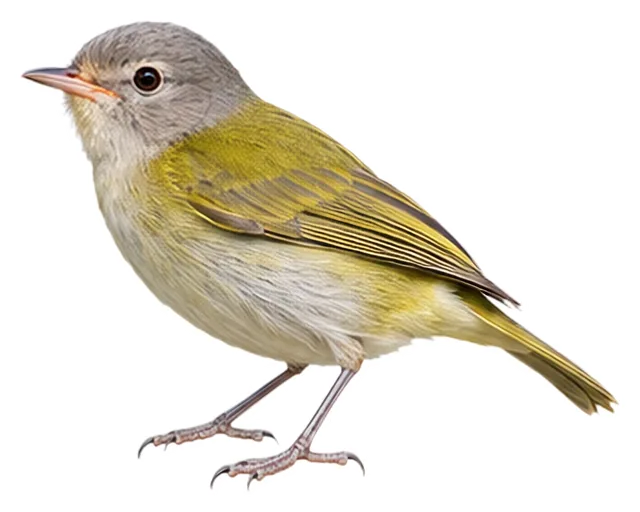
Lesser Greenlet
Pachysylvia decurtata (Bonaparte, 1838)
9.4–10 cmLength8.5 gWeight
The lesser greenlet (Pachysylvia decurtata) is a small passerine bird in the family Vireonidae, the vireos, greenlets, and shrike-babblers.
Busiest months: March · Most records: Costa Rica, Panama, Belize
Where and when it's recorded
Busiest months: March · Most records: Costa Rica, Panama, Belize

Lesser Greenlet has been recorded at 318 of the 8,276 birding hotspots we track, in 10 countries and regions.
Records by month Northern Hemisphere
Where it's recorded most
- Estación Biológica La Selva-OTSCosta Rica5,187 records
- Black Rock LodgeBelize4,074 records
- Canopy TowerPanama3,896 records
More places
- PN Carara-Entrada principal [senderos Quebrada Bonita y Universal]Costa Rica3,736 records
- Arenal Observatory LodgeCosta Rica3,253 records
- Curi-Cancha Refugio de Vida SilvestreCosta Rica2,920 records
- Rancho NaturalistaCosta Rica2,419 records
- Refugio mixto Caño NegroCosta Rica1,934 records
- Tirimbina Rainforest CenterCosta Rica1,922 records
- Pipeline Road (Camino del Oleoducto)Panama1,781 records
Countries and regions with the most records
eBird records via GBIF up to 2024-12-31. A record means someone listed it; more records partly mean more birders, not more birds.
About
The lesser greenlet (Pachysylvia decurtata) is a small passerine bird in the family Vireonidae, the vireos, greenlets, and shrike-babblers. It is found in Mexico, every Central American country, Colombia, Ecuador, and Peru.
Excerpt from Wikipedia, CC BY-SA 4.0 · authors · Read more on Wikipedia
Questions
How big is the Lesser Greenlet?
The Lesser Greenlet is about 9.4–10 cm long and weighs around 8.5 g.
Where does the Lesser Greenlet live?
Its breeding range: Middle America, South America: eastern Mexico to northwestern Peru. It is most often recorded in Costa Rica, Panama and Belize.
When is the best time to see the Lesser Greenlet?
At the hotspots we track, it is recorded most in March (Northern Hemisphere).
Is the Lesser Greenlet endangered?
The IUCN Red List classifies the Lesser Greenlet as Least Concern.
What does the Lesser Greenlet eat?
Main food: Insects & other invertebrates.
What family is the Lesser Greenlet in?
It belongs to the family Vireos, Greenlets, Shrike-babblers (Vireonidae), order Passerines (Passeriformes).
At a glance
- Length
- 9.4–10 cm
- Weight
- 8.5 g
- Habitat
- Forest
- Diet
- Insects & other invertebrates
- Lifestyle
- Perches in trees
- Migration
- Resident (barely migrates)
- Conservation
- Least Concern
More measurements
- Wing
- 52 mm
- Tail
- 36 mm
- Bill
- 15 mm
- Tarsus
- 17 mm
Averages from the AVONET dataset; length from field guides where available.
Range
Middle America, South America: eastern Mexico to northwestern Peru
Breeding range, IOC World Bird List 15.2
Classification
- Order
- Passerines Passeriformes
- Family
- Vireos, Greenlets, Shrike-babblers Vireonidae
- Genus
- Pachysylvia
Other birds in the genus Pachysylvia
 Dusky-capped GreenletPachysylvia hypoxantha
 Buff-cheeked GreenletPachysylvia muscicapina
 Golden-fronted GreenletPachysylvia aurantiifrons
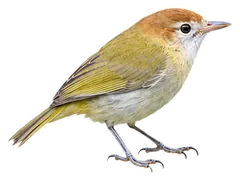 Rufous-naped GreenletPachysylvia semibrunnea
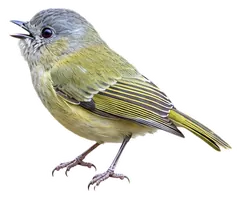 Green Shrike-babblerPteruthius xanthochlorus
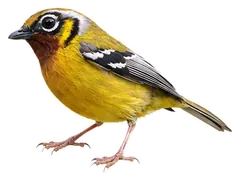 Black-eared Shrike-babblerPteruthius melanotis
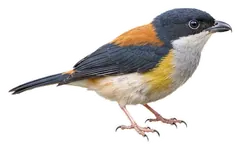 Black-headed Shrike-babblerPteruthius rufiventer
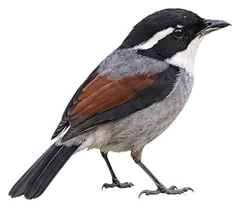 White-browed Shrike-babblerPteruthius aeralatus
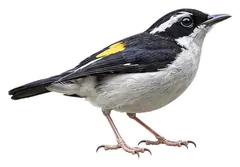 Pied Shrike-babblerPteruthius flaviscapis
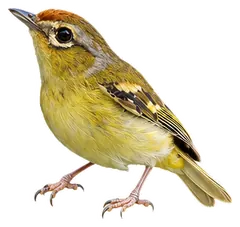 Clicking Shrike-babblerPteruthius intermedius
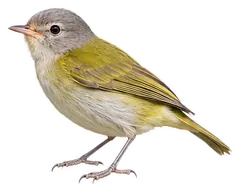
Download illustration
Free to use with credit: “Illustration: Bird Album (birdalbum.com)”. Drawn by AI from a reference photo by A Emmerson. ↗
Heard it but can't see it? Mingji identifies birds by sound and photo, on your phone.