 Bird Album
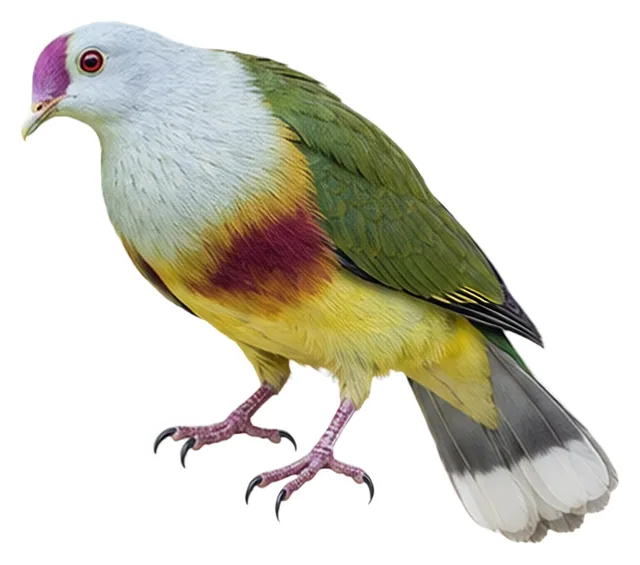
Lilac-crowned Fruit Dove
Ptilinopus rarotongensis Hartlaub & Finsch, 1871
98 gWeight
The lilac-crowned fruit dove (Ptilinopus rarotongensis), also known as the Rarotonga fruit-dove or Cook Islands fruit-dove, is one of over 50 species of Ptilinopus (the fruit doves or fruit pigeons).
Busiest months: December–January and July–August · Most records: Cook Islands
Where and when it's recorded

Lilac-crowned Fruit Dove has been recorded at 8 of the 8,171 birding hotspots we track, in 1 country or region.
Records by month Southern Hemisphere
Where it's recorded most
- Atiu IslandCook Islands58 records
- Rarotonga – Takitumu Conservation AreaCook Islands30 records
- Rarotonga – Te Rua Manga (Needle) TrackCook Islands24 records
More places
- Rarotonga – Wigmore Watefall areaCook Islands18 records
- RarotongaCook Islands14 records
- Rarotonga – Avarua vicinityCook Islands5 records
- Titikaveka Coastline & village areaCook Islands2 records
- Rarotonga – Muri Beach/LagoonCook Islands2 records
Countries and regions with the most records
eBird records via GBIF up to 2024-12-31. A record means someone listed it; more records partly mean more birders, not more birds.
About
The lilac-crowned fruit dove (Ptilinopus rarotongensis), also known as the Rarotonga fruit-dove or Cook Islands fruit-dove, is one of over 50 species of Ptilinopus (the fruit doves or fruit pigeons).
Excerpt from Wikipedia, CC BY-SA 4.0 · authors · Read more on Wikipedia
Questions
How big is the Lilac-crowned Fruit Dove?
The Lilac-crowned Fruit Dove weighs around 98 g.
Where does the Lilac-crowned Fruit Dove live?
Its breeding range: Pacific Ocean: Rarotonga and Atiu (southern Cook Islands, eastern Polynesia). It is most often recorded in Cook Islands.
When is the best time to see the Lilac-crowned Fruit Dove?
At the hotspots we track, it is recorded most in January, July, August and December (Southern Hemisphere).
Is the Lilac-crowned Fruit Dove endangered?
The IUCN Red List classifies the Lilac-crowned Fruit Dove as Near Threatened.
What does the Lilac-crowned Fruit Dove eat?
Main food: Fruit.
What family is the Lilac-crowned Fruit Dove in?
It belongs to the family Pigeons, Doves (Columbidae), order Columbiformes.
At a glance
- Weight
- 98 g
- Habitat
- Forest
- Diet
- Fruit
- Lifestyle
- Perches in trees
- Migration
- Resident (barely migrates)
- Conservation
- Near Threatened
More measurements
- Wing
- 124 mm
- Tail
- 80 mm
- Bill
- 16 mm
- Tarsus
- 26 mm
Averages from the AVONET dataset; length from field guides where available.
Range
Pacific Ocean: Rarotonga and Atiu (southern Cook Islands, eastern Polynesia)
Breeding range, IOC World Bird List 15.2
Classification
- Order
- Columbiformes
- Family
- Pigeons, Doves Columbidae
- Genus
- Ptilinopus
Other birds in the genus Ptilinopus
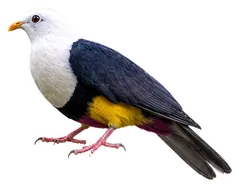 Banded Fruit DovePtilinopus cinctus
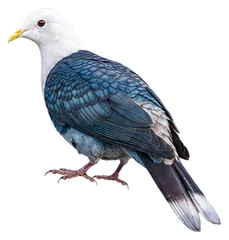 Black-banded Fruit DovePtilinopus alligator
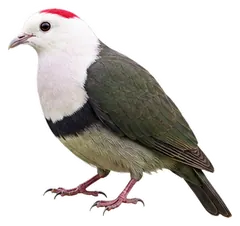 Red-naped Fruit DovePtilinopus dohertyi
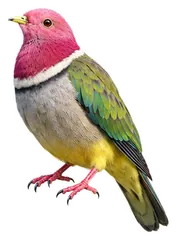 Pink-headed Fruit DovePtilinopus porphyreus
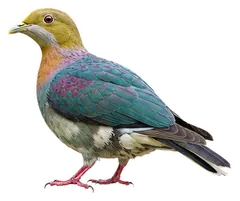 Pink-spotted Fruit DovePtilinopus perlatus
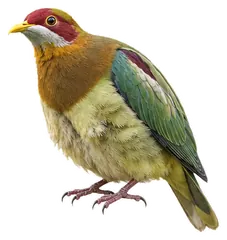 Ornate Fruit DovePtilinopus ornatus
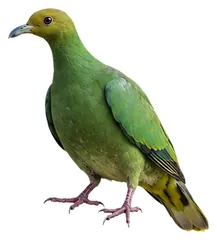 Tanna Fruit DovePtilinopus tannensis
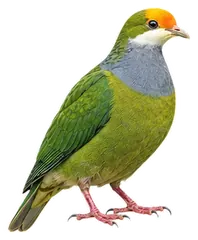 Orange-fronted Fruit DovePtilinopus aurantiifrons
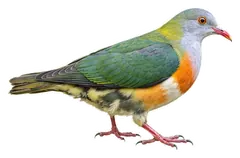 Wallace's Fruit DovePtilinopus wallacii
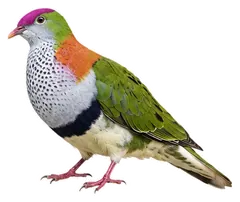 Superb Fruit DovePtilinopus superbus
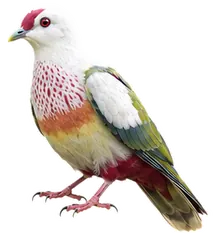 Many-colored Fruit DovePtilinopus perousii
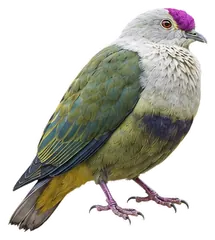 Crimson-crowned Fruit DovePtilinopus porphyraceus
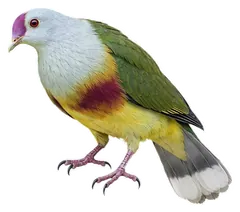
Download illustration
Free to use with credit: “Illustration: Bird Album (birdalbum.com)”. Drawn by AI from a reference photo by Kirby Morejohn. ↗
Heard it but can't see it? Mingji identifies birds by sound and photo, on your phone.
In other languages
- EnglishLilac-crowned Fruit Dove
- 简体中文拉罗果鸠
- 繁體中文庫克島果鳩
- 日本語ラロトンガヒメアオバト
- DeutschRarotongafruchttaube
- FrançaisPtilope de Rarotonga
- EspañolTilopo de Rarotonga
- Portuguêspombo-frugívoro-das-cook
- ItalianoTortora beccafrutta delle Cook
- NederlandsRarotongajufferduif
- РусскийРаротонгский фруктовый голубь
- Svenskararotongafruktduva
- DanskRarotongafrugtdue
- Polskiowocożer różowoczelny