 Bird Album
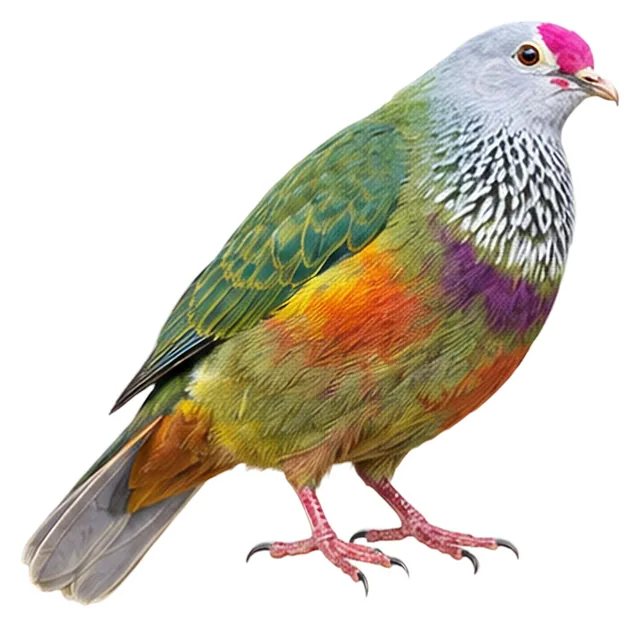
Mariana Fruit Dove
Ptilinopus roseicapilla (Lesson, RP, 1831)
90 gWeight
Busiest months: March–April · Most records: Northern Mariana Islands
Where and when it's recorded
Busiest months: March–April · Most records: Northern Mariana Islands

Mariana Fruit Dove has been recorded at 10 of the 8,276 birding hotspots we track, in 1 country or region.
Records by month Northern Hemisphere
Where it's recorded most
- Rota Resort and Country ClubNorthern Mariana Islands142 records
- Pinatang ParkNorthern Mariana Islands140 records
- WW II MemorialsNorthern Mariana Islands118 records
More places
- Seabird Sanctuary, RotaNorthern Mariana Islands77 records
- Rota airport filedsNorthern Mariana Islands53 records
- Rota Sewage Treatment PlantNorthern Mariana Islands45 records
- American Memorial ParkNorthern Mariana Islands26 records
- Puerto Rico mudflatsNorthern Mariana Islands9 records
- Airport catchment pondNorthern Mariana Islands7 records
- Landfill WetlandNorthern Mariana Islands5 records
Countries and regions with the most records
eBird records via GBIF up to 2024-12-31. A record means someone listed it; more records partly mean more birders, not more birds.
About
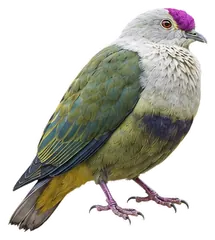
The Mariana fruit dove (Ptilinopus roseicapilla), totot in the Northern Marianas Islands or Paluman totut on Guam, also known as mwee'mwe in the Carolinian language, is a small, up to 24 cm (9.4 in) long, green fruit dove native and endemic to the Northern Marianas Islands in the Pacific and Guam. It has a red forehead; greyish head, back and breast; and yellow belly patch and undertail coverts. Sightings of the Mariana Fruit Dove on Guam are rare with up to two sightings per year.
Excerpt from Wikipedia, CC BY-SA 4.0 · authors · Read more on Wikipedia
Questions
How big is the Mariana Fruit Dove?
The Mariana Fruit Dove weighs around 90 g.
Where does the Mariana Fruit Dove live?
Its breeding range: Pacific Ocean: Saipan, Tinian, Agiguan and Rota (southern Northern Mariana Islands, western Micronesia) and Guam (southern Mariana Islands, where extinct). It is most often recorded in Northern Mariana Islands.
When is the best time to see the Mariana Fruit Dove?
At the hotspots we track, it is recorded most in March and April (Northern Hemisphere).
Is the Mariana Fruit Dove endangered?
The IUCN Red List classifies the Mariana Fruit Dove as Near Threatened.
What does the Mariana Fruit Dove eat?
Main food: Fruit.
What family is the Mariana Fruit Dove in?
It belongs to the family Pigeons, Doves (Columbidae), order Columbiformes.
At a glance
- Weight
- 90 g
- Habitat
- Forest
- Diet
- Fruit
- Lifestyle
- Perches in trees
- Migration
- Resident (barely migrates)
- Conservation
- Near Threatened
More measurements
- Wing
- 122 mm
- Tail
- 72 mm
- Bill
- 18 mm
- Tarsus
- 25 mm
Averages from the AVONET dataset; length from field guides where available.
Range
Pacific Ocean: Saipan, Tinian, Agiguan and Rota (southern Northern Mariana Islands, western Micronesia) and Guam (southern Mariana Islands, where extinct)
Breeding range, IOC World Bird List 15.2
Classification
- Order
- Columbiformes
- Family
- Pigeons, Doves Columbidae
- Genus
- Ptilinopus
Other birds in the genus Ptilinopus
 Banded Fruit DovePtilinopus cinctus
 Black-banded Fruit DovePtilinopus alligator
 Red-naped Fruit DovePtilinopus dohertyi
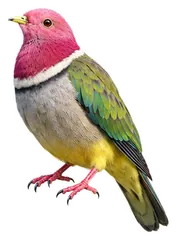 Pink-headed Fruit DovePtilinopus porphyreus
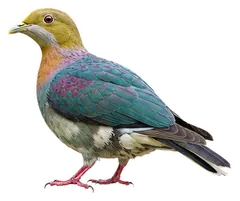 Pink-spotted Fruit DovePtilinopus perlatus
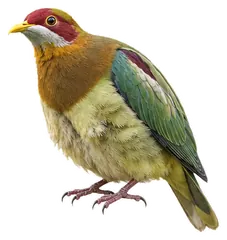 Ornate Fruit DovePtilinopus ornatus
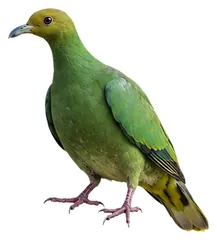 Tanna Fruit DovePtilinopus tannensis
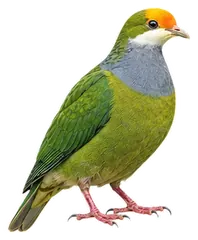 Orange-fronted Fruit DovePtilinopus aurantiifrons
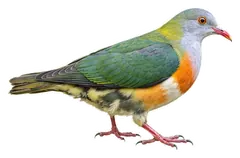 Wallace's Fruit DovePtilinopus wallacii
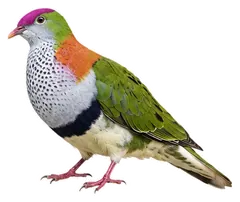 Superb Fruit DovePtilinopus superbus
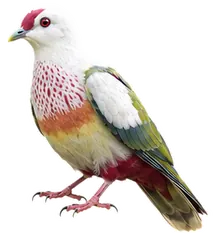 Many-colored Fruit DovePtilinopus perousii
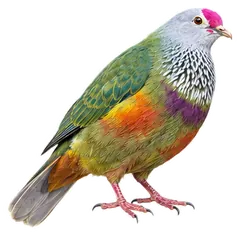
 Crimson-crowned Fruit DovePtilinopus porphyraceus
Download illustration
Free to use with credit: “Illustration: Bird Album (birdalbum.com)”. Drawn by AI from a reference photo by DickDaniels. ↗
Heard it but can't see it? Mingji identifies birds by sound and photo, on your phone.
In other languages
- EnglishMariana Fruit Dove
- 简体中文马里岛果鸠
- 繁體中文馬里亞納果鳩
- 日本語コバシヒメアオバト
- DeutschMarianenfruchttaube
- FrançaisPtilope des Mariannes
- EspañolTilopo de las Marianas
- Portuguêspombo-frugívoro-das-marianas
- ItalianoTortora beccafrutta delle Marianne
- NederlandsMarianenjufferduif
- РусскийМарианский фруктовый голубь
- Svenskamarianerfruktduva
- DanskMarianerfrugtdue
- Polskiowocożer mariański