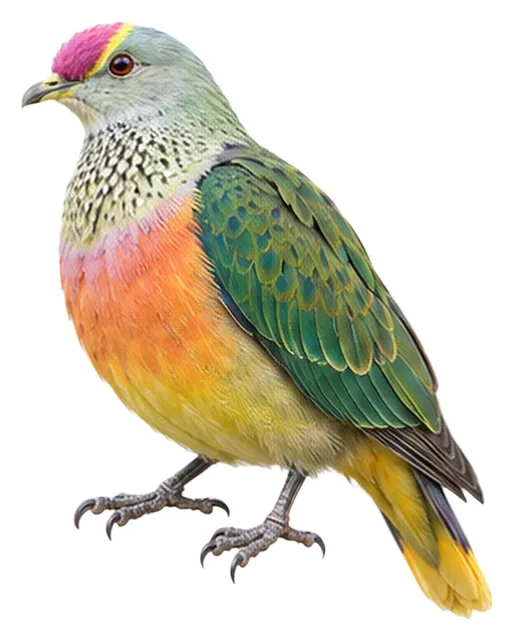
Rose-crowned Fruit Dove
Ptilinopus regina Swainson, 1825
102 gWeight
The rose-crowned fruit dove (Ptilinopus regina), also known as pink-capped fruit dove or Swainson's fruit dove, is a medium-sized fruit dove that is found in parts of southern Indonesia, northern and eastern Australia and East Timor.
Busiest months: October and December · Most records: Australia, Timor-Leste
Where and when it's recorded
Busiest months: October and December · Most records: Australia, Timor-Leste

Rose-crowned Fruit Dove has been recorded at 74 of the 8,276 birding hotspots we track, in 2 countries and regions.
Records by month Southern Hemisphere
Where it's recorded most
- Fogg Dam Conservation ReserveAustralia723 records
- Cairns Esplanade – Northern EndAustralia546 records
- Lake Samsonvale – Golds Scrub LaneAustralia529 records
More places
- Ballina Heights NorthAustralia441 records
- Mary Cairncross ReserveAustralia423 records
- Cairns EsplanadeAustralia387 records
- D'Aguilar National Park – Maiala Loop WalkAustralia385 records
- Gold Creek ReservoirAustralia350 records
- Finch Hatton GorgeAustralia340 records
- George Brown Darwin Botanic GardensAustralia304 records
Countries and regions with the most records
eBird records via GBIF up to 2024-12-31. A record means someone listed it; more records partly mean more birders, not more birds.
About
The rose-crowned fruit dove (Ptilinopus regina), also known as pink-capped fruit dove or Swainson's fruit dove, is a medium-sized fruit dove that is found in parts of southern Indonesia, northern and eastern Australia and East Timor.
Excerpt from Wikipedia, CC BY-SA 4.0 · authors · Read more on Wikipedia
Questions
How big is the Rose-crowned Fruit Dove?
The Rose-crowned Fruit Dove weighs around 102 g.
Where does the Rose-crowned Fruit Dove live?
Its breeding range: Australasia: central, eastern Lesser Sundas and northern, eastern Australia. It is most often recorded in Australia and Timor-Leste.
When is the best time to see the Rose-crowned Fruit Dove?
At the hotspots we track, it is recorded most in October and December (Southern Hemisphere).
Is the Rose-crowned Fruit Dove endangered?
The IUCN Red List classifies the Rose-crowned Fruit Dove as Least Concern.
What does the Rose-crowned Fruit Dove eat?
Main food: Fruit.
What family is the Rose-crowned Fruit Dove in?
It belongs to the family Pigeons, Doves (Columbidae), order Columbiformes.
At a glance
- Weight
- 102 g
- Habitat
- Forest
- Diet
- Fruit
- Lifestyle
- Perches in trees
- Migration
- Resident (barely migrates)
- Conservation
- Least Concern
More measurements
- Wing
- 127 mm
- Tail
- 67 mm
- Bill
- 17 mm
- Tarsus
- 20 mm
Averages from the AVONET dataset; length from field guides where available.
Range
Australasia: central, eastern Lesser Sundas and northern, eastern Australia
Breeding range, IOC World Bird List 15.2
Classification
- Order
- Columbiformes
- Family
- Pigeons, Doves Columbidae
- Genus
- Ptilinopus
Other birds in the genus Ptilinopus
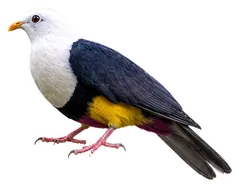 Banded Fruit DovePtilinopus cinctus
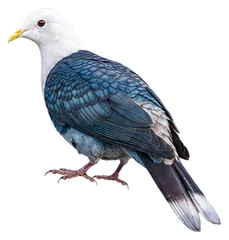 Black-banded Fruit DovePtilinopus alligator
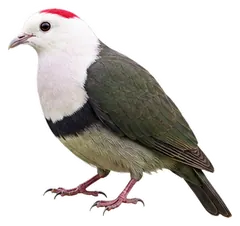 Red-naped Fruit DovePtilinopus dohertyi
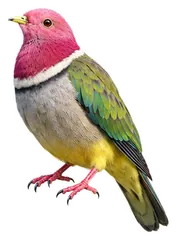 Pink-headed Fruit DovePtilinopus porphyreus
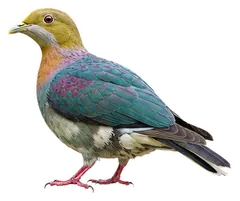 Pink-spotted Fruit DovePtilinopus perlatus
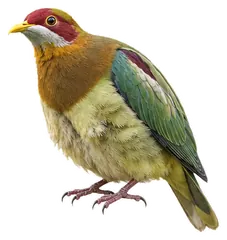 Ornate Fruit DovePtilinopus ornatus
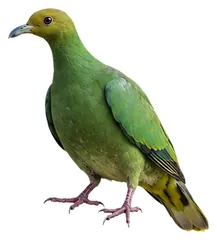 Tanna Fruit DovePtilinopus tannensis
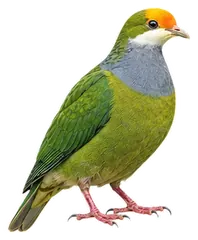 Orange-fronted Fruit DovePtilinopus aurantiifrons
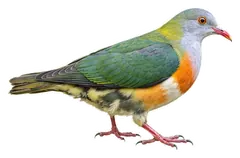 Wallace's Fruit DovePtilinopus wallacii
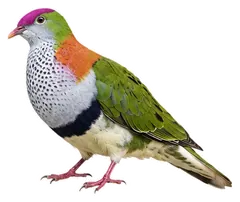 Superb Fruit DovePtilinopus superbus
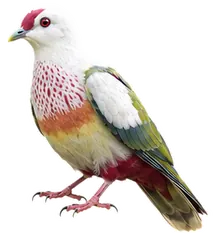 Many-colored Fruit DovePtilinopus perousii
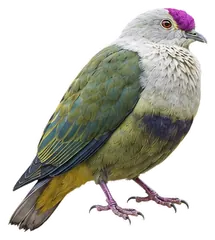 Crimson-crowned Fruit DovePtilinopus porphyraceus
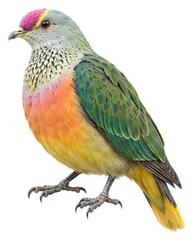
Download illustration
Free to use with credit: “Illustration: Bird Album (birdalbum.com)”. Drawn by AI from a reference photo by James Boettcher FNQ Nature Tours. ↗
Heard it but can't see it? Mingji identifies birds by sound and photo, on your phone.
In other languages
- EnglishRose-crowned Fruit Dove
- 简体中文粉顶果鸠
- 繁體中文粉頂果鳩
- 日本語ベニビタイヒメアオバト
- DeutschKönigsfruchttaube
- FrançaisPtilope à diadème
- EspañolTilopo reina
- Portuguêspombo-frugívoro-de-coroa-rosada
- ItalianoTortora beccafrutta caporosa
- NederlandsSwainsons Jufferduif
- РусскийКоролевский фруктовый голубь
- Svenskarosenkronad fruktduva
- DanskDiademfrugtdue
- Polskiowocożer królewski