 Bird Album
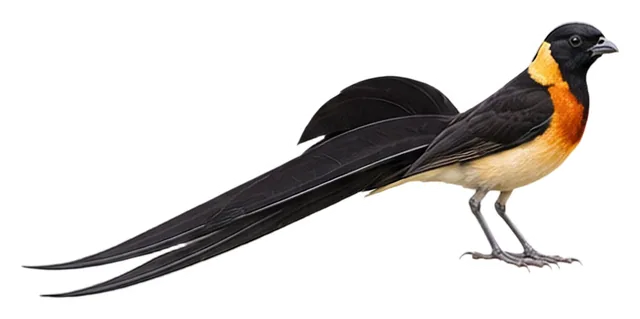
Long-tailed Paradise Whydah
Vidua paradisaea (Linnaeus, 1758)
≈14 cmLength20 gWeight
The male in the breeding season has a black head and back, a rusty breast and exceptionally long tail feathers.
Busiest months: January–February · Most records: South Africa, Kenya, Tanzania
Looks like Broad-tailed Paradise Whydah
How to identify
Field marks
- Male in the breeding season has a black head and back
- Breeding male has a rusty breast, bright yellowish-brown nape and white belly
- Breeding male has a broad, long tail that can exceed 36 cm
- Non-breeding male is mostly brown, with black crown stripes
Male, female and young
The female usually has a gray bill and gray-brown plumage with dark streaks; males in the non-breeding season are difficult to distinguish from females.
Voice
The male mimics the host bird’s song.
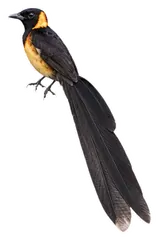
Similar species
Where and when it's recorded
Busiest months: January–February · Most records: South Africa, Kenya, Tanzania

Long-tailed Paradise Whydah has been recorded at 244 of the 8,276 birding hotspots we track, in 16 countries and regions.
Records by month Southern Hemisphere
Where it's recorded most
- Mkhuze GRSouth Africa171 records
- Tarangire NPTanzania153 records
- Tsavo West NPKenya112 records
More places
- Zaagkuildrift RdSouth Africa107 records
- Lake Manyara NPTanzania95 records
- Kruger NP – Satara CampSouth Africa83 records
- Tsavo East NP – Southern SectionKenya78 records
- Phinda GR – AirfieldSouth Africa77 records
- Sagala Lodge/Ndara RanchKenya76 records
- Awash NPEthiopia75 records
Countries and regions with the most records
eBird records via GBIF up to 2024-12-31. A record means someone listed it; more records partly mean more birders, not more birds.
About
The long-tailed paradise whydah or eastern paradise whydah (Vidua paradisaea) is a bird in the family Viduidae of the order Passeriformes. It is a small passerine with a short, stubby bill, found across eastern and southern Africa from Ethiopia south to South Africa and west to Angola. It is mostly granivorous, and feed on seeds that have ripened and fallen on the ground.
Excerpt from Wikipedia, CC BY-SA 4.0 · authors · Read more on Wikipedia
Questions
How big is the Long-tailed Paradise Whydah?
The Long-tailed Paradise Whydah is about ≈14 cm long and weighs around 20 g.
Where does the Long-tailed Paradise Whydah live?
Its breeding range: Africa: southeastern Sudan, Ethiopia and Somalia to northern South Africa. It is most often recorded in South Africa, Kenya and Tanzania.
When is the best time to see the Long-tailed Paradise Whydah?
At the hotspots we track, it is recorded most in January and February (Southern Hemisphere).
Is the Long-tailed Paradise Whydah endangered?
The IUCN Red List classifies the Long-tailed Paradise Whydah as Least Concern.
What does the Long-tailed Paradise Whydah eat?
Main food: Seeds.
What family is the Long-tailed Paradise Whydah in?
It belongs to the family Indigobirds, Whydahs (Viduidae), order Passerines (Passeriformes).
At a glance
- Length
- ≈14 cm
- Weight
- 20 g
- Habitat
- Woodland
- Diet
- Seeds
- Lifestyle
- Active on the ground
- Migration
- Resident (barely migrates)
- Conservation
- Least Concern
More measurements
- Wing
- 79 mm
- Tail
- 60 mm
- Bill
- 12 mm
- Tarsus
- 16 mm
Averages from the AVONET dataset; length from field guides where available.
Range
Africa: southeastern Sudan, Ethiopia and Somalia to northern South Africa
Breeding range, IOC World Bird List 15.2
Classification
- Order
- Passerines Passeriformes
- Family
- Indigobirds, Whydahs Viduidae
- Genus
- Vidua
Other birds in the genus Vidua
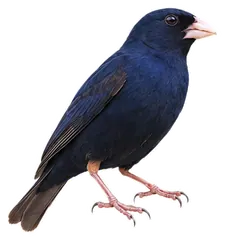 Village IndigobirdVidua chalybeata
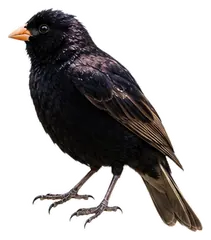 Purple IndigobirdVidua purpurascens
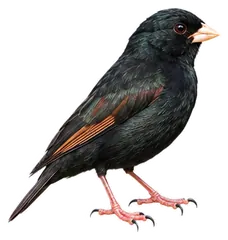 Jambandu IndigobirdVidua raricola
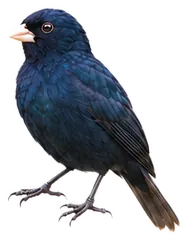 Barka IndigobirdVidua larvaticola
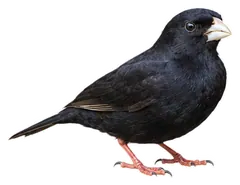 Dusky IndigobirdVidua funerea
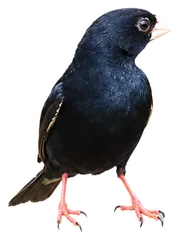 Zambezi IndigobirdVidua codringtoni
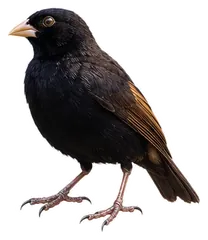 Wilson's IndigobirdVidua wilsoni
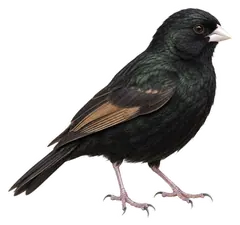 Quailfinch IndigobirdVidua nigeriae
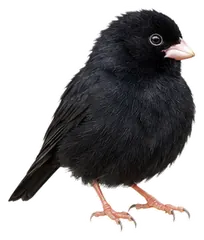 Jos Plateau IndigobirdVidua maryae
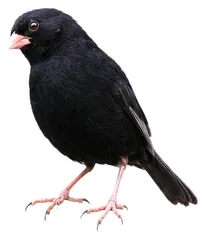 Cameroon IndigobirdVidua camerunensis
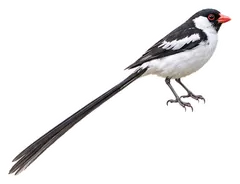 Pin-tailed WhydahVidua macroura
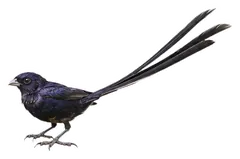 Steel-blue WhydahVidua hypocherina
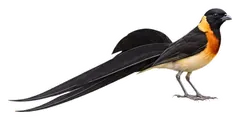
Download illustration
Free to use with credit: “Illustration: Bird Album (birdalbum.com)”. Drawn by AI from a reference photo by Warwick Tarboton. ↗
Heard it but can't see it? Mingji identifies birds by sound and photo, on your phone.
In other languages
- EnglishLong-tailed Paradise Whydah
- 简体中文乐园维达雀
- 繁體中文天堂維達雀
- 日本語ホウオウジャク
- DeutschSchmalschwanzwitwe
- FrançaisVeuve de paradis
- EspañolViuda del paraíso
- Portuguêsviúva-do-paraíso-rabilonga
- ItalianoVedova paradisea orientale
- NederlandsSmalstaartparadijswida
- РусскийДлиннохвостая райская вдовушка
- Svenskaöstlig paradisänka
- DanskParadisenke
- Polskiwdówka rajska