 Bird Album
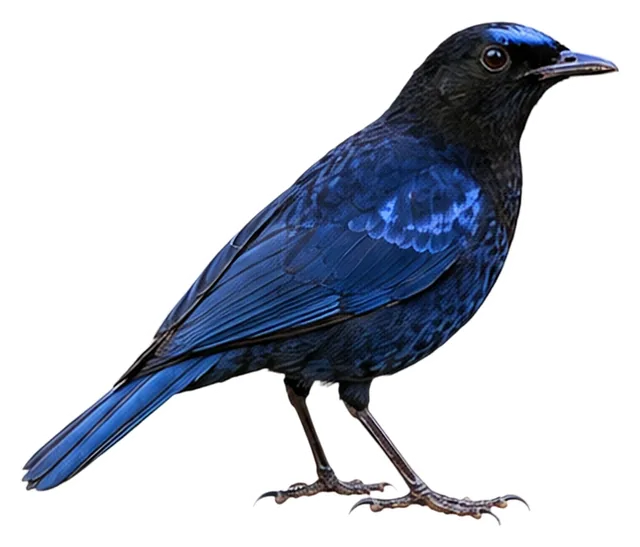
Malabar Whistling Thrush
Myophonus horsfieldii Vigors, 1831
117 gWeight
The Malabar whistling thrush (Myophonus horsfieldii) is a whistling thrush in the family Muscicapidae.
Busiest months: February and December · Most records: India
Where and when it's recorded
Busiest months: February and December · Most records: India

Malabar Whistling Thrush has been recorded at 25 of the 8,276 birding hotspots we track, in 1 country or region.
Records by month Northern Hemisphere
Where it's recorded most
- Bondla Wildlife SanctuaryIndia697 records
- Thattekkad Bird SanctuaryIndia441 records
- College of Veterinary and Animal Sciences, PookodeIndia213 records
More places
- Thattekad Bird Sanctuary – UrulanthanniIndia156 records
- Nandi HillsIndia151 records
- Eshwar Nagar, ManipalIndia150 records
- Manipal – End PointIndia135 records
- HergaIndia117 records
- Sinhagad ValleyIndia89 records
- Uma MaheswaramIndia88 records
Countries and regions with the most records
eBird records via GBIF up to 2024-12-31. A record means someone listed it; more records partly mean more birders, not more birds.
About
The Malabar whistling thrush (Myophonus horsfieldii) is a whistling thrush in the family Muscicapidae. The bird has been called whistling schoolboy for the whistling calls that they make at dawn that have a very human quality. The species is a resident in the Western Ghats and associated hills of peninsular India including central India and parts of the Eastern Ghats.
Excerpt from Wikipedia, CC BY-SA 4.0 · authors · Read more on Wikipedia
Questions
How big is the Malabar Whistling Thrush?
The Malabar Whistling Thrush weighs around 117 g.
Where does the Malabar Whistling Thrush live?
Its breeding range: Oriental: southern India. It is most often recorded in India.
When is the best time to see the Malabar Whistling Thrush?
At the hotspots we track, it is recorded most in February and December (Northern Hemisphere).
Is the Malabar Whistling Thrush endangered?
The IUCN Red List classifies the Malabar Whistling Thrush as Least Concern.
What does the Malabar Whistling Thrush eat?
Main food: Fish, shrimp & shellfish.
What family is the Malabar Whistling Thrush in?
It belongs to the family Chats, Old World Flycatchers (Muscicapidae), order Passerines (Passeriformes).
At a glance
- Weight
- 117 g
- Habitat
- Forest
- Diet
- Fish, shrimp & shellfish
- Lifestyle
- Active on the ground
- Migration
- Resident (barely migrates)
- Conservation
- Least Concern
More measurements
- Wing
- 151 mm
- Tail
- 113 mm
- Bill
- 32 mm
- Tarsus
- 44 mm
Averages from the AVONET dataset; length from field guides where available.
Range
Oriental: southern India
Breeding range, IOC World Bird List 15.2
Classification
- Order
- Passerines Passeriformes
- Family
- Chats, Old World Flycatchers Muscicapidae
- Genus
- Myophonus
Other birds in the genus Myophonus
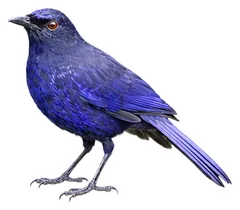 Taiwan Whistling ThrushMyophonus insularis
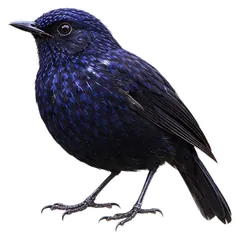 Shiny Whistling ThrushMyophonus melanurus
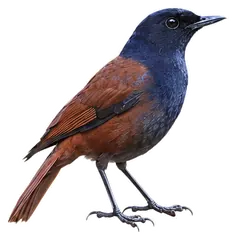 Brown-winged Whistling ThrushMyophonus castaneus
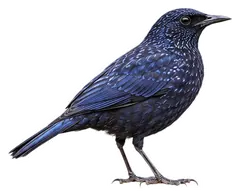 Blue Whistling ThrushMyophonus caeruleus
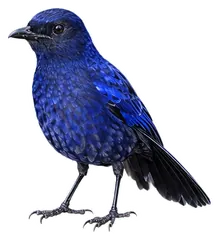 Javan Whistling ThrushMyophonus glaucinus
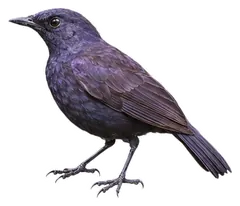 Bornean Whistling ThrushMyophonus borneensis
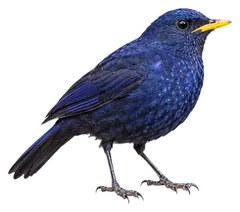 Malayan Whistling ThrushMyophonus robinsoni
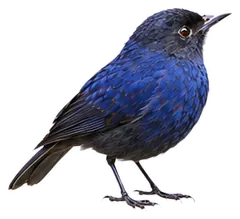 Sri Lanka Whistling ThrushMyophonus blighi
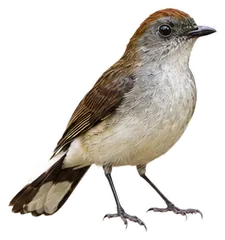 White-tailed AletheAlethe diademata
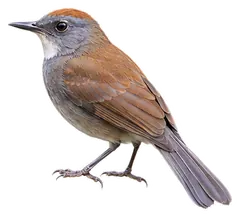 Fire-crested AletheAlethe castanea
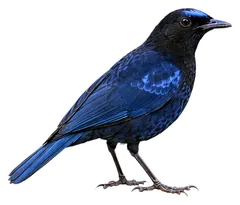
Download illustration
Free to use with credit: “Illustration: Bird Album (birdalbum.com)”. Drawn by AI from a reference photo by PJeganathan. ↗
Heard it but can't see it? Mingji identifies birds by sound and photo, on your phone.
In other languages
- EnglishMalabar Whistling Thrush
- 简体中文印度啸鸫
- 繁體中文馬拉巴紫嘯鶇
- 日本語インドルリチョウ
- DeutschMalabarpfeifdrossel
- FrançaisArrenga de Malabar
- EspañolArrenga indio
- Portuguêstordo-assobiador-do-malabar
- ItalianoTordo fischiatore del Malabar
- NederlandsMalabarfluitlijster
- РусскийМалабарская синяя птица
- Svenskaghatsvisseltrast
- DanskIndisk Fløjtedrossel
- Polskigwizdokos malabarski