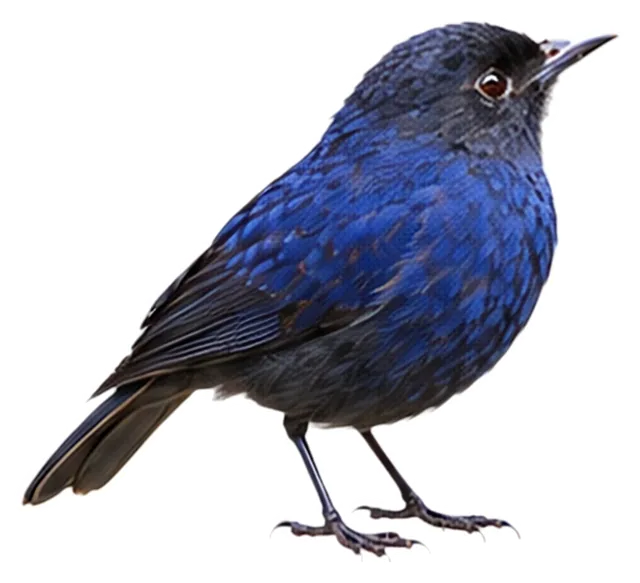
Sri Lanka Whistling Thrush
Myophonus blighi (Holdsworth, 1872)
67 gWeight
The Sri Lanka whistling thrush (Myophonus blighi) is a whistling thrush in the family Muscicapidae.
Busiest months: November · Most records: Sri Lanka
Where and when it's recorded
Busiest months: November · Most records: Sri Lanka

Sri Lanka Whistling Thrush has been recorded at 18 of the 8,276 birding hotspots we track, in 1 country or region.
Records by month Northern Hemisphere
Where it's recorded most
- Horton Plains National ParkSri Lanka371 records
- Horton plainsSri Lanka79 records
- Nuwara EliyaSri Lanka76 records
More places
- Victoria ParkSri Lanka46 records
- Sinharaja NP – Rainforest EcolodgeSri Lanka29 records
- Nuwara Eliya – Hakgala Botanical GardensSri Lanka18 records
- Sinharaja Forest ReserveSri Lanka5 records
- KitulgalaSri Lanka4 records
- Kudawa – Thurusevana RoadSri Lanka2 records
- Sinharaja Forest Reserve – Deniyaya accessSri Lanka2 records
Countries and regions with the most records
eBird records via GBIF up to 2024-12-31. A record means someone listed it; more records partly mean more birders, not more birds.
About
The Sri Lanka whistling thrush (Myophonus blighi) is a whistling thrush in the family Muscicapidae. It is a resident endemic bird in Sri Lanka.
Excerpt from Wikipedia, CC BY-SA 4.0 · authors · Read more on Wikipedia
Questions
How big is the Sri Lanka Whistling Thrush?
The Sri Lanka Whistling Thrush weighs around 67 g.
Where does the Sri Lanka Whistling Thrush live?
Its breeding range: Oriental: Sri Lanka. It is most often recorded in Sri Lanka.
When is the best time to see the Sri Lanka Whistling Thrush?
At the hotspots we track, it is recorded most in November (Northern Hemisphere).
Is the Sri Lanka Whistling Thrush endangered?
The IUCN Red List classifies the Sri Lanka Whistling Thrush as Endangered.
What does the Sri Lanka Whistling Thrush eat?
Main food: Insects & other invertebrates.
What family is the Sri Lanka Whistling Thrush in?
It belongs to the family Chats, Old World Flycatchers (Muscicapidae), order Passerines (Passeriformes).
At a glance
- Weight
- 67 g
- Habitat
- Forest
- Diet
- Insects & other invertebrates
- Lifestyle
- Active on the ground
- Migration
- Resident (barely migrates)
- Conservation
- Endangered
More measurements
- Wing
- 100 mm
- Tail
- 74 mm
- Bill
- 24 mm
- Tarsus
- 34 mm
Averages from the AVONET dataset; length from field guides where available.
Range
Oriental: Sri Lanka
Breeding range, IOC World Bird List 15.2
Classification
- Order
- Passerines Passeriformes
- Family
- Chats, Old World Flycatchers Muscicapidae
- Genus
- Myophonus
Other birds in the genus Myophonus
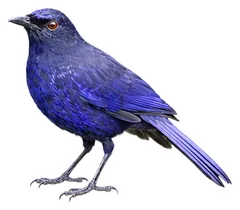 Taiwan Whistling ThrushMyophonus insularis
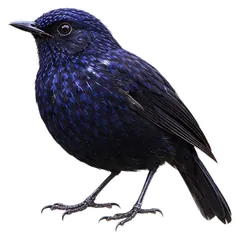 Shiny Whistling ThrushMyophonus melanurus
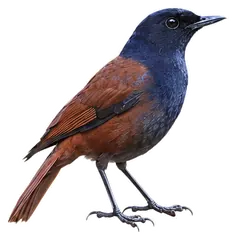 Brown-winged Whistling ThrushMyophonus castaneus
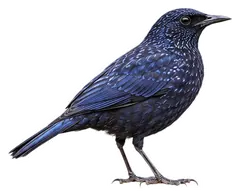 Blue Whistling ThrushMyophonus caeruleus
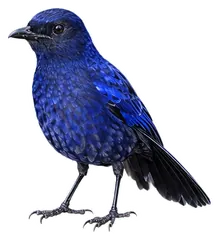 Javan Whistling ThrushMyophonus glaucinus
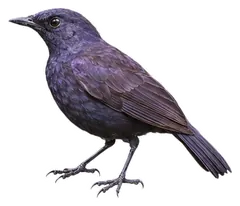 Bornean Whistling ThrushMyophonus borneensis
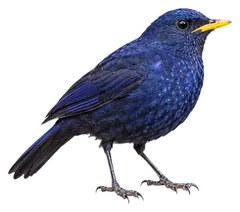 Malayan Whistling ThrushMyophonus robinsoni
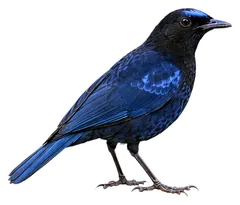 Malabar Whistling ThrushMyophonus horsfieldii
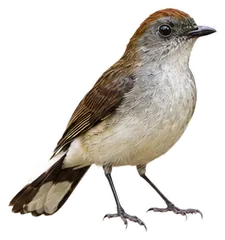 White-tailed AletheAlethe diademata
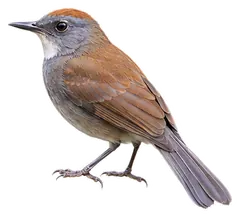 Fire-crested AletheAlethe castanea
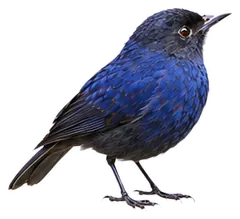
Download illustration
Free to use with credit: “Illustration: Bird Album (birdalbum.com)”. Drawn by AI from a reference photo by Sanjaya Kanishka. ↗
Heard it but can't see it? Mingji identifies birds by sound and photo, on your phone.
In other languages
- EnglishSri Lanka Whistling Thrush
- 简体中文斯里兰卡啸鸫
- 繁體中文布萊氏紫嘯鶇
- 日本語セイロンルリチョウ
- DeutschCeylonpfeifdrossel
- FrançaisArrenga de Ceylan
- EspañolArrenga de Ceilán
- Portuguêstordo-assobiador-cingalês
- ItalianoTordo fischiatore di Sri Lanka
- NederlandsCeylonfluitlijster
- РусскийЛанкийская синяя птица
- Svenskaceylonvisseltrast
- DanskSri Lanka-fløjtedrossel
- Polskigwizdokos cejloński