 Bird Album
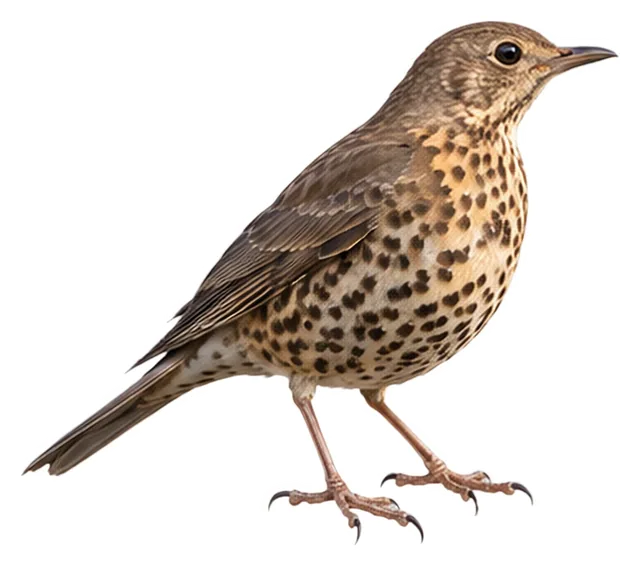
Mistle Thrush
Turdus viscivorus Linnaeus, 1758
27–28 cmLength44 cmWingspan117 gWeight
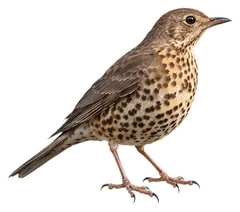
It is a rather large thrush with an upright stance and round black spots all over the breast and belly.
Busiest months: April and October · Most records: United Kingdom, Spain, Portugal
Looks like Song Thrush
How to identify
Field marks
- Yellowish-white breast and belly covered in round black spots
- Grayish-white throat
- White tips to outer tail feathers; white underwing
- Black bill with yellow at the base of the lower mandible
Male, female and young
The sexes have the same plumage; juveniles have paler upperparts with creamy teardrop-shaped markings in the feather centers, and smaller spots on the underparts.
Voice
A dry, sustained “krrrr”, like a football rattle; the male has a loud, fluty song.
Similar species
Where and when it's recorded
Busiest months: April and October · Most records: United Kingdom, Spain, Portugal

Mistle Thrush has been recorded at 1,122 of the 8,276 birding hotspots we track, in 72 countries and regions.
Records by month Northern Hemisphere
Where it's recorded most
- Amwell HMWT NRUnited Kingdom1,721 records
- Rutland WaterUnited Kingdom1,116 records
- Peak District NP – Underhill Farm, ElkstoneUnited Kingdom889 records
More places
- Zaragoza – Parque del AguaSpain811 records
- Wanstead FlatsUnited Kingdom797 records
- Aylestone Meadows LNRUnited Kingdom743 records
- East Tilbury River and MarshesUnited Kingdom733 records
- South Downs NP – Pulborough Brooks RSPB ReserveUnited Kingdom679 records
- Arnfield ReservoirUnited Kingdom664 records
- Elton ReservoirUnited Kingdom648 records
Countries and regions with the most records
eBird records via GBIF up to 2024-12-31. A record means someone listed it; more records partly mean more birders, not more birds.
About
The mistle thrush (Turdus viscivorus) is a bird common to much of Europe, temperate Asia and North Africa. It is a year-round resident in a large part of its range, but northern and eastern populations migrate south for the winter, often in small flocks. It is a large thrush with pale grey-brown upper parts, a greyish-white chin and throat, and black spots on its pale yellow and off-white under parts.
Excerpt from Wikipedia, CC BY-SA 4.0 · authors · Read more on Wikipedia
Questions
How big is the Mistle Thrush?
The Mistle Thrush is about 27–28 cm long, with a wingspan of 44 cm and weighs around 117 g.
Where does the Mistle Thrush live?
Its breeding range: Palearctic: central, western, also northern Africa. It is most often recorded in United Kingdom, Spain and Portugal.
When is the best time to see the Mistle Thrush?
At the hotspots we track, it is recorded most in April and October (Northern Hemisphere).
Is the Mistle Thrush endangered?
The IUCN Red List classifies the Mistle Thrush as Least Concern.
What does the Mistle Thrush eat?
Main food: Omnivore.
What family is the Mistle Thrush in?
It belongs to the family Thrushes (Turdidae), order Passerines (Passeriformes).
At a glance
- Length
- 27–28 cm
- Wingspan
- 44 cm
- Weight
- 117 g
- Habitat
- Forest
- Diet
- Omnivore
- Lifestyle
- Perches in trees
- Migration
- Resident (barely migrates)
- Conservation
- Least Concern
More measurements
- Wing
- 154 mm
- Tail
- 112 mm
- Bill
- 26 mm
- Tarsus
- 33 mm
Averages from the AVONET dataset; length from field guides where available.
Range
Palearctic: central, western, also northern Africa
Breeding range, IOC World Bird List 15.2
Classification
- Order
- Passerines Passeriformes
- Family
- Thrushes Turdidae
- Genus
- Turdus
Other birds in the genus Turdus
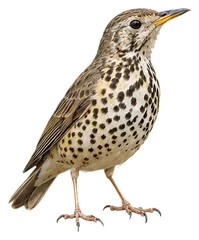 Ethiopian ThrushTurdus simensis
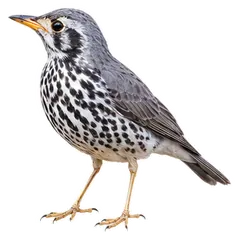 Groundscraper ThrushTurdus litsitsirupa
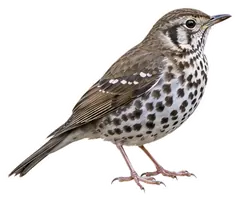 Chinese ThrushTurdus mupinensis
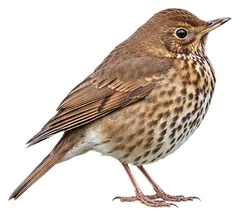 Song ThrushTurdus philomelos
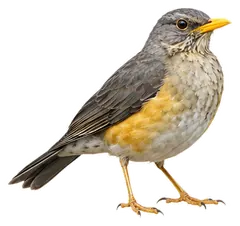 African ThrushTurdus pelios
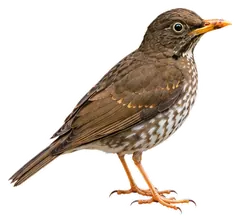 Principe ThrushTurdus xanthorhynchus
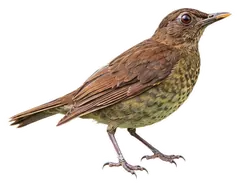 Sao Tome ThrushTurdus olivaceofuscus
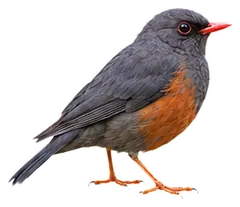 Abyssinian ThrushTurdus abyssinicus
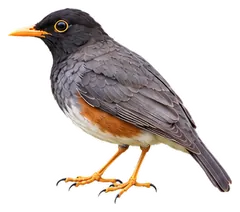 Taita ThrushTurdus helleri
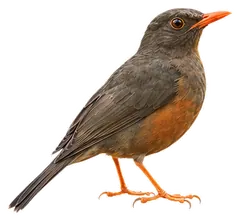 Usambara ThrushTurdus roehli
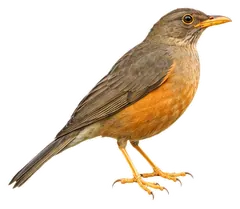 Olive ThrushTurdus olivaceus
 Kurrichane ThrushTurdus libonyana
Download illustration
Free to use with credit: “Illustration: Bird Album (birdalbum.com)”. Drawn by AI from a reference photo by Vyacheslav Luzanov. ↗
Heard it but can't see it? Mingji identifies birds by sound and photo, on your phone.