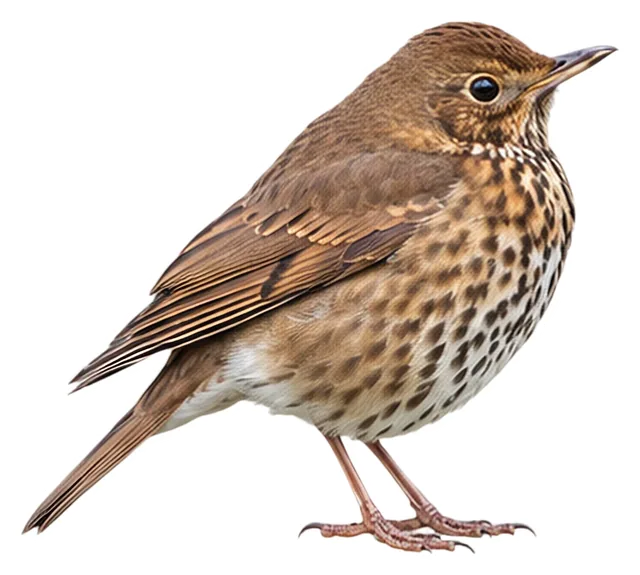
Song Thrush
Turdus philomelos Brehm, CL, 1831
20–24 cmLength36 cmWingspan68 gWeight
It has a brown back and creamy-white or pale yellow underparts with black spots; the male sings loudly and mimics sounds.
Busiest months: March–April and October · Most records: United Kingdom, Spain, New Zealand
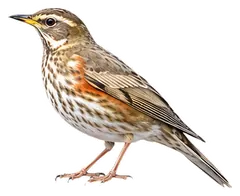
Looks like Redwing, Mistle Thrush, Chinese Thrush
How to identify
Field marks
- Brown back
- Creamy-white or pale yellow underparts with black spots
- Yellowish bill; warm yellow underwing
- Pink legs and feet
Male, female and young
Sexes similar; chicks resemble adults but have pale yellow or orange markings on the back and underwing.
Voice
The call is short and sharp; the male sings a clear song from high perches such as trees and rooftops.
Similar species
Where and when it's recorded
Busiest months: March–April and October · Most records: United Kingdom, Spain, New Zealand

Song Thrush has been recorded at 1,440 of the 8,276 birding hotspots we track, in 84 countries and regions.
Records by month Northern Hemisphere
Where it's recorded most
- Amwell HMWT NRUnited Kingdom5,207 records
- Txingudi – PlaiaundiSpain4,191 records
- Beddington FarmlandsUnited Kingdom2,823 records
More places
- South Downs NP – Pulborough Brooks RSPB ReserveUnited Kingdom2,184 records
- Rutland WaterUnited Kingdom2,010 records
- Walthamstow WetlandsUnited Kingdom1,793 records
- Titchwell Marsh RSPB ReserveUnited Kingdom1,767 records
- Brent ReservoirUnited Kingdom1,748 records
- Urdaibai RB – bird center y laguna de OruetaSpain1,670 records
- East Tilbury River and MarshesUnited Kingdom1,622 records
Countries and regions with the most records
eBird records via GBIF up to 2024-12-31. A record means someone listed it; more records partly mean more birders, not more birds.
About
The song thrush (Turdus philomelos) is a thrush that breeds across the West Palearctic. It has brown upperparts and black-spotted cream or buff underparts and has four recognised subspecies. Its distinctive song, which features repeated musical phrases, has frequently been referenced in poetry.
Excerpt from Wikipedia, CC BY-SA 4.0 · authors · Read more on Wikipedia
Questions
How big is the Song Thrush?
The Song Thrush is about 20–24 cm long, with a wingspan of 36 cm and weighs around 68 g.
Where does the Song Thrush live?
Its breeding range: Palearctic: central, western. It is most often recorded in United Kingdom, Spain and New Zealand.
When is the best time to see the Song Thrush?
At the hotspots we track, it is recorded most in March, April and October (Northern Hemisphere).
Is the Song Thrush endangered?
The IUCN Red List classifies the Song Thrush as Least Concern.
What does the Song Thrush eat?
Main food: Insects & other invertebrates.
What family is the Song Thrush in?
It belongs to the family Thrushes (Turdidae), order Passerines (Passeriformes).
At a glance
- Length
- 20–24 cm
- Wingspan
- 36 cm
- Weight
- 68 g
- Habitat
- Forest
- Diet
- Insects & other invertebrates
- Lifestyle
- Varied
- Migration
- Migratory
- Conservation
- Least Concern
More measurements
- Wing
- 116 mm
- Tail
- 82 mm
- Bill
- 23 mm
- Tarsus
- 32 mm
Averages from the AVONET dataset; length from field guides where available.
Range
Palearctic: central, western
Breeding range, IOC World Bird List 15.2
Classification
- Order
- Passerines Passeriformes
- Family
- Thrushes Turdidae
- Genus
- Turdus
Other birds in the genus Turdus
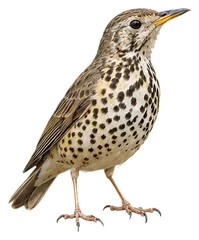 Ethiopian ThrushTurdus simensis
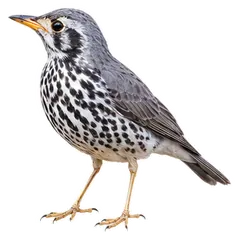 Groundscraper ThrushTurdus litsitsirupa
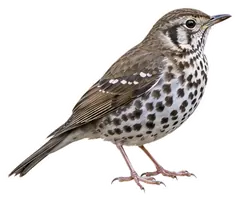 Chinese ThrushTurdus mupinensis
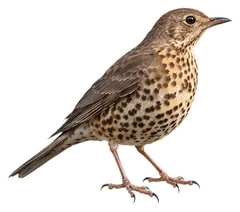 Mistle ThrushTurdus viscivorus
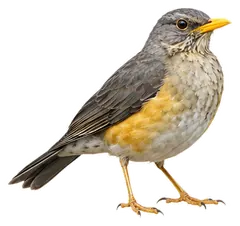 African ThrushTurdus pelios
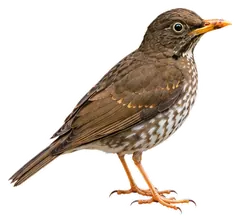 Principe ThrushTurdus xanthorhynchus
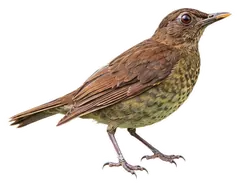 Sao Tome ThrushTurdus olivaceofuscus
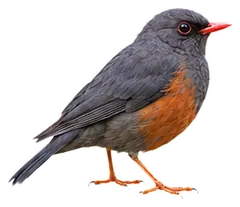 Abyssinian ThrushTurdus abyssinicus
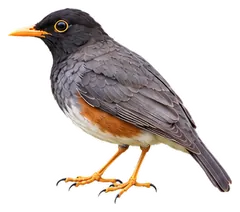 Taita ThrushTurdus helleri
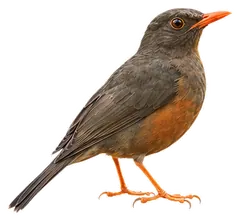 Usambara ThrushTurdus roehli
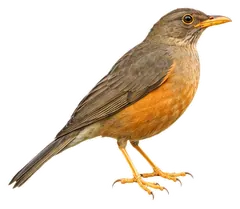 Olive ThrushTurdus olivaceus
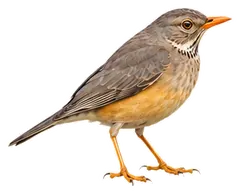 Kurrichane ThrushTurdus libonyana
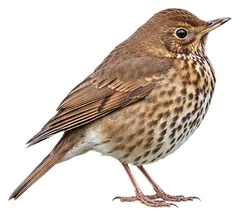
Download illustration
Free to use with credit: “Illustration: Bird Album (birdalbum.com)”. Drawn by AI from a reference photo by Mario. ↗
Heard it but can't see it? Mingji identifies birds by sound and photo, on your phone.