 Bird Album
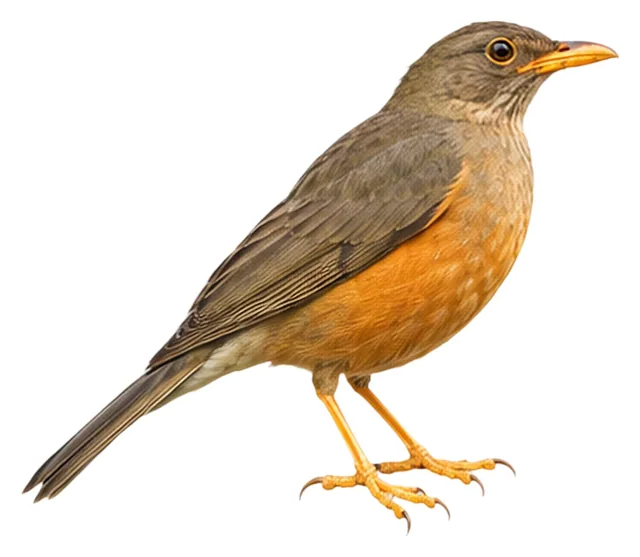
Olive Thrush
Turdus olivaceus Linnaeus, 1766
24 cmLength67 gWeight
The olive thrush (Turdus olivaceus) is, in its range, one of the most common members of the thrush family (Turdidae).
Busiest months: September–November · Most records: South Africa, Zimbabwe, Eswatini
Where and when it's recorded
Busiest months: September–November · Most records: South Africa, Zimbabwe, Eswatini

Olive Thrush has been recorded at 68 of the 8,276 birding hotspots we track, in 5 countries and regions.
Records by month Southern Hemisphere
Where it's recorded most
- Kirstenbosch Botanical GardenSouth Africa2,790 records
- Harold Porter Botanical GardensSouth Africa815 records
- Eshowe – Dlinza ForestSouth Africa401 records
More places
- Intaka IslandSouth Africa245 records
- Kirstenhof WetlandSouth Africa179 records
- Sani Pass (ZA) – low elevationSouth Africa172 records
- SeldomseenZimbabwe133 records
- PaardevleiSouth Africa63 records
- Wakkerstroom areaSouth Africa39 records
- Boulders BeachSouth Africa34 records
Countries and regions with the most records
eBird records via GBIF up to 2024-12-31. A record means someone listed it; more records partly mean more birders, not more birds.
About
The olive thrush (Turdus olivaceus) is, in its range, one of the most common members of the thrush family (Turdidae). It occurs in African highlands from the montane regions in Eastern and Central Africa in the north to the Cape of Good Hope in the south. It is a bird of forest and woodland, but has locally adapted to parks and large gardens in suburban areas.
Excerpt from Wikipedia, CC BY-SA 4.0 · authors · Read more on Wikipedia
Questions
How big is the Olive Thrush?
The Olive Thrush is about 24 cm long and weighs around 67 g.
Where does the Olive Thrush live?
Its breeding range: Africa: southeastern. It is most often recorded in South Africa, Zimbabwe and Eswatini.
When is the best time to see the Olive Thrush?
At the hotspots we track, it is recorded most in September, October and November (Southern Hemisphere).
Is the Olive Thrush endangered?
The IUCN Red List classifies the Olive Thrush as Least Concern.
What does the Olive Thrush eat?
Main food: Omnivore.
What family is the Olive Thrush in?
It belongs to the family Thrushes (Turdidae), order Passerines (Passeriformes).
At a glance
- Length
- 24 cm
- Weight
- 67 g
- Habitat
- Forest
- Diet
- Omnivore
- Lifestyle
- Varied
- Migration
- Resident (barely migrates)
- Conservation
- Least Concern
More measurements
- Wing
- 120 mm
- Tail
- 94 mm
- Bill
- 27 mm
- Tarsus
- 33 mm
Averages from the AVONET dataset; length from field guides where available.
Range
Africa: southeastern
Breeding range, IOC World Bird List 15.2
Classification
- Order
- Passerines Passeriformes
- Family
- Thrushes Turdidae
- Genus
- Turdus
Other birds in the genus Turdus
 Ethiopian ThrushTurdus simensis
 Groundscraper ThrushTurdus litsitsirupa
 Chinese ThrushTurdus mupinensis
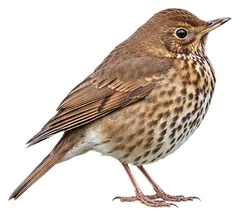 Song ThrushTurdus philomelos
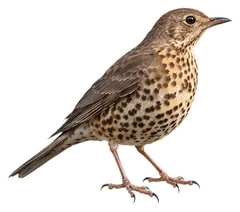 Mistle ThrushTurdus viscivorus
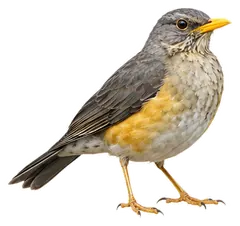 African ThrushTurdus pelios
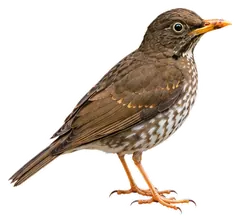 Principe ThrushTurdus xanthorhynchus
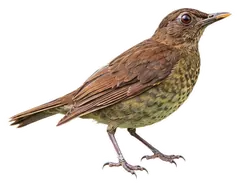 Sao Tome ThrushTurdus olivaceofuscus
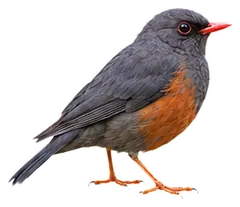 Abyssinian ThrushTurdus abyssinicus
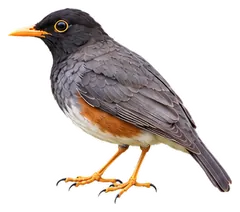 Taita ThrushTurdus helleri
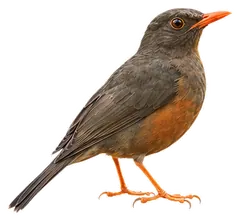 Usambara ThrushTurdus roehli
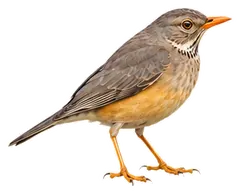 Kurrichane ThrushTurdus libonyana
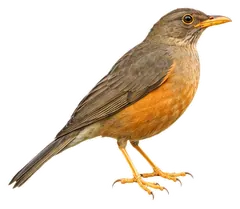
Download illustration
Free to use with credit: “Illustration: Bird Album (birdalbum.com)”. Drawn by AI from a reference photo by markus lilje. ↗
Heard it but can't see it? Mingji identifies birds by sound and photo, on your phone.