 Bird Album
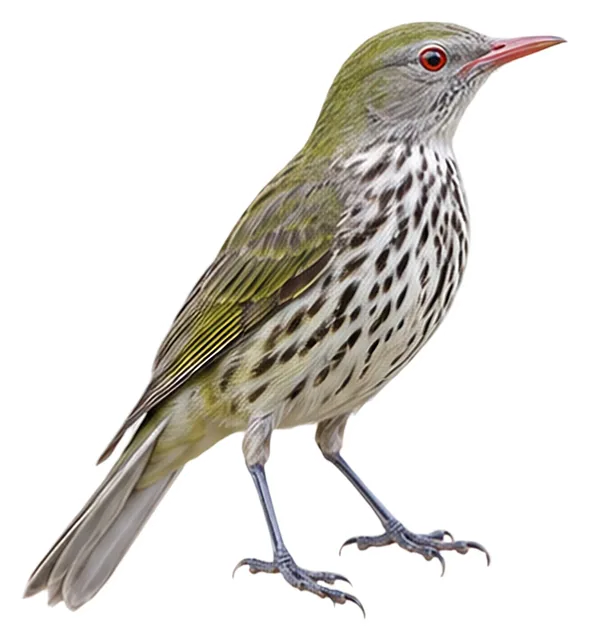
Olive-backed Oriole
Oriolus sagittatus (Latham, 1801)
95 gWeight
The olive-backed oriole (Oriolus sagittatus), or white-bellied oriole, is a very common medium-sized passerine bird native to northern and eastern Australia and south-central New Guinea.
Busiest months: October–November · Most records: Australia
Where and when it's recorded

Olive-backed Oriole has been recorded at 194 of the 8,171 birding hotspots we track, in 1 country or region.
Records by month Southern Hemisphere
Where it's recorded most
- Oxley Creek CommonAustralia3,091 records
- Sandy Camp Road WetlandsAustralia2,678 records
- Broome Bird ObservatoryAustralia2,179 records
More places
- Lake Samsonvale – Golds Scrub LaneAustralia2,038 records
- Gold Creek ReservoirAustralia1,568 records
- Kumbartcho SanctuaryAustralia1,082 records
- Bundaberg Botanical GardensAustralia1,041 records
- Dowse LagoonAustralia985 records
- Anstead Bushland ReserveAustralia878 records
- Nature Refuge Hawkesbury RoadAustralia821 records
Countries and regions with the most records
eBird records via GBIF up to 2024-12-31. A record means someone listed it; more records partly mean more birders, not more birds.
About
The olive-backed oriole (Oriolus sagittatus), or white-bellied oriole, is a very common medium-sized passerine bird native to northern and eastern Australia and south-central New Guinea. The most wide-ranging of the Australasian orioles, it is noisy and conspicuous.
Excerpt from Wikipedia, CC BY-SA 4.0 · authors · Read more on Wikipedia
Questions
How big is the Olive-backed Oriole?
The Olive-backed Oriole weighs around 95 g.
Where does the Olive-backed Oriole live?
Its breeding range: Australasia: Trans-Fly (south-central New Guinea) and northern, eastern Australia. It is most often recorded in Australia.
When is the best time to see the Olive-backed Oriole?
At the hotspots we track, it is recorded most in October and November (Southern Hemisphere).
Is the Olive-backed Oriole endangered?
The IUCN Red List classifies the Olive-backed Oriole as Least Concern.
What does the Olive-backed Oriole eat?
Main food: Omnivore.
What family is the Olive-backed Oriole in?
It belongs to the family Figbirds, Old World Orioles, Piopios (Oriolidae), order Passerines (Passeriformes).
At a glance
- Weight
- 95 g
- Habitat
- Woodland
- Diet
- Omnivore
- Lifestyle
- Perches in trees
- Migration
- Partial migrant
- Conservation
- Least Concern
More measurements
- Wing
- 145 mm
- Tail
- 100 mm
- Bill
- 34 mm
- Tarsus
- 26 mm
Averages from the AVONET dataset; length from field guides where available.
Range
Australasia: Trans-Fly (south-central New Guinea) and northern, eastern Australia
Breeding range, IOC World Bird List 15.2
Classification
- Order
- Passerines Passeriformes
- Family
- Figbirds, Old World Orioles, Piopios Oriolidae
- Genus
- Oriolus
Other birds in the genus Oriolus
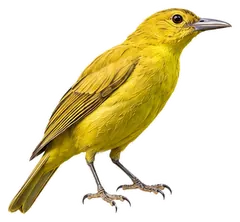 Isabela OrioleOriolus isabellae
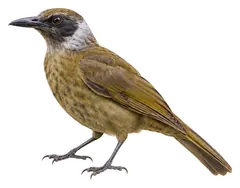 Grey-collared OrioleOriolus forsteni
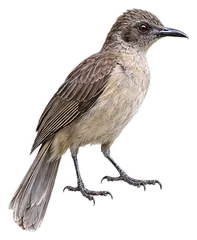 Black-eared OrioleOriolus bouroensis
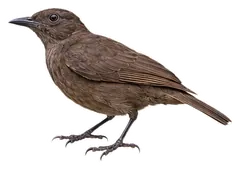 Dusky-brown OrioleOriolus phaeochromus
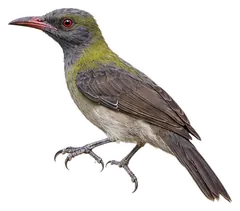 Timor OrioleOriolus melanotis
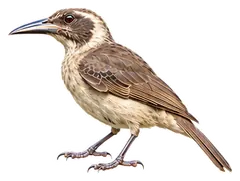 Wetar OrioleOriolus finschi
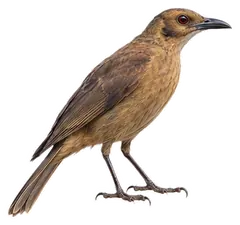 Tanimbar OrioleOriolus decipiens
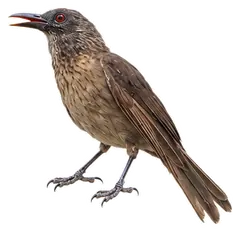 Brown OrioleOriolus szalayi
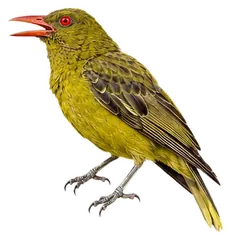 Green OrioleOriolus flavocinctus
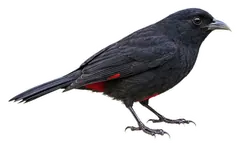 Javan OrioleOriolus cruentus
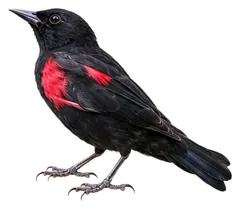 Black-and-crimson OrioleOriolus consanguineus
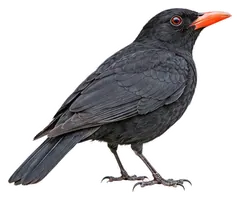 Black OrioleOriolus hosii
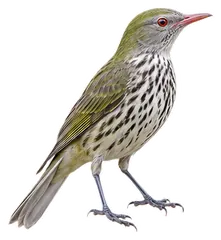
Download illustration
Free to use with credit: “Illustration: Bird Album (birdalbum.com)”. Drawn by AI from a reference photo by Andrew Allen. ↗
Heard it but can't see it? Mingji identifies birds by sound and photo, on your phone.