 Bird Album
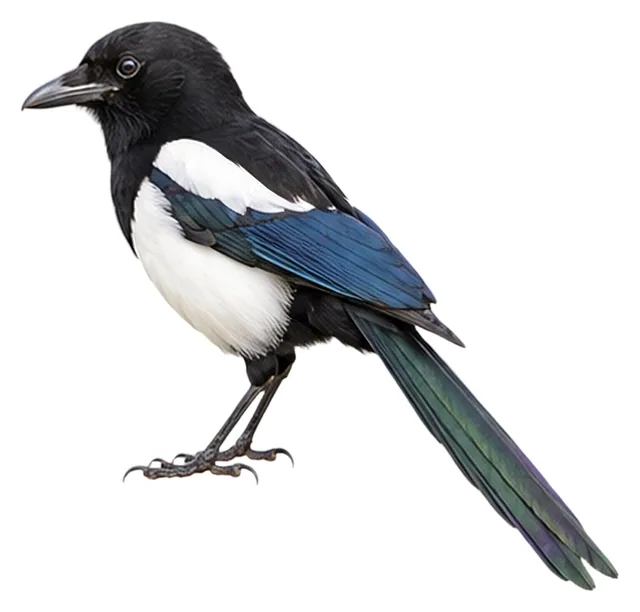
Oriental Magpie
Pica serica Gould, 1845
≈43 cmLength218 gWeight
It is a black-and-white bird about 45 cm in body length, with a purple-blue metallic gloss on the back and tail.
Busiest months: October–January and April–May · Most records: China, South Korea, Russia
Looks like Eurasian Magpie, Oriental Magpie-Robin
How to identify
Field marks
- Strong purple-blue iridescent sheen on the back, tail and flight feathers
- Rump mostly black, with a narrow band that often appears grayish-white
- About 45 cm long, with a proportionately shorter tail than Eurasian Magpie
Voice
Similar to Eurasian Magpie, but noticeably softer.
Similar species
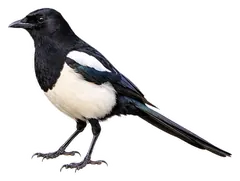
Slightly smaller than Eurasian Magpie, with a relatively shorter tail, relatively longer bill and legs, darker plumage and less white.
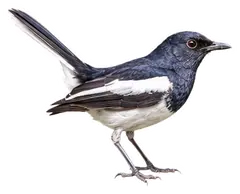
Oriental Magpie-Robin is also a black-and-white, long-tailed bird and is often mistaken for Oriental Magpie, but its body length is only about 20 cm.
Where and when it's recorded
Busiest months: October–January and April–May · Most records: China, South Korea, Russia

Oriental Magpie has been recorded at 1,297 of the 8,276 birding hotspots we track, in 8 countries and regions.
Records by month Northern Hemisphere
Where it's recorded most
- Taipei – National Taiwan University Main CampusTaiwan (China)4,168 records
- Huajiang IBA – Huajiang Wild Duck Nature Park (Huajiang to Zhongxing Bridge)Taiwan (China)3,589 records
- Taipei – Da'an Forest ParkTaiwan (China)2,179 records
More places
- Mai Po Nature ReserveHong Kong (China)2,009 records
- Shahe ReservoirChina1,736 records
- Taipei – Beitou Guizikeng Drainage CanalTaiwan (China)1,635 records
- Hsinchu Coast IBA – GangnanTaiwan (China)1,439 records
- Kinmen – Lake Ci Fishponds Birding AreaChina1,384 records
- Kinmen – Botanical GardenChina1,362 records
- Nanhui DongtanChina1,325 records
Countries and regions with the most records
eBird records via GBIF up to 2024-12-31. A record means someone listed it; more records partly mean more birders, not more birds.
About
The Oriental magpie (Pica serica) is a species of magpie found from southeastern Russia to eastern China, Korea, Taiwan (China), and northern Indochina and Myanmar. It is also naturalised in Japan. Other names include Korean magpie, Chinese magpie and Asian magpie.
Excerpt from Wikipedia, CC BY-SA 4.0 · authors · Read more on Wikipedia
Questions
How big is the Oriental Magpie?
The Oriental Magpie is about ≈43 cm long and weighs around 218 g.
Where does the Oriental Magpie live?
Its breeding range: Oriental: southeastern Russia and Myanmar to eastern China, Taiwan (China) and northern Indochina. It is most often recorded in China, South Korea and Russia.
When is the best time to see the Oriental Magpie?
At the hotspots we track, it is recorded most in January, April, May, October, November and December (Northern Hemisphere).
What does the Oriental Magpie eat?
Main food: Omnivore.
What family is the Oriental Magpie in?
It belongs to the family Crows, Jays (Corvidae), order Passerines (Passeriformes).
At a glance
- Length
- ≈43 cm
- Weight
- 218 g
- Habitat
- Towns & farmland
- Diet
- Omnivore
- Lifestyle
- Active on the ground
- Migration
- Resident (barely migrates)
More measurements
- Wing
- 193 mm
- Tail
- 242 mm
- Bill
- 41 mm
- Tarsus
- 47 mm
Averages from the AVONET dataset; length from field guides where available.
Range
Oriental: southeastern Russia and Myanmar to eastern China, Taiwan (China) and northern Indochina
Breeding range, IOC World Bird List 15.2
Subspecies · 2
- Pica serica serica n Myanmar to e China, Taiwan (China) and n Indochina
- Pica serica anderssoni se Russia, extreme ne China and Korean Pen.
Classification
- Order
- Passerines Passeriformes
- Family
- Crows, Jays Corvidae
- Genus
- Pica
Other birds in the genus Pica
Eurasian MagpiePica pica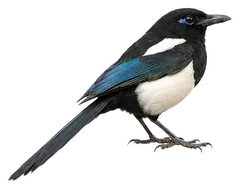 Maghreb MagpiePica mauritanica
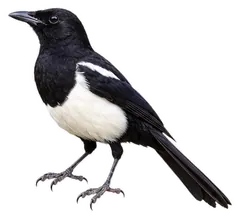 Asir MagpiePica asirensis
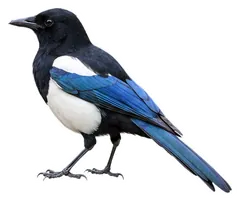 Black-rumped MagpiePica bottanensis
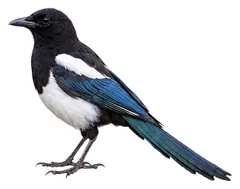 Black-billed MagpiePica hudsonia
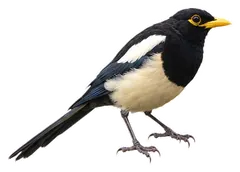 Yellow-billed MagpiePica nuttallii
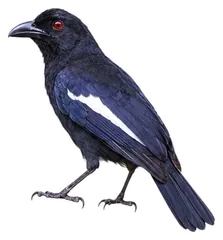 Malayan Black MagpiePlatysmurus leucopterus
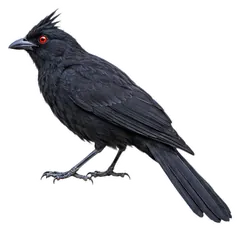 Bornean Black MagpiePlatysmurus aterrimus
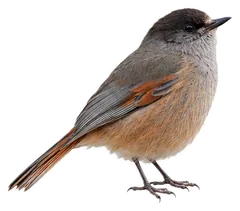 Siberian JayPerisoreus infaustus
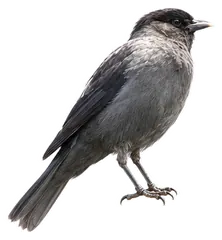 Sichuan JayPerisoreus internigrans
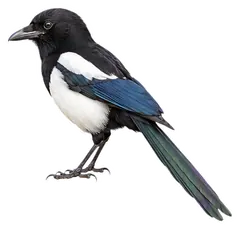
Download illustration
Free to use with credit: “Illustration: Bird Album (birdalbum.com)”. Drawn by AI from a reference photo by 星外之神. ↗

Heard it but can't see it? Mingji identifies birds by sound and photo, on your phone.