 Bird Album
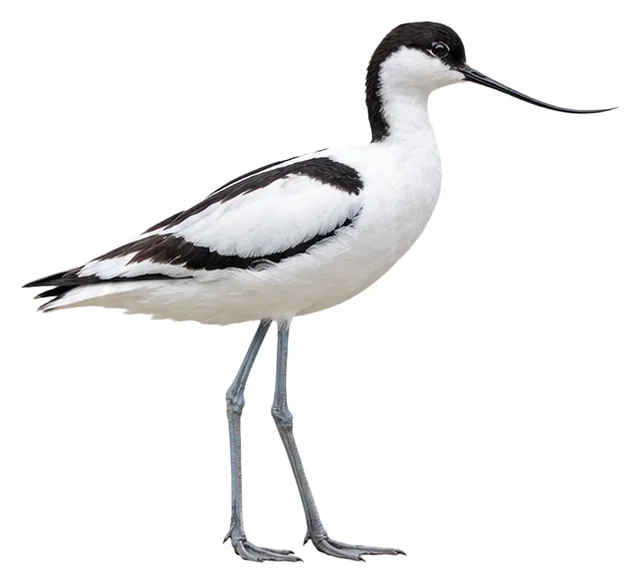
Pied Avocet
Recurvirostra avosetta Linnaeus, 1758
42–46 cmLength78 cmWingspan304 gWeight
It is a boldly black-and-white, long-legged waterbird with a long, slender, upturned bill.
Busiest months: April–May · Most records: United Kingdom, Spain, China
How to identify
Field marks
- Bill long, slender and upturned
- Black cap extends to nape
- Body white; black patches on wings and back
- Legs blue and very long
Male, female and young
Sexes similar in appearance; male has a longer, straighter bill, female a shorter, more curved bill. Juvenile has more gray and ocher.
Voice
A flowing, melodious “kluit kluit”, audible from a distance.
Where and when it's recorded

Pied Avocet has been recorded at 1,564 of the 8,171 birding hotspots we track, in 103 countries and regions.
Records by month Northern Hemisphere
Where it's recorded most
- Titchwell Marsh RSPB ReserveUnited Kingdom8,233 records
- Minsmere RSPB ReserveUnited Kingdom5,757 records
- Cley & Salthouse Marshes NWT NR – Cley Marshes including Hides and Visitor CentreUnited Kingdom4,698 records
More places
- Mai Po Nature ReserveHong Kong (China)3,492 records
- Desembocadura del Guadalhorce – ÁreaSpain3,297 records
- Frampton Marsh RSPB ReserveUnited Kingdom3,234 records
- Strandfontein WTPSouth Africa2,310 records
- L'Albufera PNat – El Raco de l'OllaSpain2,288 records
- WWT Slimbridge Wetland CentreUnited Kingdom2,078 records
- Oare Marshes LNRUnited Kingdom2,054 records
Countries and regions with the most records
eBird records via GBIF up to 2024-12-31. A record means someone listed it; more records partly mean more birders, not more birds.
About
The pied avocet (Recurvirostra avosetta) is a species of wader in the Recurvirostridae family, the only member of the avocet genus Recurvirostra found in Europe, Africa, and Asia.
Excerpt from Wikipedia, CC BY-SA 4.0 · authors · Read more on Wikipedia
Questions
How big is the Pied Avocet?
The Pied Avocet is about 42–46 cm long, with a wingspan of 78 cm and weighs around 304 g.
Where does the Pied Avocet live?
Its breeding range: Africa, Palearctic: inland and coastal southern British Isles, Iberian Peninsula, far southern Scandinavia (northwestern to southwestern Europe) and southwestern Russia to Transbaikalia (northeastern Russia) and northeastern China south through northern Middle East, Central Asia to east-central Afghanistan, Sind and Kutch (coastal Pakistan and northwestern India); eastern and southern Africa. It is most often recorded in United Kingdom, Spain and China.
When is the best time to see the Pied Avocet?
At the hotspots we track, it is recorded most in April and May (Northern Hemisphere).
Is the Pied Avocet endangered?
The IUCN Red List classifies the Pied Avocet as Least Concern.
What does the Pied Avocet eat?
Main food: Fish, shrimp & shellfish.
What family is the Pied Avocet in?
It belongs to the family Stilts, Avocets (Recurvirostridae), order Charadriiformes.
At a glance
- Length
- 42–46 cm
- Wingspan
- 78 cm
- Weight
- 304 g
- Habitat
- Wetland
- Diet
- Fish, shrimp & shellfish
- Lifestyle
- Active on the ground
- Migration
- Partial migrant
- Conservation
- Least Concern
More measurements
- Wing
- 218 mm
- Tail
- 79 mm
- Bill
- 84 mm
- Tarsus
- 87 mm
Averages from the AVONET dataset; length from field guides where available.
Range
Africa, Palearctic: inland and coastal southern British Isles, Iberian Peninsula, far southern Scandinavia (northwestern to southwestern Europe) and southwestern Russia to Transbaikalia (northeastern Russia) and northeastern China south through northern Middle East, Central Asia to east-central Afghanistan, Sind and Kutch (coastal Pakistan and northwestern India); eastern and southern Africa
Breeding range, IOC World Bird List 15.2
Classification
- Order
- Charadriiformes
- Family
- Stilts, Avocets Recurvirostridae
- Genus
- Recurvirostra
Other birds in the genus Recurvirostra
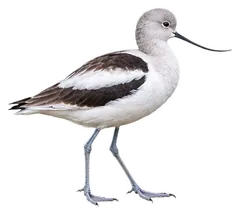 American AvocetRecurvirostra americana
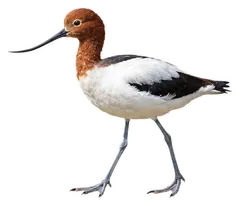 Red-necked AvocetRecurvirostra novaehollandiae
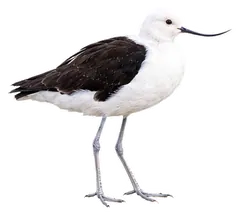 Andean AvocetRecurvirostra andina
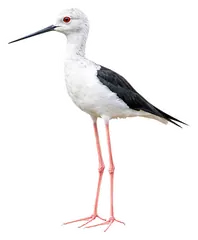 Black-winged StiltHimantopus himantopus
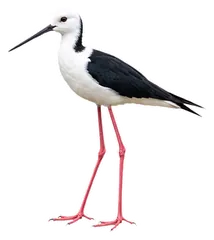 Pied StiltHimantopus leucocephalus
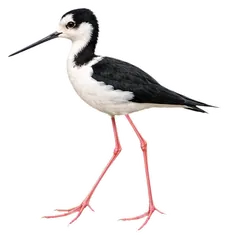 Black-necked StiltHimantopus mexicanus
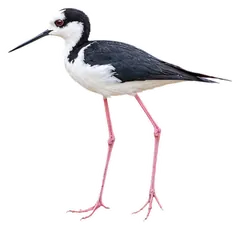 White-backed StiltHimantopus melanurus
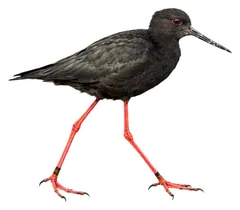 Black StiltHimantopus novaezelandiae
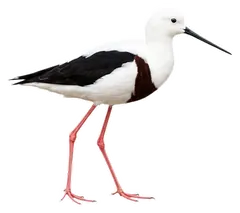 Banded StiltCladorhynchus leucocephalus
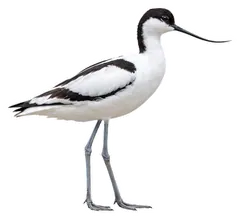
Download illustration
Free to use with credit: “Illustration: Bird Album (birdalbum.com)”. Drawn by AI from a reference photo by El Golli Mohamed. ↗
Heard it but can't see it? Mingji identifies birds by sound and photo, on your phone.