 Bird Album
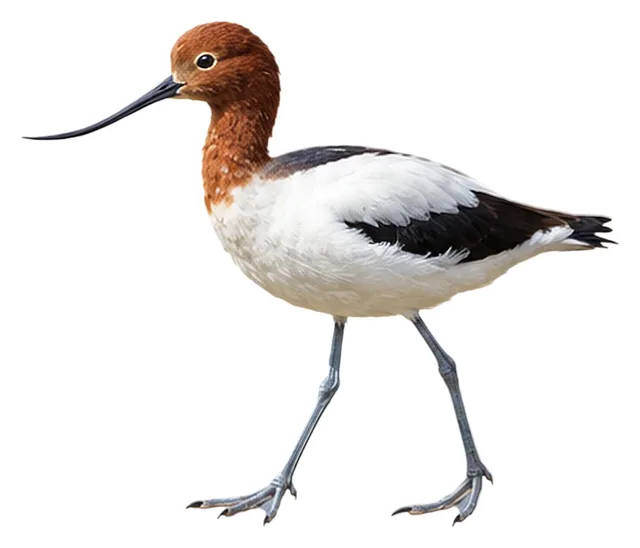
Red-necked Avocet
Recurvirostra novaehollandiae Vieillot, 1816
325 gWeight
Busiest months: January · Most records: Australia
Where and when it's recorded
Busiest months: January · Most records: Australia

Red-necked Avocet has been recorded at 82 of the 8,276 birding hotspots we track, in 1 country or region.
Records by month Southern Hemisphere
Where it's recorded most
- Western Treatment PlantAustralia6,799 records
- Alice Springs Sewage PondsAustralia2,399 records
- Western Treatment Plant – T Section PondsAustralia1,180 records
More places
- Hunter Wetlands National Park – Stockton SandspitAustralia1,150 records
- Bicentennial Park (Sydney Olympic Park) – Waterbird RefugeAustralia899 records
- Lake McLarty Nature ReserveAustralia556 records
- Lake WollumboolaAustralia541 records
- Port of Brisbane Shorebird RoostAustralia498 records
- Western Treatment Plant – Western LagoonsAustralia491 records
- Sydney Olympic ParkAustralia478 records
Countries and regions with the most records
eBird records via GBIF up to 2024-12-31. A record means someone listed it; more records partly mean more birders, not more birds.
About
The red-necked avocet (Recurvirostra novaehollandiae) also known as the Australian avocet, cobbler, cobbler's awl, and painted lady, is a wader of the family Recurvirostridae that is endemic to Australia and is fairly common and widespread throughout, except for the north and north east coastal areas of the country. Closely related to the stilts, it shares their fragile slender elegance, however the deep red head and neck distinguish them. It appeared on a 13 cent postage stamp in 1966.
Excerpt from Wikipedia, CC BY-SA 4.0 · authors · Read more on Wikipedia
Questions
How big is the Red-necked Avocet?
The Red-necked Avocet weighs around 325 g.
Where does the Red-necked Avocet live?
Its breeding range: Australasia: Australia (except northern, Tasmania). It is most often recorded in Australia.
When is the best time to see the Red-necked Avocet?
At the hotspots we track, it is recorded most in January (Southern Hemisphere).
Is the Red-necked Avocet endangered?
The IUCN Red List classifies the Red-necked Avocet as Least Concern.
What does the Red-necked Avocet eat?
Main food: Fish, shrimp & shellfish.
What family is the Red-necked Avocet in?
It belongs to the family Stilts, Avocets (Recurvirostridae), order Charadriiformes.
At a glance
- Weight
- 325 g
- Habitat
- Wetland
- Diet
- Fish, shrimp & shellfish
- Lifestyle
- Active on the ground
- Migration
- Partial migrant
- Conservation
- Least Concern
More measurements
- Wing
- 225 mm
- Tail
- 80 mm
- Bill
- 94 mm
- Tarsus
- 89 mm
Averages from the AVONET dataset; length from field guides where available.
Range
Australasia: Australia (except northern, Tasmania)
Breeding range, IOC World Bird List 15.2
Classification
- Order
- Charadriiformes
- Family
- Stilts, Avocets Recurvirostridae
- Genus
- Recurvirostra
Other birds in the genus Recurvirostra
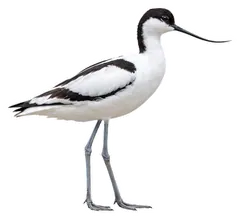 Pied AvocetRecurvirostra avosetta
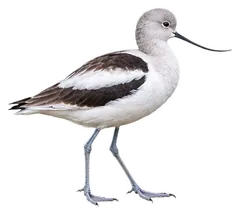 American AvocetRecurvirostra americana
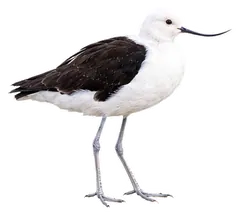 Andean AvocetRecurvirostra andina
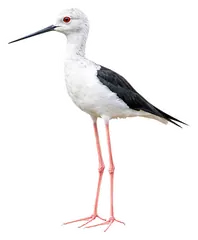 Black-winged StiltHimantopus himantopus
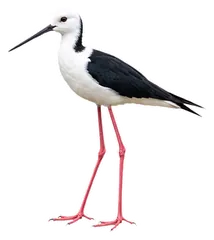 Pied StiltHimantopus leucocephalus
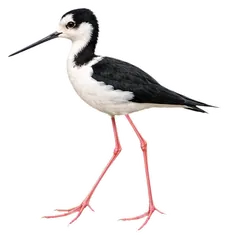 Black-necked StiltHimantopus mexicanus
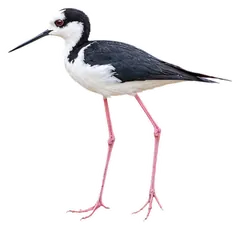 White-backed StiltHimantopus melanurus
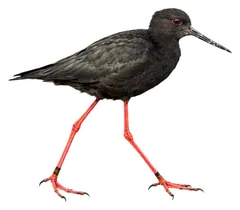 Black StiltHimantopus novaezelandiae
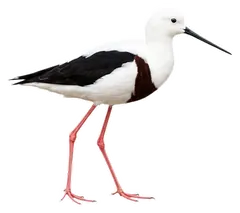 Banded StiltCladorhynchus leucocephalus
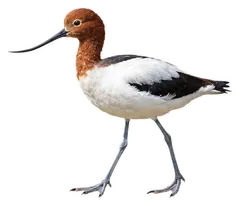
Download illustration
Free to use with credit: “Illustration: Bird Album (birdalbum.com)”. Drawn by AI from a reference photo by Ray Turnbull. ↗
Heard it but can't see it? Mingji identifies birds by sound and photo, on your phone.
In other languages
- EnglishRed-necked Avocet
- 简体中文红颈反嘴鹬
- 繁體中文紅頸反嘴鴴
- 日本語アカガシラソリハシセイタカシギ
- DeutschRotkopf-Säbelschnäbler
- FrançaisAvocette d’Australie
- EspañolAvoceta australiana
- Portuguêsalfaiate-australiano
- ItalianoAvocetta collorosso
- NederlandsAustralische Kluut
- РусскийАвстралийская шилоклювка
- Svenskaaustralisk skärfläcka
- DanskAustralsk Klyde
- Polskiszablodziób australijski