 Bird Album
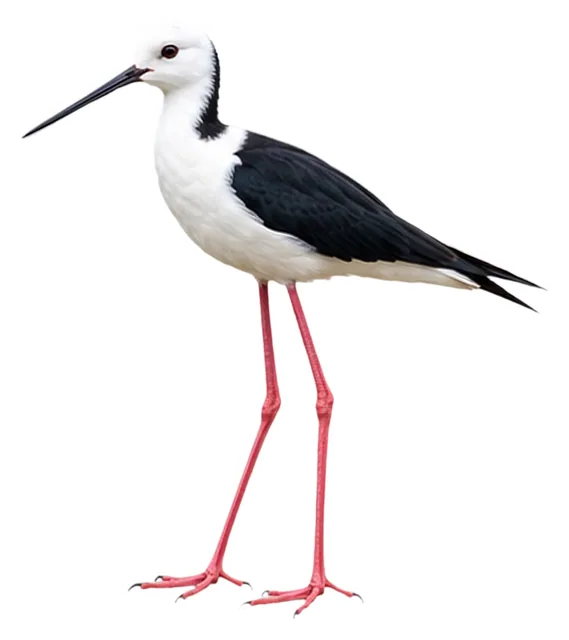
Pied Stilt
Himantopus leucocephalus Gould, 1837
≈36 cmLength177 gWeight
Its black-and-white body is supported by two long, slender pink legs.
Busiest months: January and October–November · Most records: Australia, New Zealand, Indonesia
How to identify
Field marks
- Legs long, slender and pink
- Back of head, nape and back greenish-black
- Bill long, slender and black
- Eyes and eyelids red
Voice
Gives repeated shrieks in flight.
Where and when it's recorded

Pied Stilt has been recorded at 339 of the 8,171 birding hotspots we track, in 11 countries and regions.
Records by month Southern Hemisphere
Where it's recorded most
- Western Treatment PlantAustralia8,492 records
- Oxley Creek CommonAustralia3,426 records
- Bowra Wildlife SanctuaryAustralia3,184 records
More places
- Alice Springs Sewage PondsAustralia2,405 records
- Western Treatment Plant – T Section PondsAustralia2,328 records
- Kedron Brook Wetlands ReserveAustralia2,184 records
- Broome South Wastewater Treatment PlantAustralia2,043 records
- Landing Lights WetlandAustralia1,751 records
- Jawbone Flora and Fauna ReserveAustralia1,746 records
- Townsville Town Common Conservation ParkAustralia1,745 records
Countries and regions with the most records
eBird records via GBIF up to 2024-12-31. A record means someone listed it; more records partly mean more birders, not more birds.
About
The pied stilt (Himantopus leucocephalus), also known as the white-headed stilt, is a shorebird in the family Recurvirostridae. It is widely distributed with a large total population size and apparently stable population trend, occurring in Malaysia, Japan, the Philippines, Brunei, Christmas Island, Indonesia, Palau, Papua New Guinea, Australia, and New Zealand. It is listed as Least Concern on the IUCN Red List.
Excerpt from Wikipedia, CC BY-SA 4.0 · authors · Read more on Wikipedia
Questions
How big is the Pied Stilt?
The Pied Stilt is about ≈36 cm long and weighs around 177 g.
Where does the Pied Stilt live?
Its breeding range: Oriental, Australasia: local central, southern Philippines, Indonesian Archipelago, New Guinea region, Australia, New Zealand, northeastern New Britain (southeastern Bismarck Archipelago). It is most often recorded in Australia, New Zealand and Indonesia.
When is the best time to see the Pied Stilt?
At the hotspots we track, it is recorded most in January, October and November (Southern Hemisphere).
What does the Pied Stilt eat?
Main food: Fish, shrimp & shellfish.
What family is the Pied Stilt in?
It belongs to the family Stilts, Avocets (Recurvirostridae), order Charadriiformes.
At a glance
- Length
- ≈36 cm
- Weight
- 177 g
- Habitat
- Wetland
- Diet
- Fish, shrimp & shellfish
- Lifestyle
- Active on the ground
- Migration
- Partial migrant
More measurements
- Wing
- 222 mm
- Tail
- 70 mm
- Bill
- 65 mm
- Tarsus
- 116 mm
Averages from the AVONET dataset; length from field guides where available.
Range
Oriental, Australasia: local central, southern Philippines, Indonesian Archipelago, New Guinea region, Australia, New Zealand, northeastern New Britain (southeastern Bismarck Archipelago)
Breeding range, IOC World Bird List 15.2
Classification
- Order
- Charadriiformes
- Family
- Stilts, Avocets Recurvirostridae
- Genus
- Himantopus
Other birds in the genus Himantopus
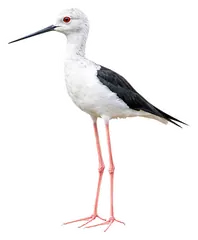 Black-winged StiltHimantopus himantopus
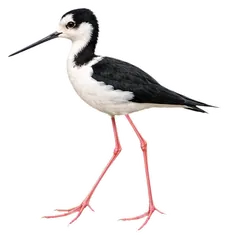 Black-necked StiltHimantopus mexicanus
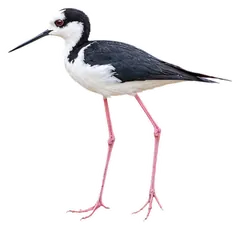 White-backed StiltHimantopus melanurus
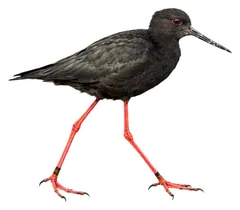 Black StiltHimantopus novaezelandiae
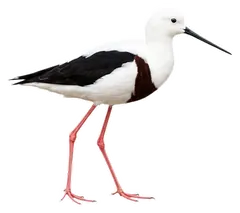 Banded StiltCladorhynchus leucocephalus
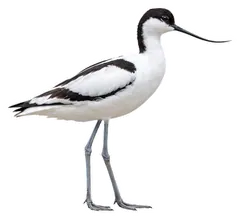 Pied AvocetRecurvirostra avosetta
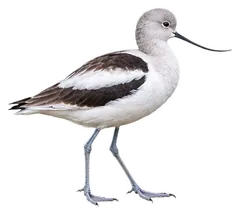 American AvocetRecurvirostra americana
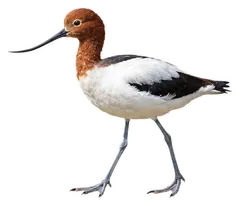 Red-necked AvocetRecurvirostra novaehollandiae
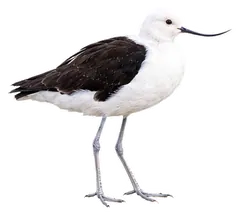 Andean AvocetRecurvirostra andina
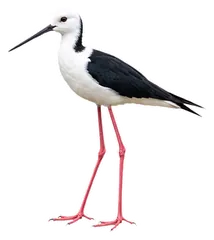
Download illustration
Free to use with credit: “Illustration: Bird Album (birdalbum.com)”. Drawn by AI from a reference photo by Wendy F. ↗
Heard it but can't see it? Mingji identifies birds by sound and photo, on your phone.
In other languages
- EnglishPied Stilt
- 简体中文澳洲长脚鹬
- 繁體中文白頭高蹺鴴
- 日本語オーストラリアセイタカシギ
- DeutschWeißgesicht-Stelzenläufer
- FrançaisÉchasse d’Australie
- EspañolCigüeñuela Pechirroja
- Portuguêspernilongo-australasiático
- ItalianoCavaliere testabianca
- NederlandsAustralische Steltkluut
- РусскийАвстралийский ходулочник
- Svenskaaustralisk styltlöpare
- DanskAustralsk Stylteløber
- Polskiszczudłak białogłowy