 Bird Album
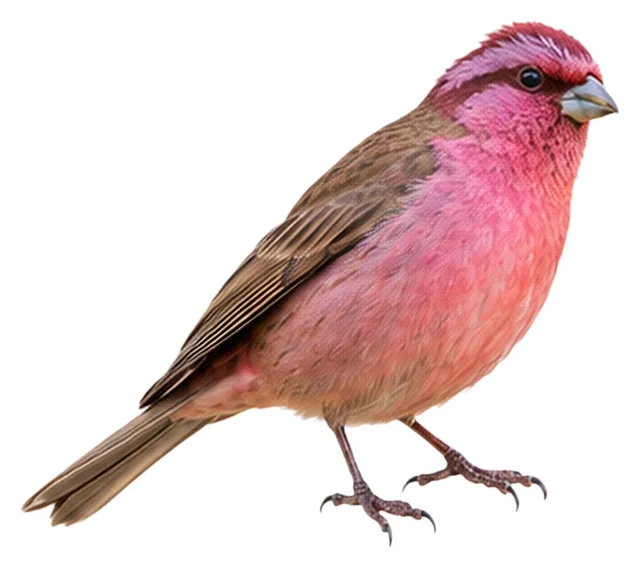
Pink-browed Rosefinch
Carpodacus rodochroa (Vigors, 1831)
≈14 cmLength18 gWeight
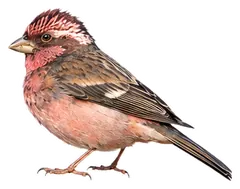
The male is raspberry-pink with a supercilium; the female is brown with streaks on the underparts.
Busiest months: February and December · Most records: India, Nepal, China
How to identify
Field marks
- Male: raspberry-red with an eyestripe and supercilium
- Breast and upper belly pale purple
- Lower belly to undertail white or pale pink
- Bill pointed, tail tip notched
Male, female and young
The female is brown with streaks, almost no pink, and a broad white supercilium; the juvenile more closely resembles the female.
Voice
The song is a series of loud, rising “toowhi toowhi” whistles; calls include “per-lee” and “chew-wee”.
Where and when it's recorded
Busiest months: February and December · Most records: India, Nepal, China

Pink-browed Rosefinch has been recorded at 17 of the 8,276 birding hotspots we track, in 4 countries and regions.
Records by month Northern Hemisphere
Where it's recorded most
- PangotIndia159 records
- SattalIndia73 records
- Munsyari – Bheema WodeyarIndia48 records
More places
- Australian Base Camp - Raptor Migration SiteNepal38 records
- Annapurna Conservation Area - Ghode Pani and PoonhillNepal33 records
- Mt. PhulchowkiNepal18 records
- GyirongChina13 records
- Shivapuri-Nagarjun National ParkNepal12 records
- Langtang National Park - Syabru to Lama HotelNepal10 records
- Neelan BothoPakistan7 records
Countries and regions with the most records
eBird records via GBIF up to 2024-12-31. A record means someone listed it; more records partly mean more birders, not more birds.
About
The pink-browed rosefinch (Carpodacus rodochroa) is a finch in the family Fringillidae. Nicholas Aylward Vigors first described the species in 1831. It is migratory and ranges across the northern regions of the Indian subcontinent, mainly in the Himalayas.
Excerpt from Wikipedia, CC BY-SA 4.0 · authors · Read more on Wikipedia
Questions
How big is the Pink-browed Rosefinch?
The Pink-browed Rosefinch is about ≈14 cm long and weighs around 18 g.
Where does the Pink-browed Rosefinch live?
Its breeding range: Palearctic, Oriental: south-central Palearctic-n Oriental region in west to east-central Himalayas, in montane grassy slopes, scrub and forest edge: from northern Pakistan and Kashmir to Bhutan and southern, southeastern Tibet. It is most often recorded in India, Nepal and China.
When is the best time to see the Pink-browed Rosefinch?
At the hotspots we track, it is recorded most in February and December (Northern Hemisphere).
Is the Pink-browed Rosefinch endangered?
The IUCN Red List classifies the Pink-browed Rosefinch as Least Concern.
What does the Pink-browed Rosefinch eat?
Main food: Seeds.
What family is the Pink-browed Rosefinch in?
It belongs to the family Finches, Euphonias (Fringillidae), order Passerines (Passeriformes).
At a glance
- Length
- ≈14 cm
- Weight
- 18 g
- Habitat
- Forest
- Diet
- Seeds
- Lifestyle
- Varied
- Migration
- Partial migrant
- Conservation
- Least Concern
More measurements
- Wing
- 80 mm
- Tail
- 57 mm
- Bill
- 14 mm
- Tarsus
- 18 mm
Averages from the AVONET dataset; length from field guides where available.
Range
Palearctic, Oriental: south-central Palearctic-n Oriental region in west to east-central Himalayas, in montane grassy slopes, scrub and forest edge: from northern Pakistan and Kashmir to Bhutan and southern, southeastern Tibet
Breeding range, IOC World Bird List 15.2
Classification
- Order
- Passerines Passeriformes
- Family
- Finches, Euphonias Fringillidae
- Genus
- Carpodacus
Other birds in the genus Carpodacus
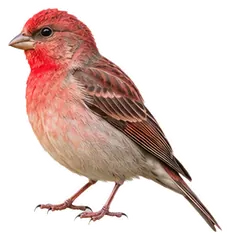 Common RosefinchCarpodacus erythrinus
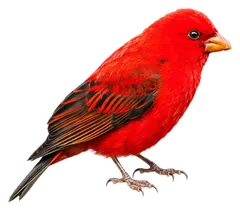 Scarlet FinchCarpodacus sipahi
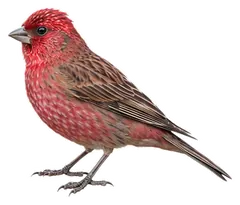 Streaked RosefinchCarpodacus rubicilloides
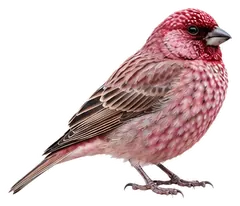 Great RosefinchCarpodacus rubicilla
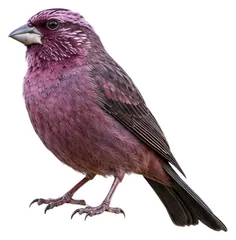 Blyth's RosefinchCarpodacus grandis
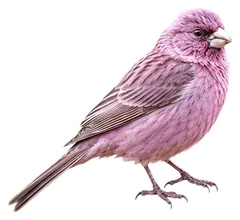 Red-mantled RosefinchCarpodacus rhodochlamys
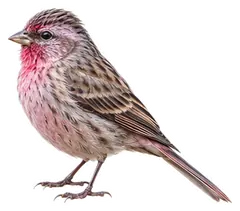 Himalayan Beautiful RosefinchCarpodacus pulcherrimus
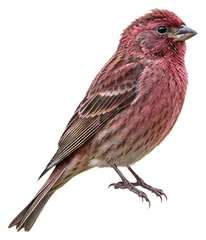 Chinese Beautiful RosefinchCarpodacus davidianus
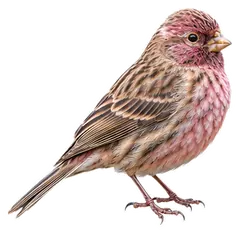 Pink-rumped RosefinchCarpodacus waltoni
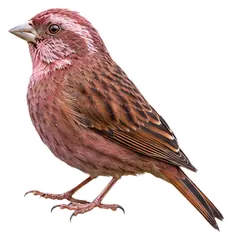 Dark-rumped RosefinchCarpodacus edwardsii
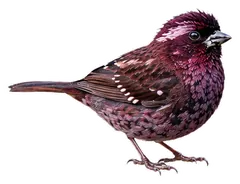 Spot-winged RosefinchCarpodacus rodopeplus
 Sharpe's RosefinchCarpodacus verreauxii
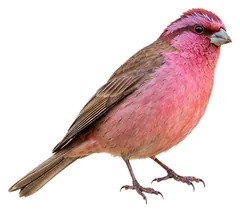
Download illustration
Free to use with credit: “Illustration: Bird Album (birdalbum.com)”. Drawn by AI from a reference photo by Avinash Bhagat. ↗
Heard it but can't see it? Mingji identifies birds by sound and photo, on your phone.
In other languages
- EnglishPink-browed Rosefinch
- 简体中文玫红眉朱雀
- 繁體中文玫紅眉朱雀
- 日本語バラマユマシコ
- DeutschRosenbrauengimpel
- FrançaisRoselin à sourcils roses
- EspañolCamachuelo cejirrosado
- Portuguêspintarroxo-de-sobrancelha-rosada
- ItalianoCiuffolotto roseo cigliarosa
- NederlandsWenkbrauwroodmus
- РусскийКраснобровая чечевица
- Svenskarosabrynad rosenfink
- DanskRødbrynet Rosenfinke
- Polskidziwonia różowobrewa