 Bird Album
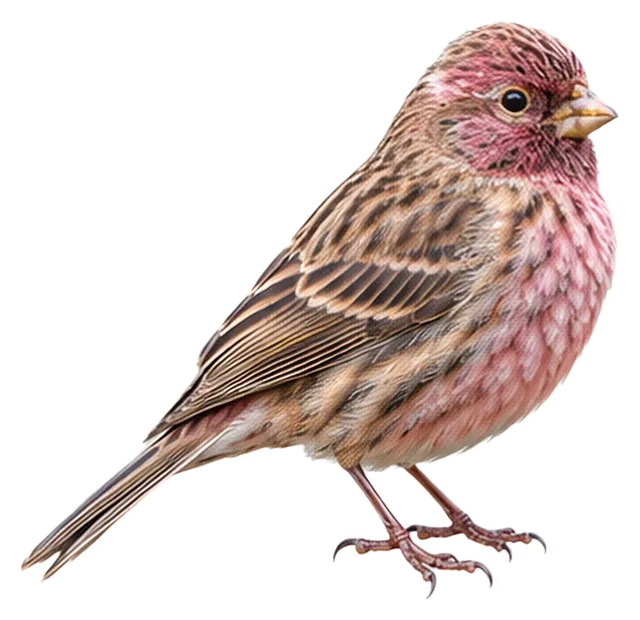
Pink-rumped Rosefinch
Carpodacus waltoni (Sharpe, 1905)
≈15 cmLength27 gWeight
It inhabits alpine scrub, grassland and forest at 2,700–4,300 m.
Busiest months: May–June · Most records: China
How to identify
Where and when it's recorded

Pink-rumped Rosefinch has been recorded at 75 of the 8,171 birding hotspots we track, in 1 country or region.
Records by month Northern Hemisphere
Where it's recorded most
- Baizha ForestChina84 records
- MengbishanChina78 records
- Shugseb NunneryChina73 records
More places
- Balang Shan [General Area]China60 records
- Balang Shan PassChina46 records
- Baxi ForestChina43 records
- Kanda MountainChina40 records
- Balang Shan – Main Tunnel NorthChina29 records
- Gonggangling PassChina27 records
- Mengbishan – upper trackChina23 records
Countries and regions with the most records
eBird records via GBIF up to 2024-12-31. A record means someone listed it; more records partly mean more birders, not more birds.
Questions
How big is the Pink-rumped Rosefinch?
The Pink-rumped Rosefinch is about ≈15 cm long and weighs around 27 g.
Where does the Pink-rumped Rosefinch live?
Its breeding range: Palearctic: south-central, southeastern Palearctic in Tibetan Plateau and Hengduan Mountains, in high-montane dry scrub, forest edge: northeastern Tibet, southeastern Qinghai and western Sichuan, in south to southeastern Tibet and northwestern Yunnan (west-central, central China). It is most often recorded in China.
When is the best time to see the Pink-rumped Rosefinch?
At the hotspots we track, it is recorded most in May and June (Northern Hemisphere).
Is the Pink-rumped Rosefinch endangered?
The IUCN Red List classifies the Pink-rumped Rosefinch as Least Concern.
What does the Pink-rumped Rosefinch eat?
Main food: Seeds.
What family is the Pink-rumped Rosefinch in?
It belongs to the family Finches, Euphonias (Fringillidae), order Passerines (Passeriformes).
At a glance
- Length
- ≈15 cm
- Weight
- 27 g
- Habitat
- Grassland
- Diet
- Seeds
- Lifestyle
- Active on the ground
- Migration
- Partial migrant
- Conservation
- Least Concern
More measurements
- Wing
- 71 mm
- Tail
- 62 mm
- Bill
- 11 mm
- Tarsus
- 18 mm
Averages from the AVONET dataset; length from field guides where available.
Range
Palearctic: south-central, southeastern Palearctic in Tibetan Plateau and Hengduan Mountains, in high-montane dry scrub, forest edge: northeastern Tibet, southeastern Qinghai and western Sichuan, in south to southeastern Tibet and northwestern Yunnan (west-central, central China)
Breeding range, IOC World Bird List 15.2
Subspecies · 2
- Carpodacus waltoni waltoni se Tibet
- Carpodacus waltoni eos c and c China (e Tibet, se Qinghai, and w Sichuan); winters also NW Yunnan (Likiang Mts). | non-breeding: nw Yunnan (Likiang Mts).
Classification
- Order
- Passerines Passeriformes
- Family
- Finches, Euphonias Fringillidae
- Genus
- Carpodacus
Other birds in the genus Carpodacus
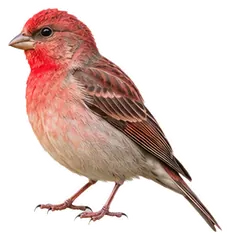 Common RosefinchCarpodacus erythrinus
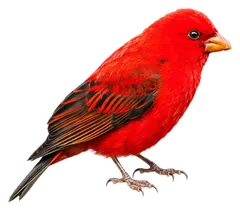 Scarlet FinchCarpodacus sipahi
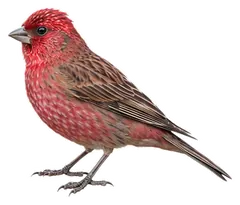 Streaked RosefinchCarpodacus rubicilloides
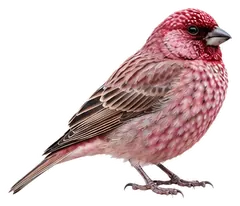 Great RosefinchCarpodacus rubicilla
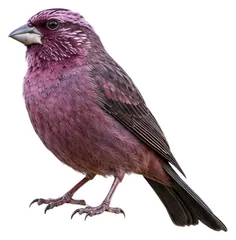 Blyth's RosefinchCarpodacus grandis
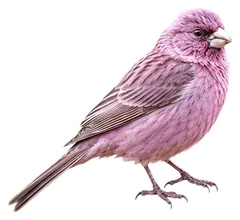 Red-mantled RosefinchCarpodacus rhodochlamys
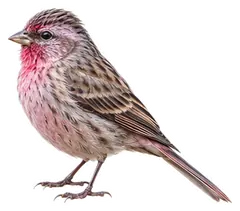 Himalayan Beautiful RosefinchCarpodacus pulcherrimus
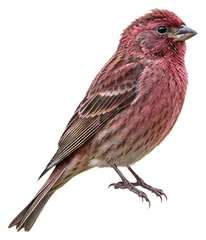 Chinese Beautiful RosefinchCarpodacus davidianus
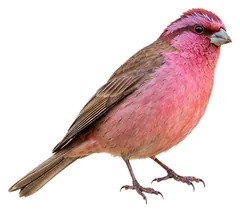 Pink-browed RosefinchCarpodacus rodochroa
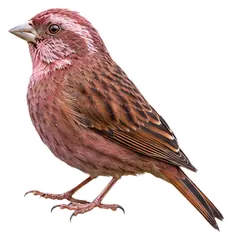 Dark-rumped RosefinchCarpodacus edwardsii
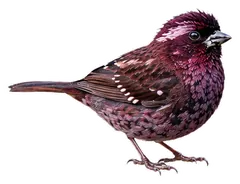 Spot-winged RosefinchCarpodacus rodopeplus
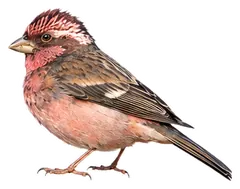 Sharpe's RosefinchCarpodacus verreauxii
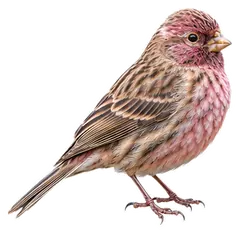
Download illustration
Free to use with credit: “Illustration: Bird Album (birdalbum.com)”. Drawn by AI from a reference photo by Alexander Naumov. ↗
Heard it but can't see it? Mingji identifies birds by sound and photo, on your phone.