 Bird Album
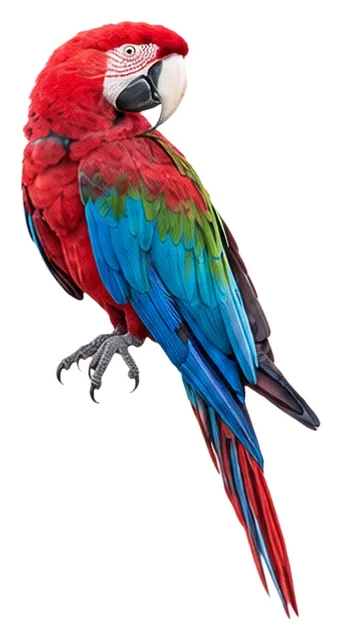
Red-and-green Macaw
Ara chloropterus Gray, GR, 1859
90–95 cmLength104–124 cmWingspan1.2 kgWeight
This large macaw is mainly red, with wings that grade from red through green to blue.
Busiest months: August and October · Most records: Peru, Brazil, Guyana
Looks like Scarlet Macaw
How to identify
Field marks
- Mainly bright red overall
- White bare skin on face with fine lines of red feathers
- Wings grade from red through green to blue; tail tinged blue
- Upper mandible white with black at base, lower mandible grayish-black
Male, female and young
Males are slightly larger than females; immature birds have grayish pupils, a gray lower mandible and a shorter tail.
Voice
Loud, rough calls; in flight it gives “AHH-ra”, “arAT” and “ree-eeah”, as well as a Carrion Crow-like “kraaah”.
Similar species
Where and when it's recorded

Red-and-green Macaw has been recorded at 162 of the 8,171 birding hotspots we track, in 20 countries and regions.
Records by month Southern Hemisphere
Where it's recorded most
- Tambopata Research CenterPeru718 records
- Rio Cristalino – listas históricasBrazil567 records
- Atta Lodge / Iwokrama Canopy WalkwayGuyana524 records
More places
- Los Amigos Biological StationPeru495 records
- Blanquillo Macaw Clay LickPeru429 records
- PN Chapada dos Guimarães – Pousada do ParqueBrazil429 records
- Pousada TrijunçãoBrazil424 records
- Iwokrama River LodgeGuyana415 records
- Estación Biológica de Cocha CashuPeru385 records
- Sadiri LodgeBolivia323 records
Countries and regions with the most records
eBird records via GBIF up to 2024-12-31. A record means someone listed it; more records partly mean more birders, not more birds.
About
The red-and-green macaw (Ara chloropterus), also known as the green-winged macaw, is a large, mostly-red macaw of the genus Ara. It is popular in aviculture, and is the second most commonly kept macaw species after the blue-and-yellow macaw. However, they are not as common in captivity as the blue-and-yellow, and are much more expensive; prices are often double that of the blue-and-gold.
Excerpt from Wikipedia, CC BY-SA 4.0 · authors · Read more on Wikipedia
Questions
How big is the Red-and-green Macaw?
The Red-and-green Macaw is about 90–95 cm long, with a wingspan of 104–124 cm and weighs around 1.2 kg.
Where does the Red-and-green Macaw live?
Its breeding range: South America: Amazonia and south-central. It is most often recorded in Peru, Brazil and Guyana.
When is the best time to see the Red-and-green Macaw?
At the hotspots we track, it is recorded most in August and October (Southern Hemisphere).
Is the Red-and-green Macaw endangered?
The IUCN Red List classifies the Red-and-green Macaw as Least Concern.
What does the Red-and-green Macaw eat?
Main food: Omnivore.
What family is the Red-and-green Macaw in?
It belongs to the family African & New World Parrots (Psittacidae), order Parrot (Psittaciformes).
At a glance
- Length
- 90–95 cm
- Wingspan
- 104–124 cm
- Weight
- 1.2 kg
- Habitat
- Forest
- Diet
- Omnivore
- Lifestyle
- Perches in trees
- Migration
- Resident (barely migrates)
- Conservation
- Least Concern
More measurements
- Wing
- 402 mm
- Tail
- 486 mm
- Bill
- 77 mm
- Tarsus
- 34 mm
Averages from the AVONET dataset; length from field guides where available.
Range
South America: Amazonia and south-central
Breeding range, IOC World Bird List 15.2
Classification
- Order
- Parrot Psittaciformes
- Family
- African & New World Parrots Psittacidae
- Genus
- Ara
Other birds in the genus Ara
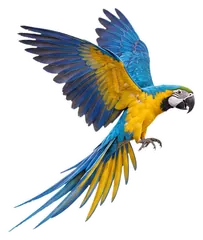 Blue-and-yellow MacawAra ararauna
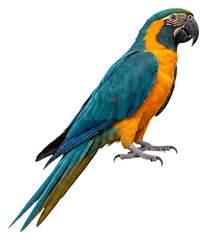 Blue-throated MacawAra glaucogularis
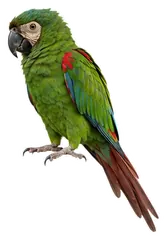 Chestnut-fronted MacawAra severus
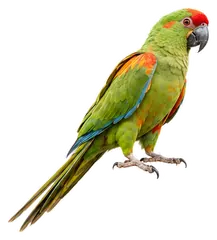 Red-fronted MacawAra rubrogenys
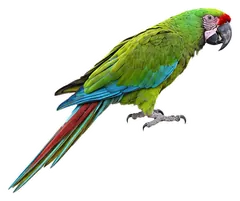 Military MacawAra militaris
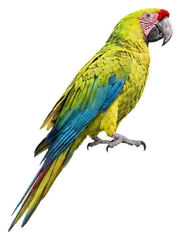 Great Green MacawAra ambiguus
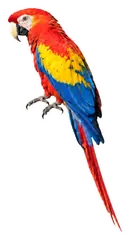 Scarlet MacawAra macao
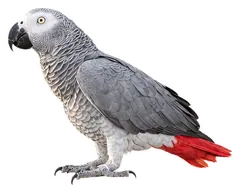 Grey ParrotPsittacus erithacus
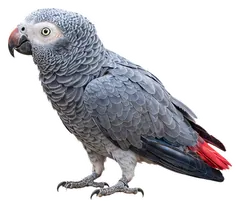 Timneh ParrotPsittacus timneh
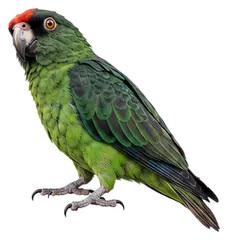 Red-fronted ParrotPoicephalus gulielmi
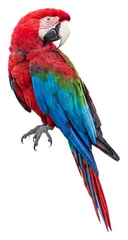
Download illustration
Free to use with credit: “Illustration: Bird Album (birdalbum.com)”. Drawn by AI from a reference photo by Paul Schlarman. ↗
Heard it but can't see it? Mingji identifies birds by sound and photo, on your phone.